Skip to content
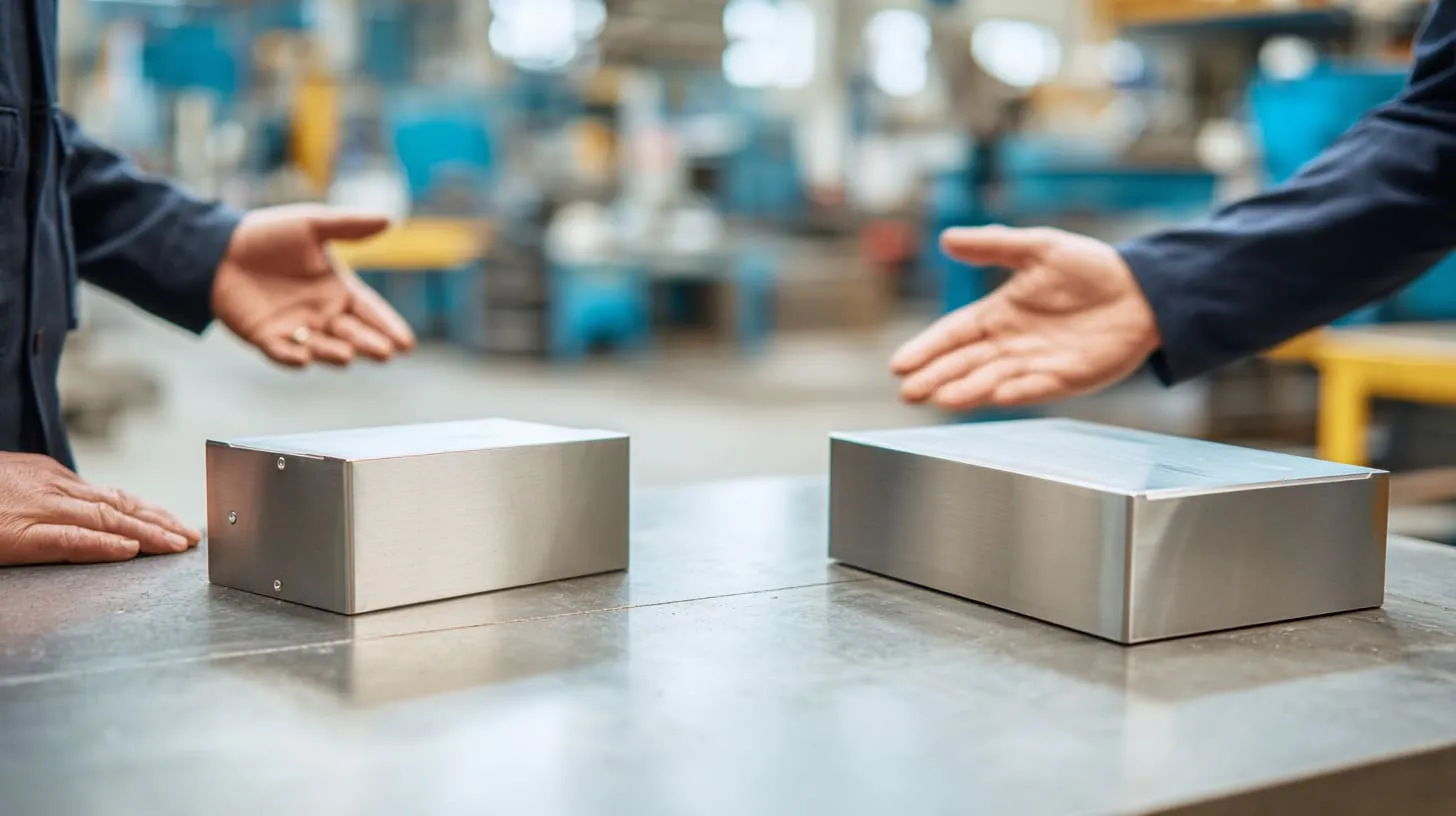
Some topics come up so often in my daily work that they almost become part of the background noise. A buyer asks about corrosion, another asks about outdoor exposure, and a third wonders why two enclosures that look similar come with very different price tags. Before long, the same question sits in the center of the table again: “Should I choose NEMA 4 or NEMA 4X?”
It’s a fair question. These labels feel technical, but they affect real things — reliability, cost, downtime, and even peace of mind. And since many of my clients place their enclosures in places where weather, chemicals, or humidity can be unpredictable, understanding these ratings makes every sourcing decision much easier.
So let’s break it down together — simply, clearly, and in a way that helps you choose what truly fits your project.
What do NEMA 4 and 4X mean: definitions & baseline protections
What is NEMA 4?
When a box carries the NEMA 4 label, it promises a basic shield against a few harsh realities:
- Rain or water sprayed by a hose
- Dust or dirt, plus small particles flying around
- Splashes or drips from above or the side
- Ice forming on surfaces, in cold or freezing weather
That means this enclosure is built to be sealed tight. Doors often have gaskets. Latches or clamps keep them firmly closed. The idea is simple: keep water, dust, and ice out. If your equipment lives outdoors or in a dusty factory space — that may be enough.
What is NEMA 4X?
NEMA 4X includes every defense NEMA 4 offers. But it adds something crucial: corrosion resistance.
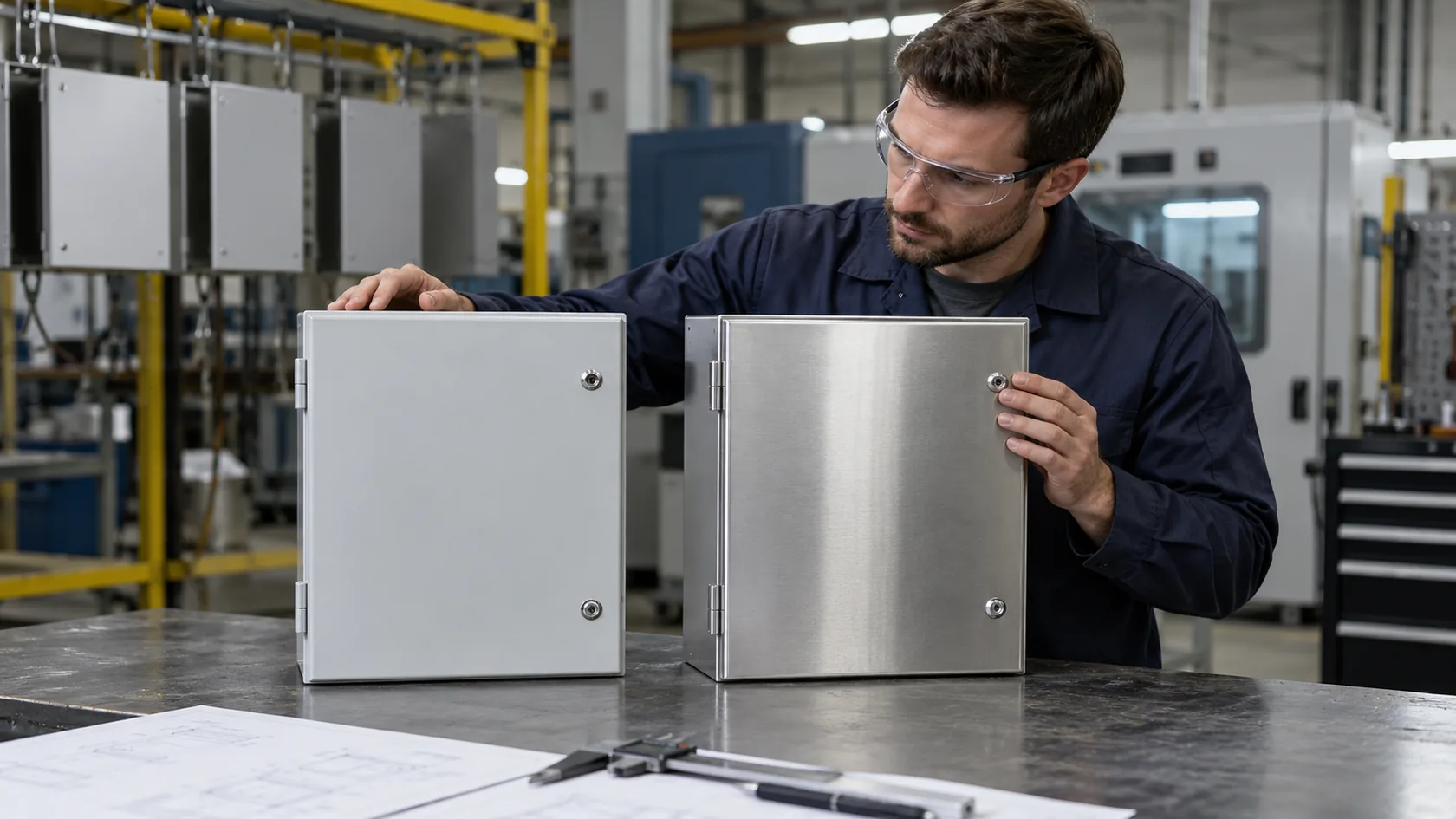
To meet 4X standards, enclosures are often built with better materials or coatings. Think stainless steel. Or fiberglass‑reinforced materials. Sometimes heavy-duty polycarbonate or special rust‑proof paints.
4X means the box resists:
- Rust from moisture or salt water
- Corrosion from chemicals or cleaning agents
- Long-term wear when environment is humid or salty
If your setup lives near the sea. Or inside a chemical plant. Or even in a factory that gets frequent wash‑downs — 4X is built to fight that.
Key Differences Between NEMA 4 vs. 4X
Corrosion resistance: the “X” factor
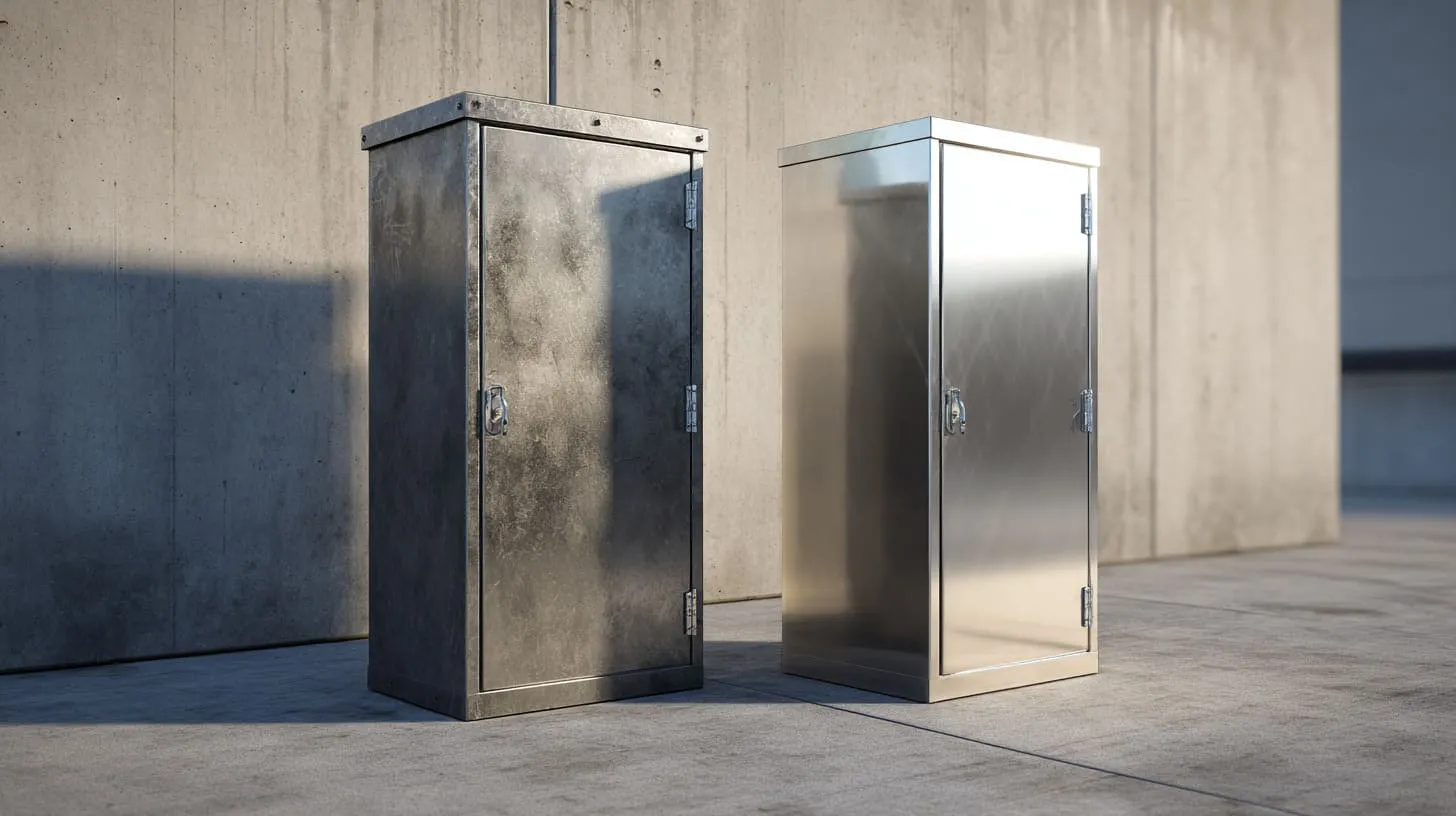
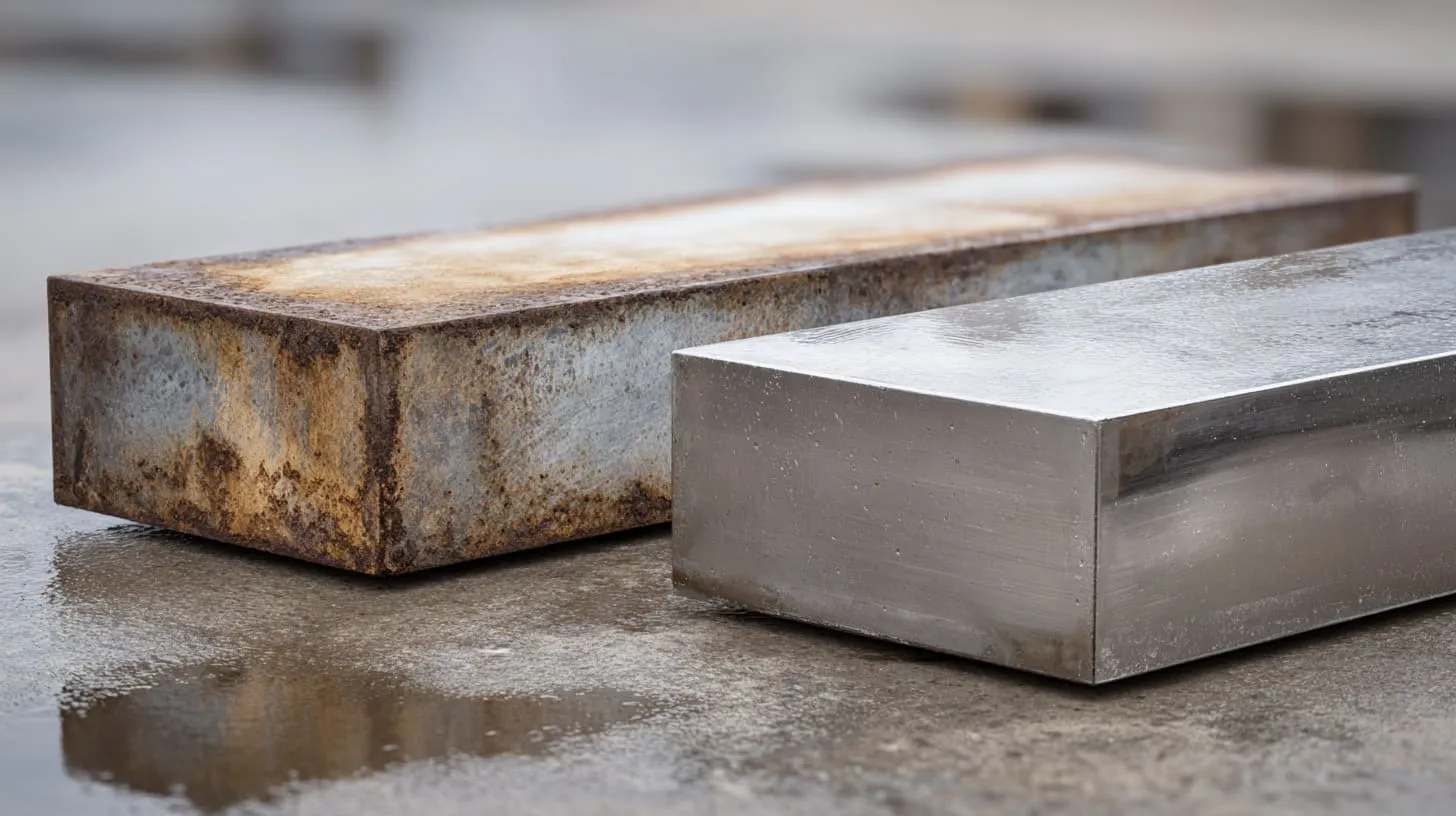
Here is where 4X really stands out: it fights rust. Plain steel or aluminum (common in 4) may start to corrode under salt air or chemical exposure. Over months or years, that corrosion can lead to seal failure, water ingress, or even structural weakness.
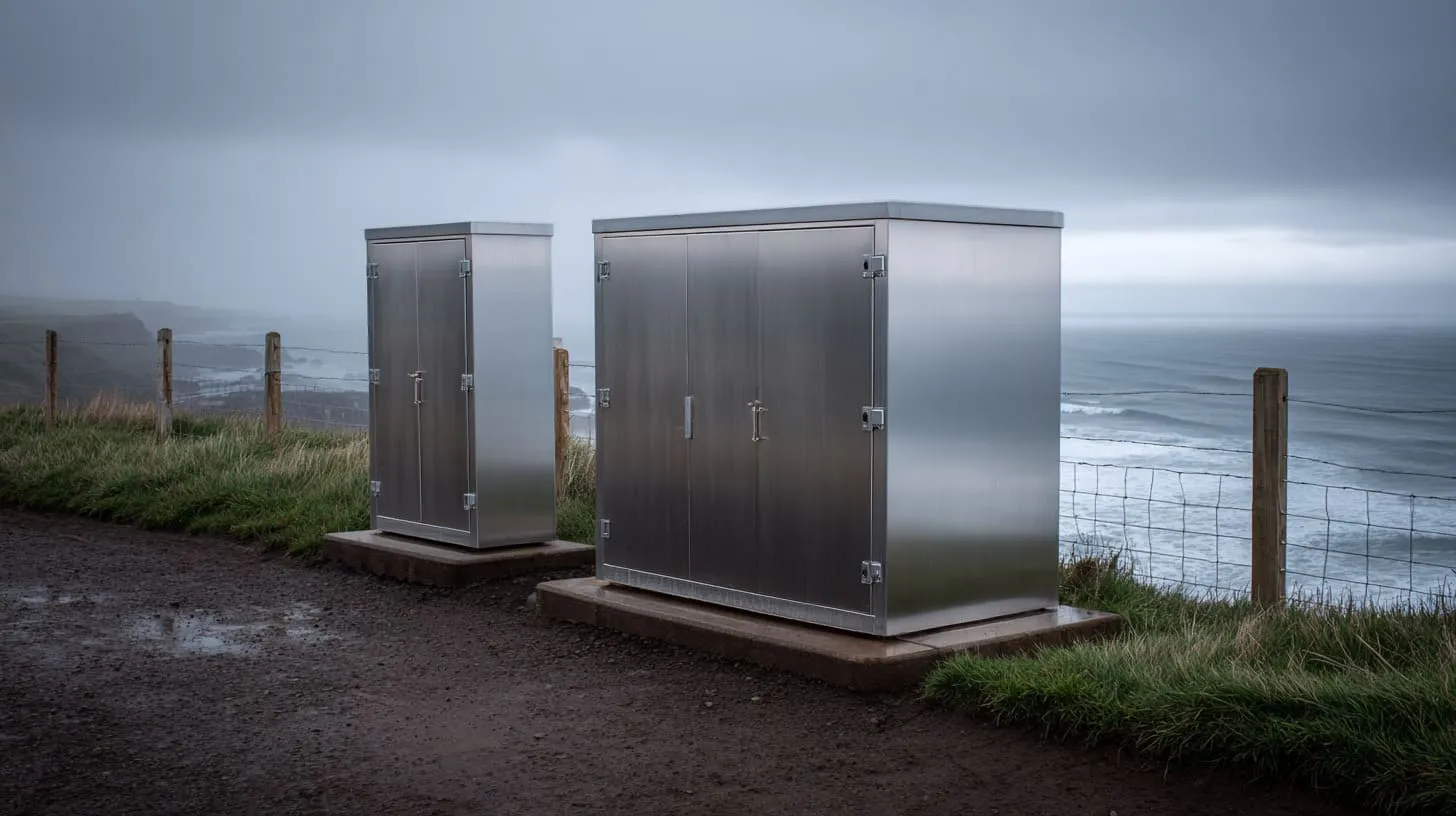
For example, I once had a client from Europe who placed control modules in coastal greenhouses. They used standard 4-rated aluminum boxes. After a year, the salty air had caused rust on hinges and latches. We switched them to 4X with stainless steel. Problem solved. No rust. No leak. No downtime.
If you expect: salty air, chemical exposure, frequent cleaning, or humid weather — 4X gives peace of mind.
If not — 4 may be just fine.
Material & manufacturing differences
Here’s how 4 and 4X often differ under the hood:
| Rating | Typical Materials / Coating | Pros | Cons |
|---|---|---|---|
| NEMA 4 | Painted or powder‑coated steel; aluminum; fiberglass; basic plastics | Lower cost; faster delivery | Risk of rust; surface degradation over time |
| NEMA 4X | Stainless steel; fiberglass‑reinforced polyester; polycarbonate; anti‑corrosion coatings | Long life, rust‑proof, low maintenance | Higher cost; heavier (if steel) |
So with 4X, you pay a bit more. But in many harsh environments, it pays off. For mild indoor settings, 4 often delivers enough protection while keeping costs down.
Typical applications & environment suitability
When do you choose 4? And when is 4X really worth it?
- NEMA 4 is enough: indoors or outdoors with occasional rain or dust. Factories, light‑duty machinery, basic control boxes, or general industrial settings without corrosive agents.
- Choose NEMA 4X: if you’re near salty air (coastal regions), in chemical or food processing plants, wastewater systems, marine environments, or anywhere frequent cleaning and harsh chemicals are used.
I’ve seen it with my own eyes: a small wastewater management startup ordering 4-rated steel boxes — and then dealing with rust and failures two years later. When they switched to 4X, reliability improved dramatically.
Maintenance and lifespan considerations
If you use NEMA 4:
- You may need to inspect regularly for rust or paint chips.
- You might need to repaint or recoat after a few years — especially in humid or salty air.
With NEMA 4X:
- Maintenance drops significantly.
- Boxes often last years without needing coatings.
- Seals, hinges, and latches stay firm even after repeated exposure to water or chemicals.
For many clients, that reduced upkeep becomes a major cost saver over the life of the product.
How NEMA 4/4X Compare vs. Other Standards (e.g. IP Ratings, other NEMA types)
NEMA vs. IP ratings: equivalence and differences
People often compare NEMA 4 or 4X with an IP rating like :contentReference[oaicite:2]{index=2}. Sure — both are about dust and water protection. But NEMA adds tests that IP doesn’t always cover.
For example:
- NEMA checks for ice formation resistance.
- NEMA 4X demands corrosion resistance.
So even if an enclosure is IP66-rated, it might still fail long-term in a salty or chemical‑heavy environment. That’s why some engineers ask me: “Can IP cover 4X?” The honest answer: often not.
When other NEMA types might be considered instead
Maybe NEMA 4 or 4X doesn’t fit your needs perfectly. Depending on your project, other NEMA ratings could work:
- For indoor dust-only enclosures: simpler ratings like NEMA 1, 2, or 12 can suffice.
- For submerged or high-pressure wash-down scenarios: heavier duty ratings — such as NEMA 6 / 6P or hazardous‑area types — may be more appropriate.
It’s about matching the environment. Not forcing a one-size-fits-all box.
How to Choose Between NEMA 4 and NEMA 4X — Decision Factors for Buyers & Engineers
1. Environment and exposure conditions
Ask yourself:
- Will the enclosure see salt air, humidity, chemicals, or strong cleaning agents?
- Will it be outdoors or in a place with moisture and dust?
- Will it face frequent wash‑downs or wet cleaning?
If yes: go with 4X.
If no (dry indoor, light outdoor, no harsh agents): 4 may work fine.
2. Material and longevity requirements
If you want to build something that lasts — maybe 5, 10, or 15 years — and you want little maintenance, choose 4X.
If budget matters more than lifespan, and environment is gentle — 4 could be a good balance.
3. Cost vs. risk tolerance analysis
Maybe upfront cost for 4X is higher. But if you risk corrosion, rust, or failure — total cost over years could be much higher. Sometimes the cheap option becomes expensive later.
4. Industry & application‑specific requirements
- Food processing, marine, chemical, wastewater, coastal areas → 4X is often required.
- General industrial control panels, indoor machines, mild outdoor use → 4 might be fine.
5. Custom enclosure manufacturing implications (from a factory / supplier perspective)
From where I sit — building custom boxes for clients worldwide — 4X demands more care:
- We must pick right materials (stainless steel, polycarbonate, or treated metal).
- We must ensure sealing, gasket quality, hinge quality are up to spec.
- Lead times may be a bit longer. Costs go up.
But for clients who need durability and low maintenance — 4X is often worth it. For budget‑sensitive clients in mild environments — 4 feels more practical.
Summary Comparison Table (NEMA 4 vs. 4X)
| Feature / Factor | NEMA 4 | NEMA 4X |
|---|---|---|
| Water & dust protection | ✅ | ✅ |
| Hose‑directed water / rain / splashes | ✅ | ✅ |
| Protection from ice formation | ✅ | ✅ |
| Corrosion resistance | ❌ (not guaranteed) | ✅ (mandatory) |
| Typical materials | Painted steel, aluminum, fiberglass | Stainless steel, polycarbonate, FRP, anti‑corrosion materials |
| Suitable environments | General indoor/outdoor, non‑corrosive | Coastal, marine, chemical, food/beverage, salty or humid air |
| Lifecycle & maintenance | Moderate — may need repainting or upkeep | Long — low maintenance, rust‑proof |
| Typical cost | Lower | Higher |
Conclusion
When I look back at years working with custom enclosures — sometimes for small Raspberry Pi gadgets, sometimes for heavy‑duty industrial gear — I know this for sure: NEMA 4 and 4X do similar jobs, but 4X adds a safety net when things get tough.
If your device will sit in a salty coastal factory. Or inside a facility that gets chemical wash‑downs. Or under humid, tough weather — 4X gives peace of mind.
If the box lives indoors or outdoors under normal conditions — 4 often hits the sweet spot between cost and protection.
For me at MaidaTech, offering both gives you — as buyers — flexibility. You choose based on your needs. Based on where your gear lives. Based on how long you expect it to last.
If you want to talk it through — I’m here. Let’s make sure your enclosure protects not just the inside, but your investment.