Skip to content

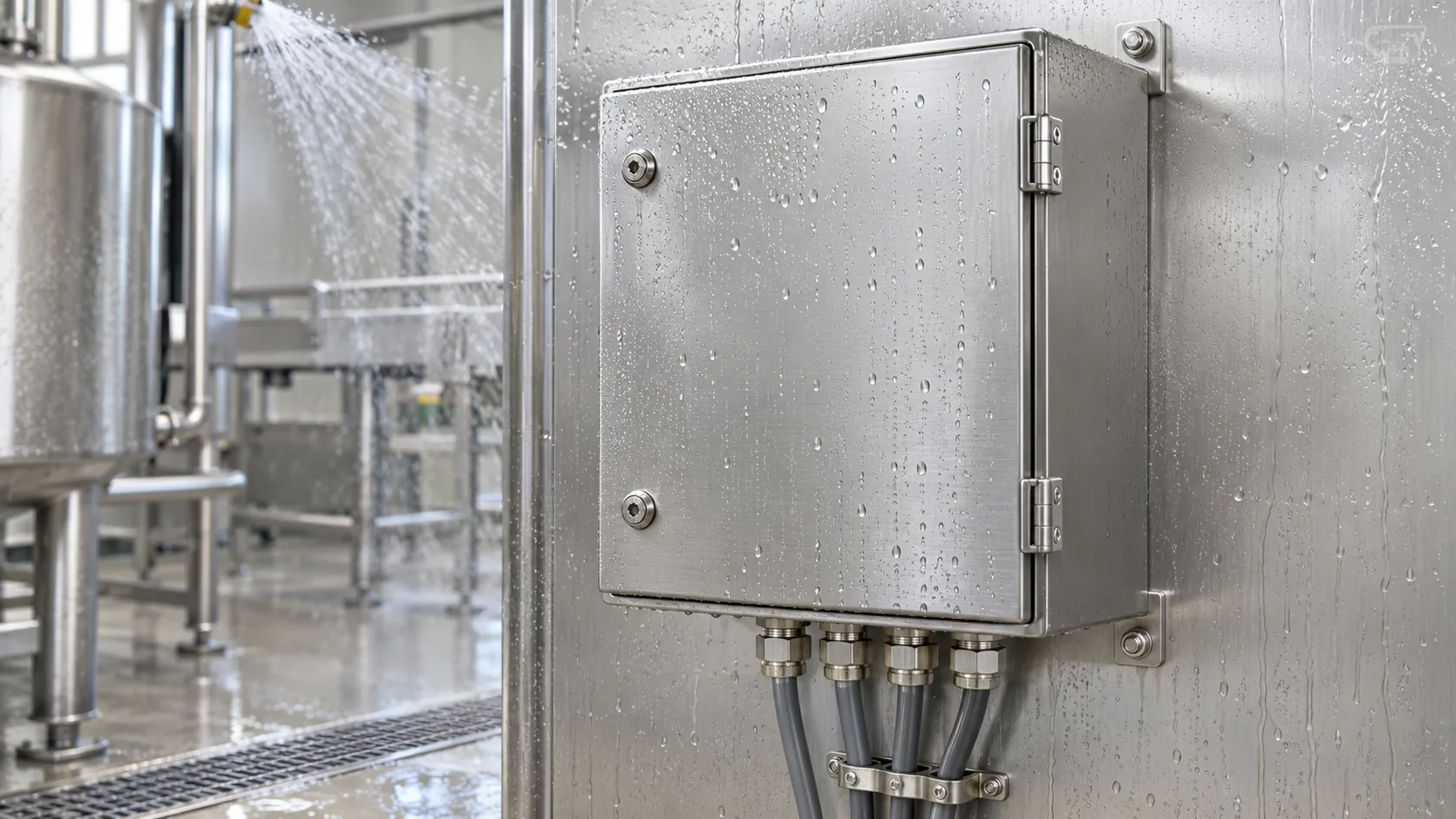
A stainless-steel enclosure RFQ sometimes arrives with only two words in the material line: “316 stainless.” That may be a sensible starting point, but it is not yet an enclosure specification. The material grade says something useful about the sheet; it does not say where salt or chemicals will collect, how the door seam drains, what happens after welding, or whether the installed cable entries keep water away from the electronics.
For custom enclosures, I treat 304 versus 316 as an exposure-and-design decision, not a prestige contest. Both grades are widely used austenitic stainless steels. Grade 316 contains molybdenum, which gives it better resistance to chloride-related pitting and crevice corrosion than 304. That advantage matters in the right service conditions, but it can be wasted by a poor joint, a contaminated weld, standing water, or hardware that is less suitable than the shell.
The most reliable purchase decision comes from putting the metal grade back into the complete job: environment, shape, fabrication, sealing, installation, cleaning, and cost. That is where an enclosure succeeds or fails.
What the Grade Tells You—and What It Does Not
The useful difference
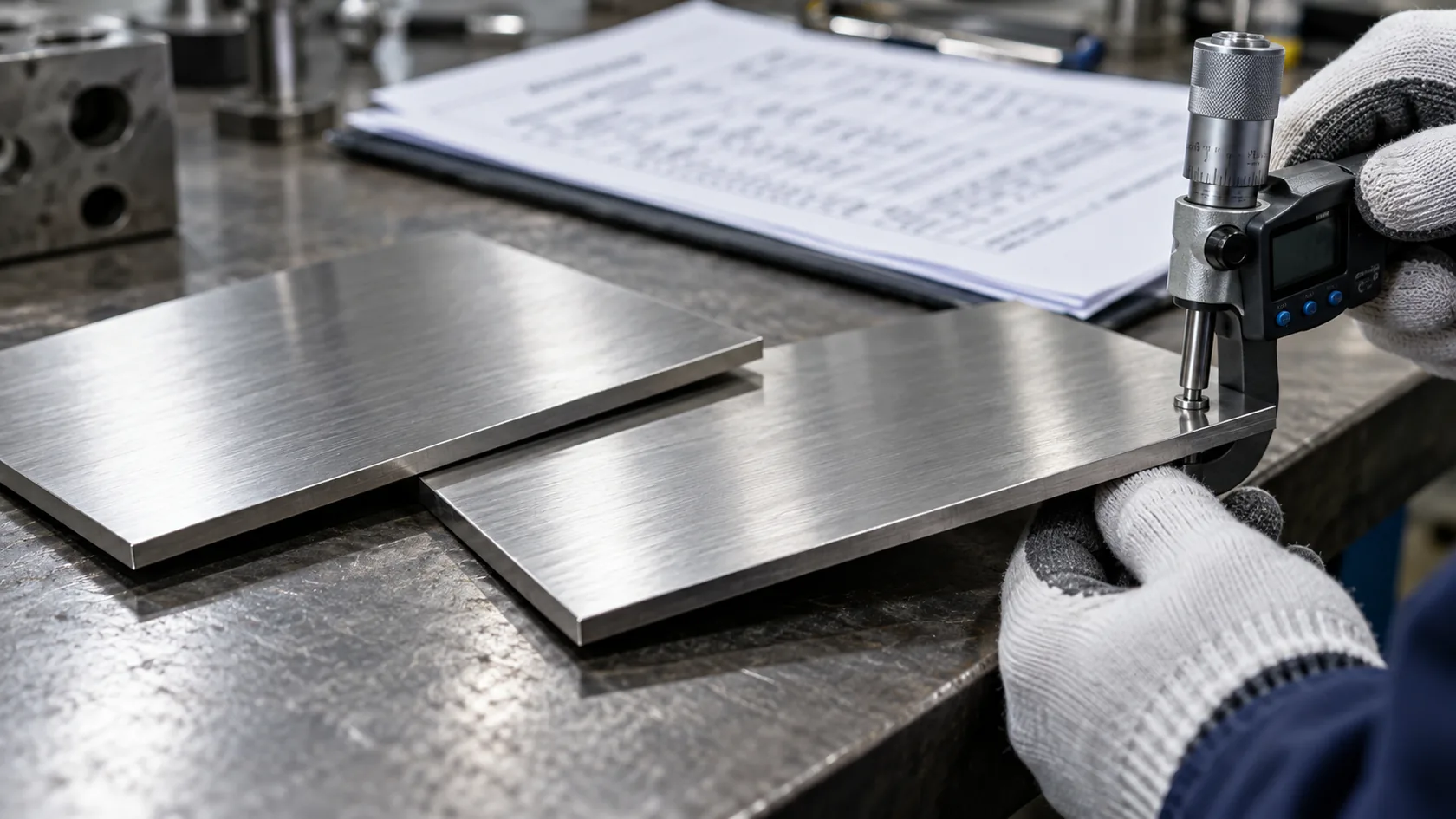
For many clean indoor electrical and electronic applications, 304 is a practical and economical stainless choice. Where chloride-bearing deposits, coastal air, some washdown chemicals, or more demanding process conditions are credible, 316 or 316L may provide an important additional margin. The British Stainless Steel Association’s crevice-corrosion guidance notes the beneficial effect of molybdenum and ranks 316 above 304 for resistance to this localized attack.
That is not a promise that 316 cannot corrode. Pitting and crevice corrosion are local failures. A cabinet can look fine across most of its door and still start to stain or pit beneath a gasket edge, washer, deposit, or uncleaned horizontal lip.
| Grade question | What it helps answer | What it cannot answer alone |
|---|---|---|
| 304 or 304L | Is a general-purpose stainless option suitable for a low-corrosion exposure? | Whether the installed enclosure traps deposits or water |
| 316 or 316L | Is added localized-corrosion resistance justified by the exposure? | Whether chloride concentration, temperature, or chemical cleaning exceeds its limits |
| L grade for welded work | Is lower-carbon material appropriate to the proposed welding route? | Whether weld heat tint and contamination will be properly removed |
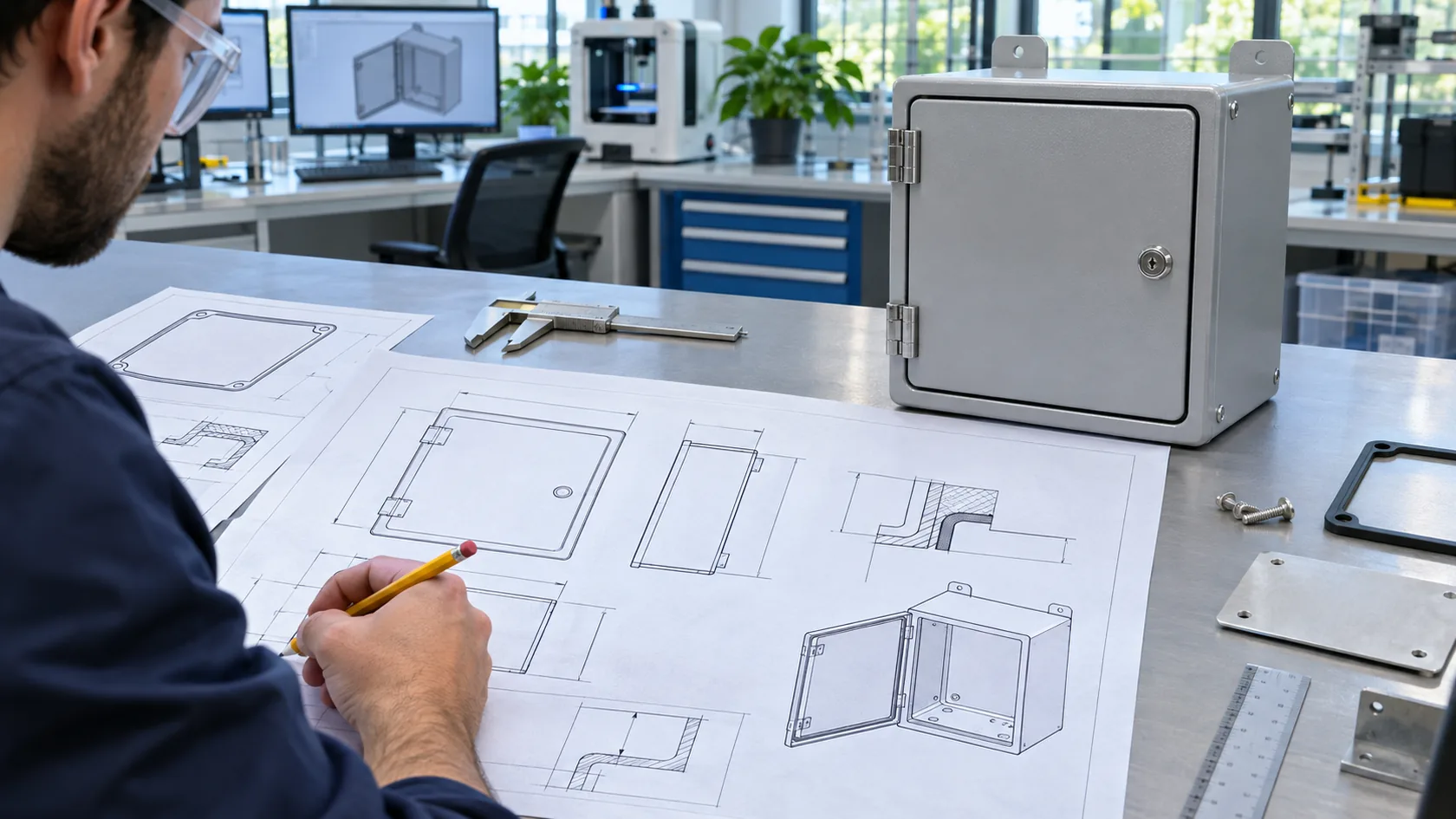
When I review a drawing, the grade comes after the site description, not before it. That order keeps an expensive word on the purchase order from becoming a substitute for engineering.
Start With the Actual Exposure
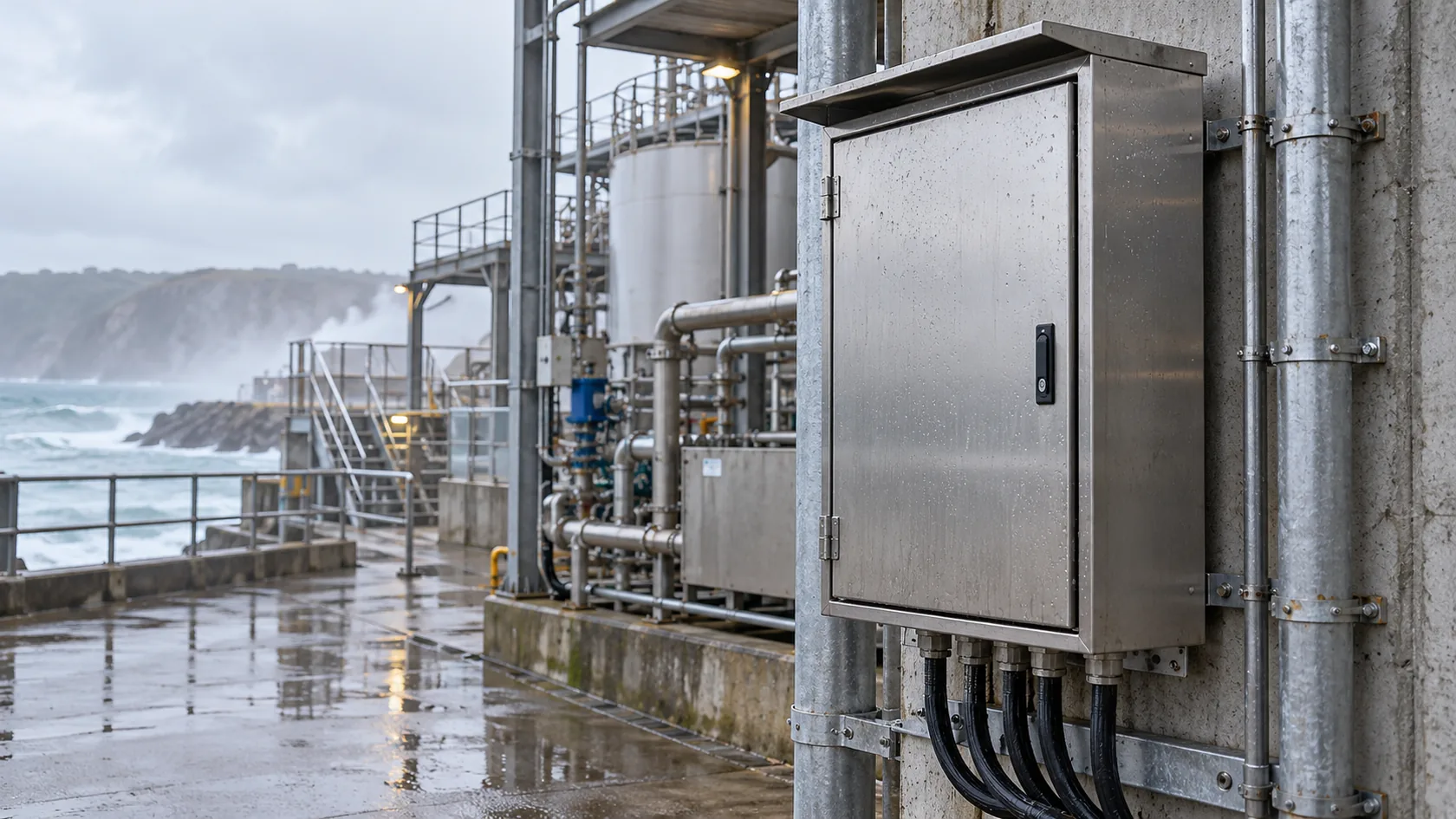
“Outdoor” is not a corrosion category
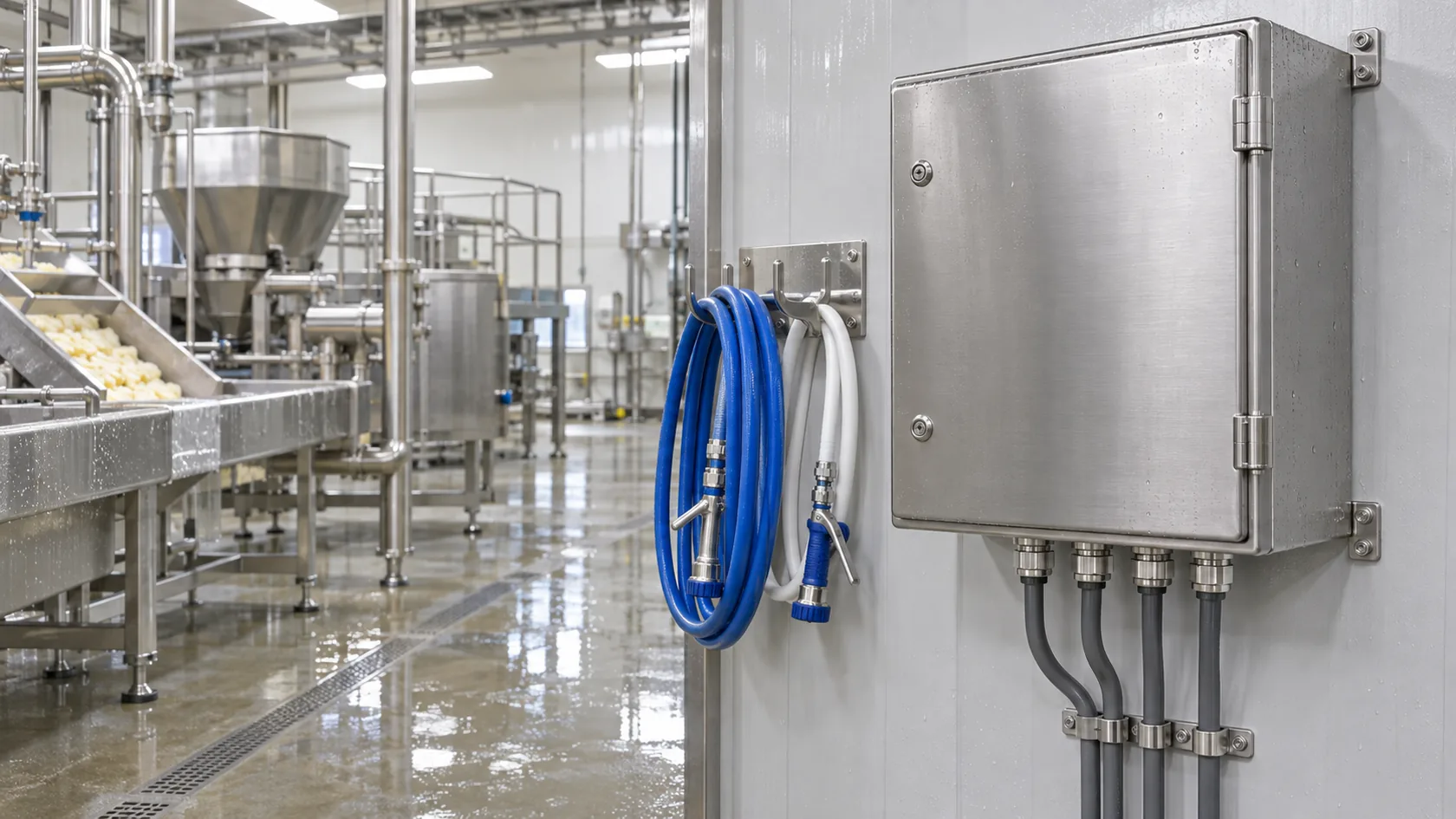
An enclosure under a clean inland canopy has a different risk from one beside a road treated with de-icing salt, near a coast, at a wastewater facility, or in a food plant with repeated chemical washdown. Ask what lands on the surface, how long it stays wet, whether rain can wash it, how hot the metal becomes, and how regularly it will be cleaned.
Chloride level, temperature, oxygen availability, water chemistry, and crevice geometry interact. As a broad water-service guide, the Nickel Institute reports that 304 is commonly considered for lower chloride levels than 316, while also cautioning that pitting and crevice attack can occur at lower levels when local conditions concentrate chlorides. Those figures should not be copied into an enclosure specification without considering the actual deposit, wet/dry cycling, and geometry.
I become cautious when an exposure description contains “coastal,” “chlorinated,” “washdown,” “road salt,” “chemical fumes,” or “not cleaned very often.” The first question is not automatically “Should we use 316?” It is “Where can the contaminant sit, and can the product be installed and maintained so it does not stay there?”
Do not use 316 as a seawater shortcut
316 is often a more defensible option than 304 around salt-bearing air, but it is not a universal seawater or severe-chloride solution. Hotter, more concentrated, stagnant, or tightly creviced exposures can call for a different alloy family and specialist review. A better grade is still limited by the service condition it actually sees.
Once the exposure is written clearly, the enclosure geometry becomes the next major control.
The Enclosure Design Can Defeat a Better Grade
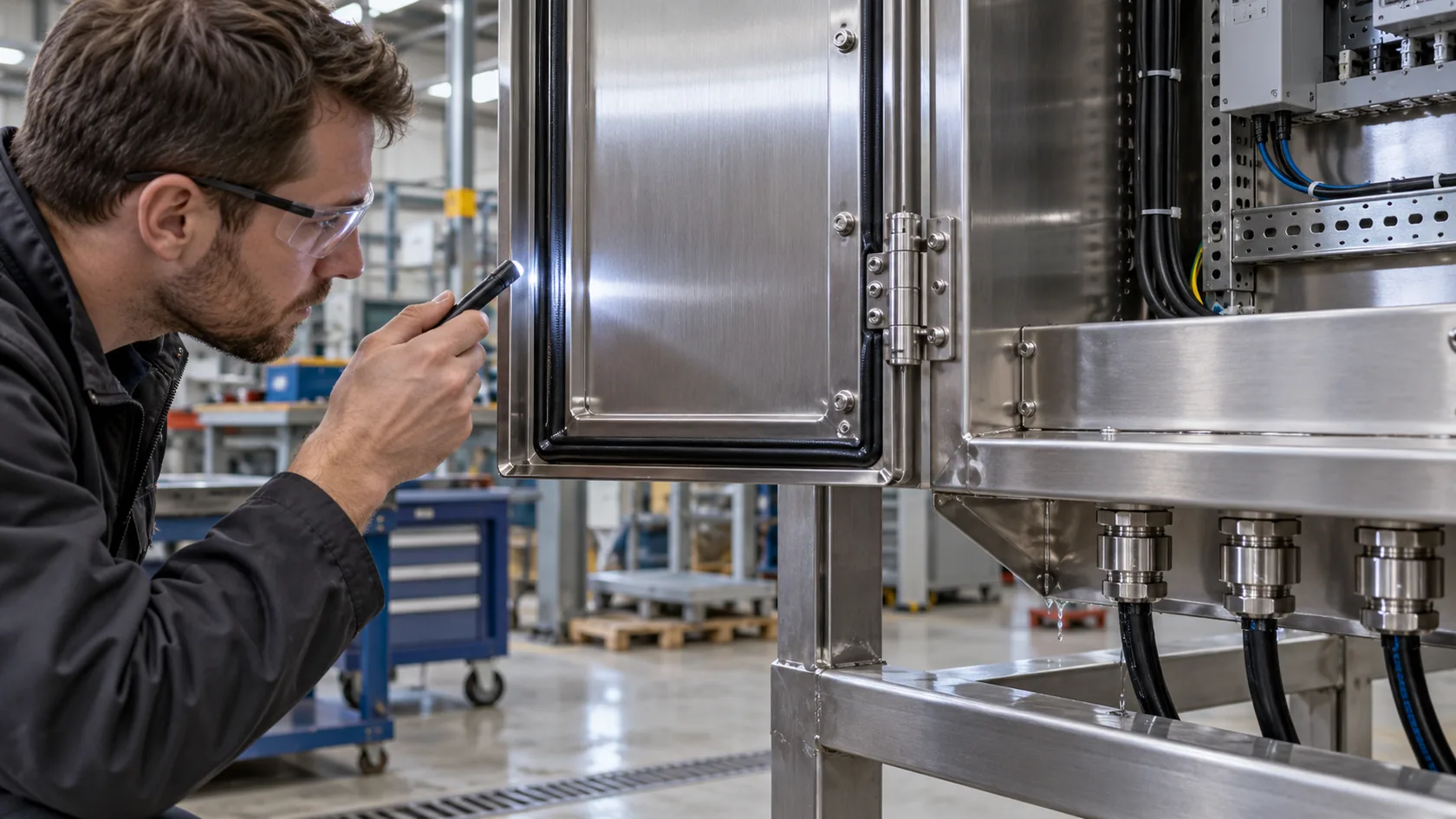
Look for places that hold water and deposits
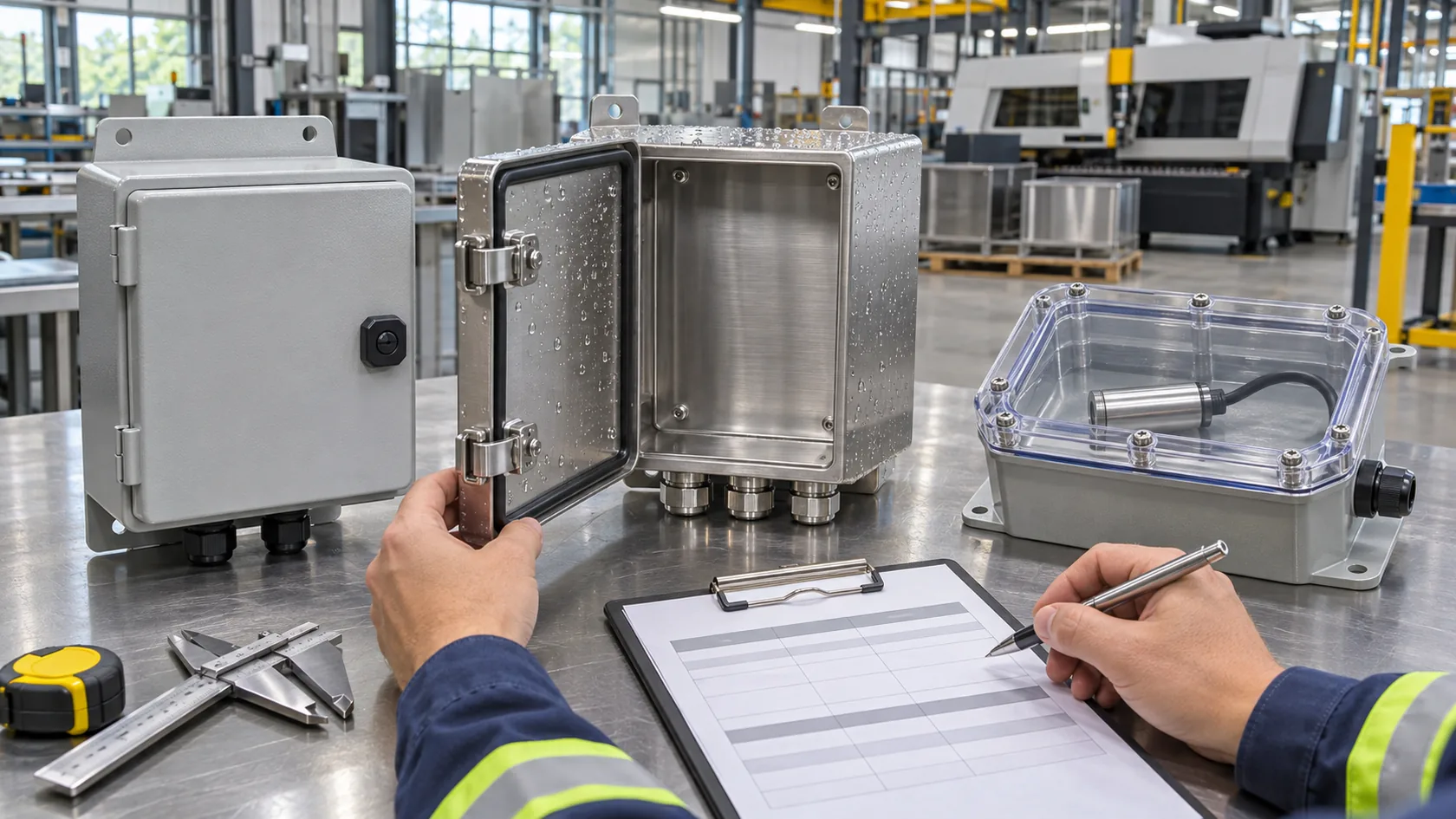
A stainless enclosure should give water and dirt fewer places to settle. Flat upward-facing roofs, deep horizontal ledges, unsealed overlaps, door seams, gasket edges, washer interfaces, and poorly positioned cable entries can form small corrosive environments even when the surrounding air looks harmless.
| Design detail | Risk if ignored | Better question for the drawing review |
|---|---|---|
| Door and lid seam | Crevice corrosion or water ingress at the joint | Does the gasket layout seal correctly and avoid a water trap? |
| Cable entry | Water can track into the enclosure or stand at the gland plate | Are entries oriented, sealed, and supported for the installed cable range? |
| Top surface | Salt and dirt deposits remain wet after rain | Can the roof shed water and be reached for cleaning? |
| Mounting and brackets | Dissimilar-metal contact or inaccessible gaps | Are isolation, drainage, and maintenance access considered? |
| Fasteners and hardware | A lower-resistance component can become the early failure point | Is the hardware specified for the same exposure as the shell? |
The International Molybdenum Association’s selection guidance makes a point I value in enclosure work: smoother finishes, drainage, fewer crevices, rain washing, and planned cleaning can change the material decision. I would rather improve a difficult seam on a 316 enclosure than rely on the grade name to rescue a bad seam later.
Sealing is an installed-system result
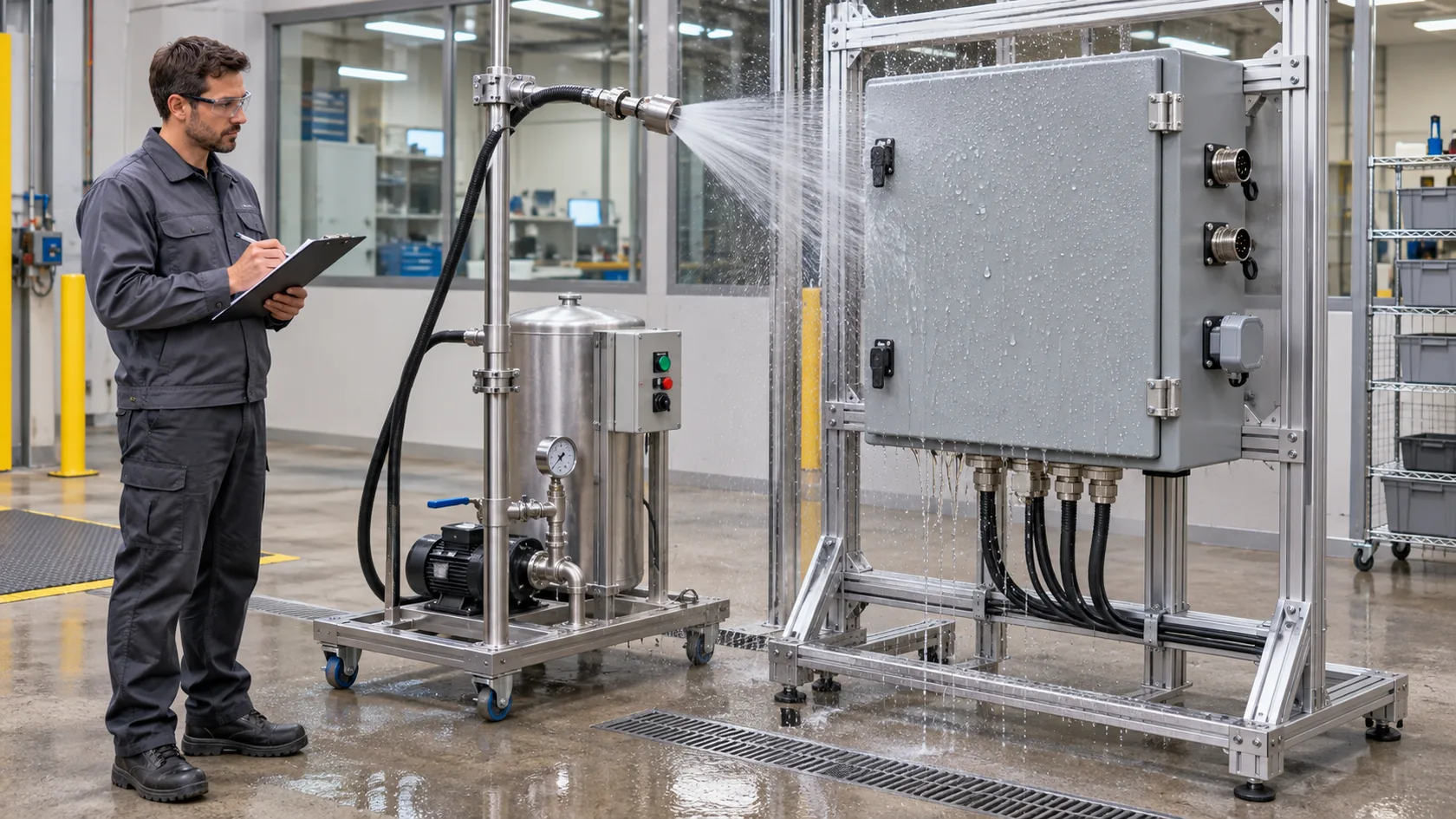
An IP or NEMA target is not created by the shell material. The gasket profile and compression, flange stiffness, hinge side, fastener spacing, cable glands, connectors, vents, mounting angle, and field assembly all influence the result. Increasing sealing can also reduce airflow and make condensation more likely, so the thermal path and drainage deserve the same attention as the grade.
Good design leaves fabrication with fewer hidden corrosion sites to manage.
Fabrication and Finish Are Part of Corrosion Control
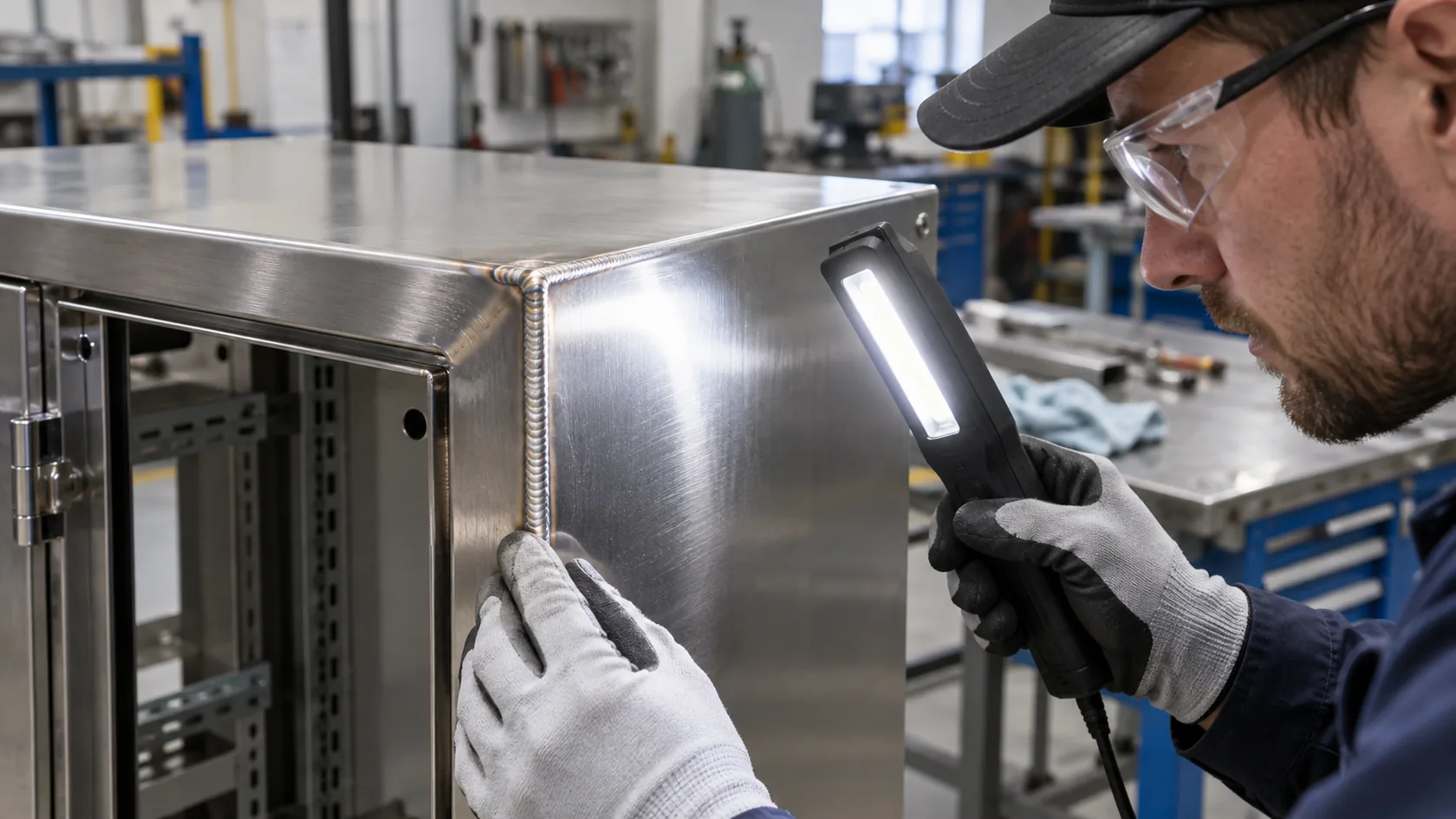
A stainless surface can be damaged during manufacture
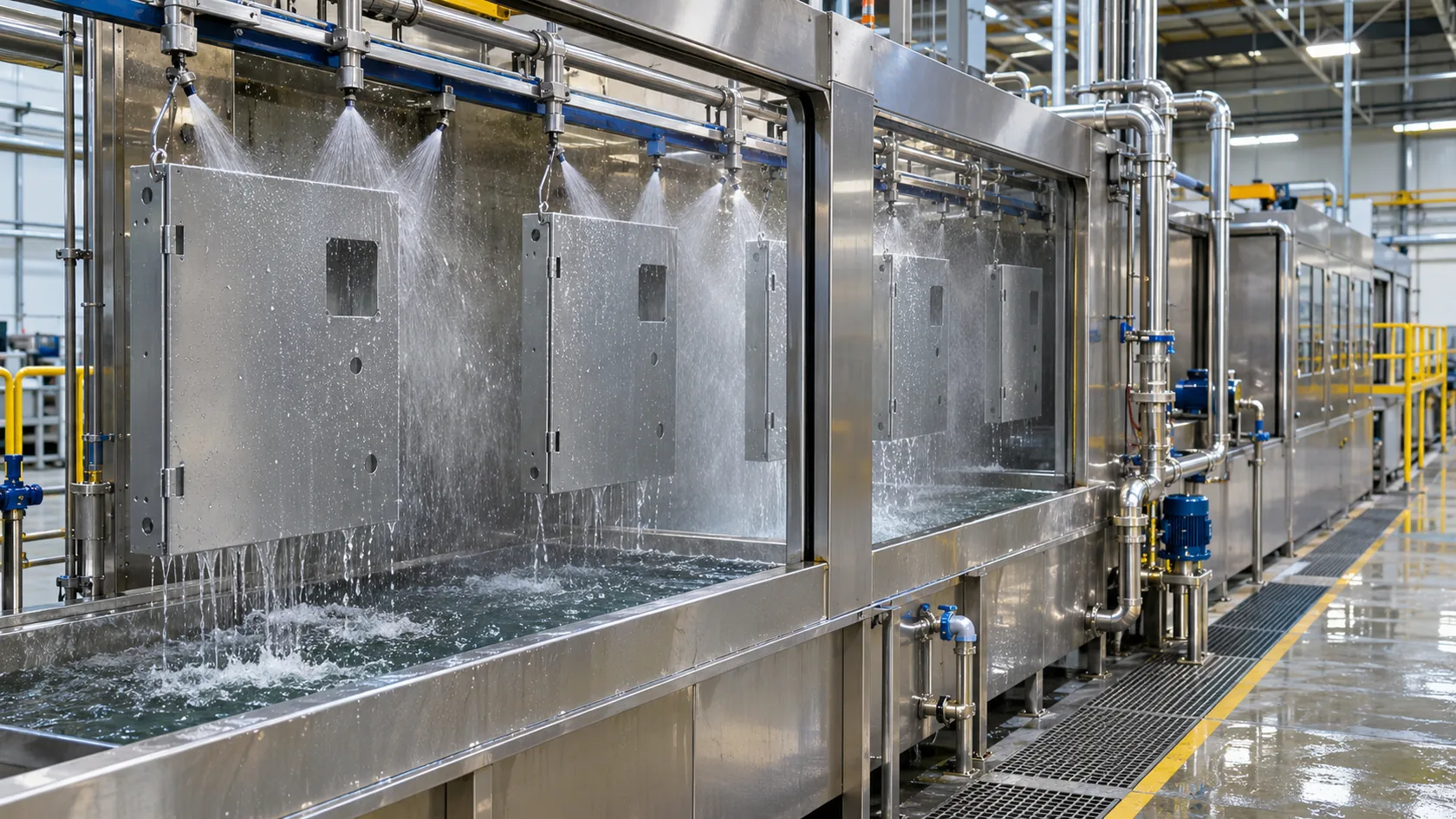
Cutting, forming, welding, grinding, carbon-steel transfer, shop dirt, heat tint, and rough finishing can all affect the surface condition. For welded assemblies, specify the grade and filler appropriately, then define what happens after welding: cleanup, removal of heat tint where required, surface finish, passivation or other validated treatment if appropriate, and inspection criteria.
The British Stainless Steel Association’s corrosion overview also warns that chloride-rich environments and residual stress deserve care. In practical terms, I do not approve a stainless enclosure merely because its material certificate says 316L. I also want to see the weld condition, the corners, the formed edges, and the surfaces that will face outward in service.
Define the finish and cleanliness level
“Brushed stainless” is mainly an appearance instruction unless the drawing also states the relevant surface finish, direction, weld treatment, and acceptance standard. A rougher or damaged surface can hold deposits more readily than a smooth, clean one. If cleaning chemicals, food contact, pharmaceutical service, or a visible architectural finish matter, say so before the sample stage.
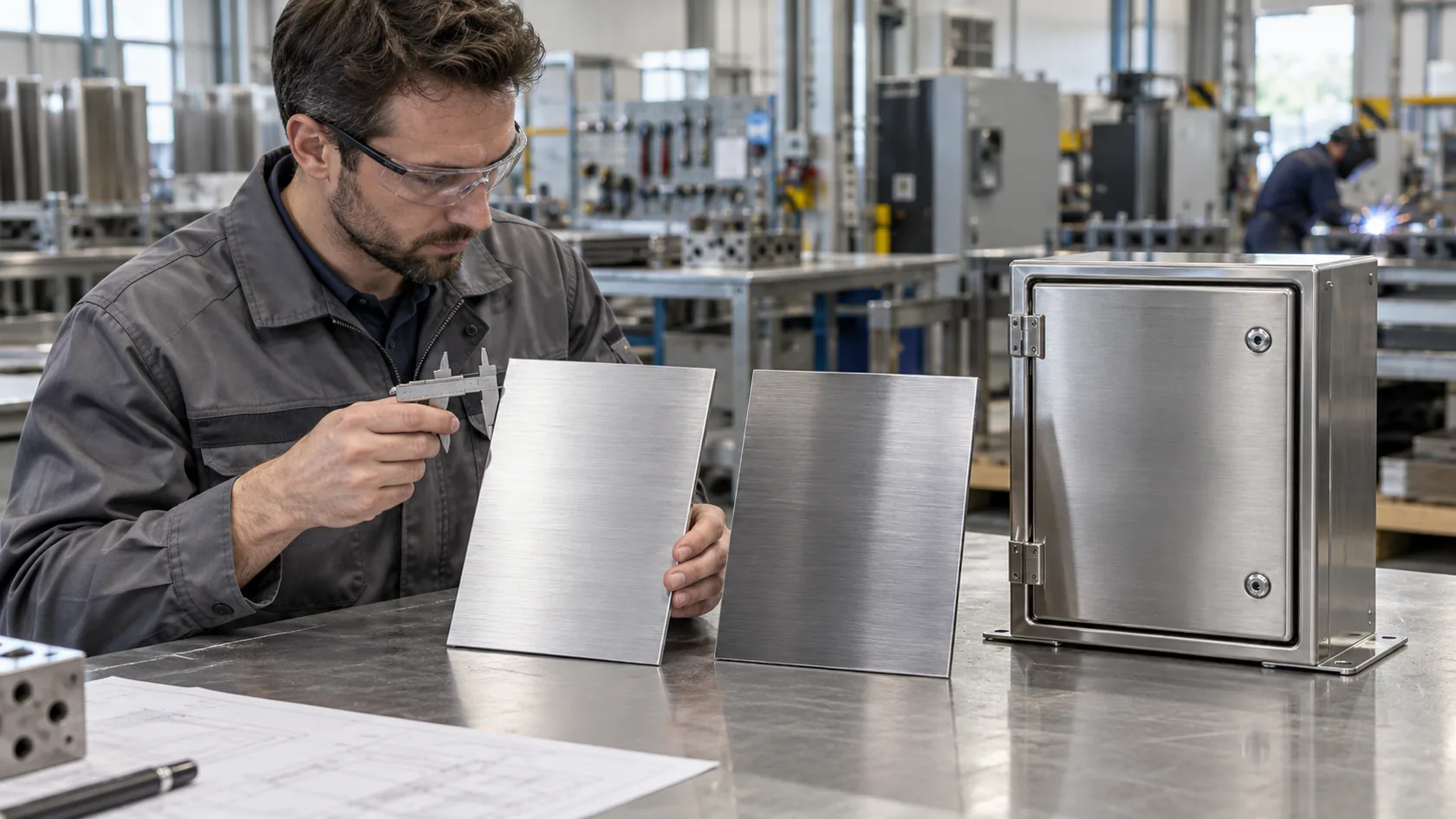
This is also why a representative finished sample is more useful than a loose coupon. It shows the actual welds, bends, seams, and hardware—the details a material data sheet cannot see.
Compare Cost as a Project Risk, Not a Sheet Price
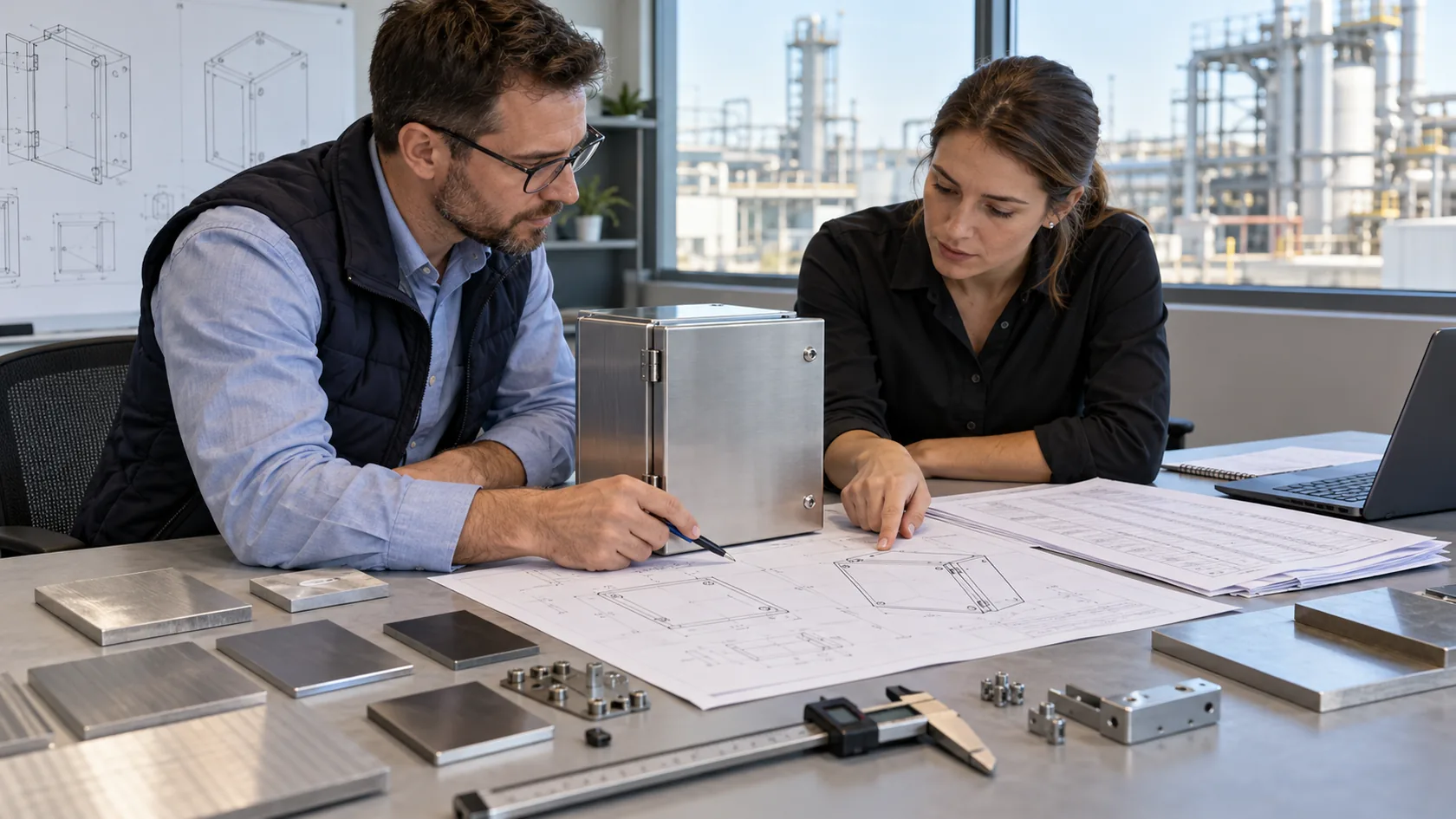
The price premium for 316 material can be real, particularly when it affects sheet, hardware, welding, finishing, lead time, and inventory. But the cheapest grade is not necessarily the lowest-cost enclosure if field staining, corrosion claims, cosmetic rejection, or redesign are plausible.
| Project situation | Often reasonable starting point | What to confirm before purchase |
|---|---|---|
| Clean indoor control equipment | 304 or 304L | Humidity, cleaning agents, weld requirements, and any trapped moisture |
| Sheltered outdoor inland equipment | 304 or 316 depending on deposition and maintenance | Orientation, rain washing, surface drainage, and local pollution |
| Coastal, de-icing-salt, or frequent washdown exposure | 316 or 316L may be justified | Chloride source, temperature, cleaning chemistry, crevices, and maintenance plan |
| Severe chloride or hot stagnant chemical exposure | Specialist material selection beyond a simple 304/316 choice | Actual medium, concentration, temperature, stress, test basis, and alternate alloys |
My factory-side view is simple: budget the material decision together with the enclosure details that protect it. Paying for 316 while accepting a water-holding roof, untreated weld discoloration, and unspecified hardware is a poor trade. Paying for a better grade where the exposure truly needs it can be much cheaper than a field replacement.
The cost comparison becomes credible only after the design and service assumptions are made visible in the RFQ.
A Better RFQ and Review Checklist
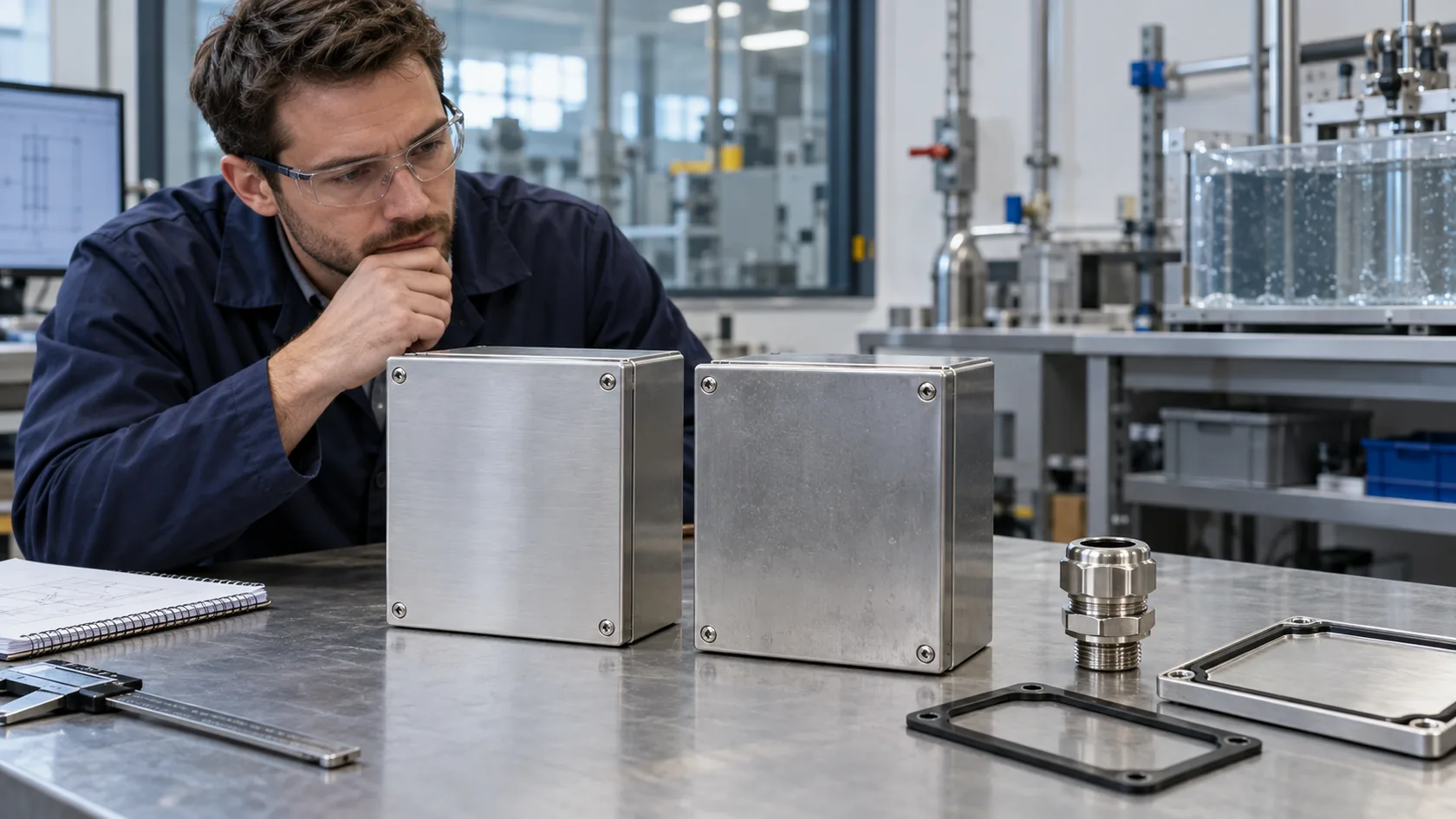
Before selecting 304, 316, 304L, or 316L for a custom enclosure, include these points in the design review:
- Describe the installed location: indoor, sheltered outdoor, coastal, roadside, washdown, chemical process, or another specific condition.
- Identify contaminants: salt spray, de-icing salt, chlorides, cleaners, process liquids, dust, or fumes.
- Show where water enters, drains, evaporates, or pools, including roof shape, seams, glands, connectors, and mounting.
- State the required enclosure performance as an installed assembly, including the intended test method and configuration when an IP or NEMA target applies.
- Specify material form and grade, wall thickness, finish, grain direction where cosmetic, welding requirements, and post-weld cleanup.
- Include hardware, hinges, latches, fasteners, brackets, cable glands, and dissimilar-metal interfaces in the corrosion review.
- Define the cleaning method, chemicals, expected access, and reasonable maintenance interval.
- Ask for a representative sample or validation plan when the exposure is consequential.
This checklist is not paperwork for its own sake. It tells the factory which trade-offs are intentional. If the final installation differs from the drawing, I would revisit the grade decision before production instead of assuming the original material callout still covers the new risk.
Conclusion
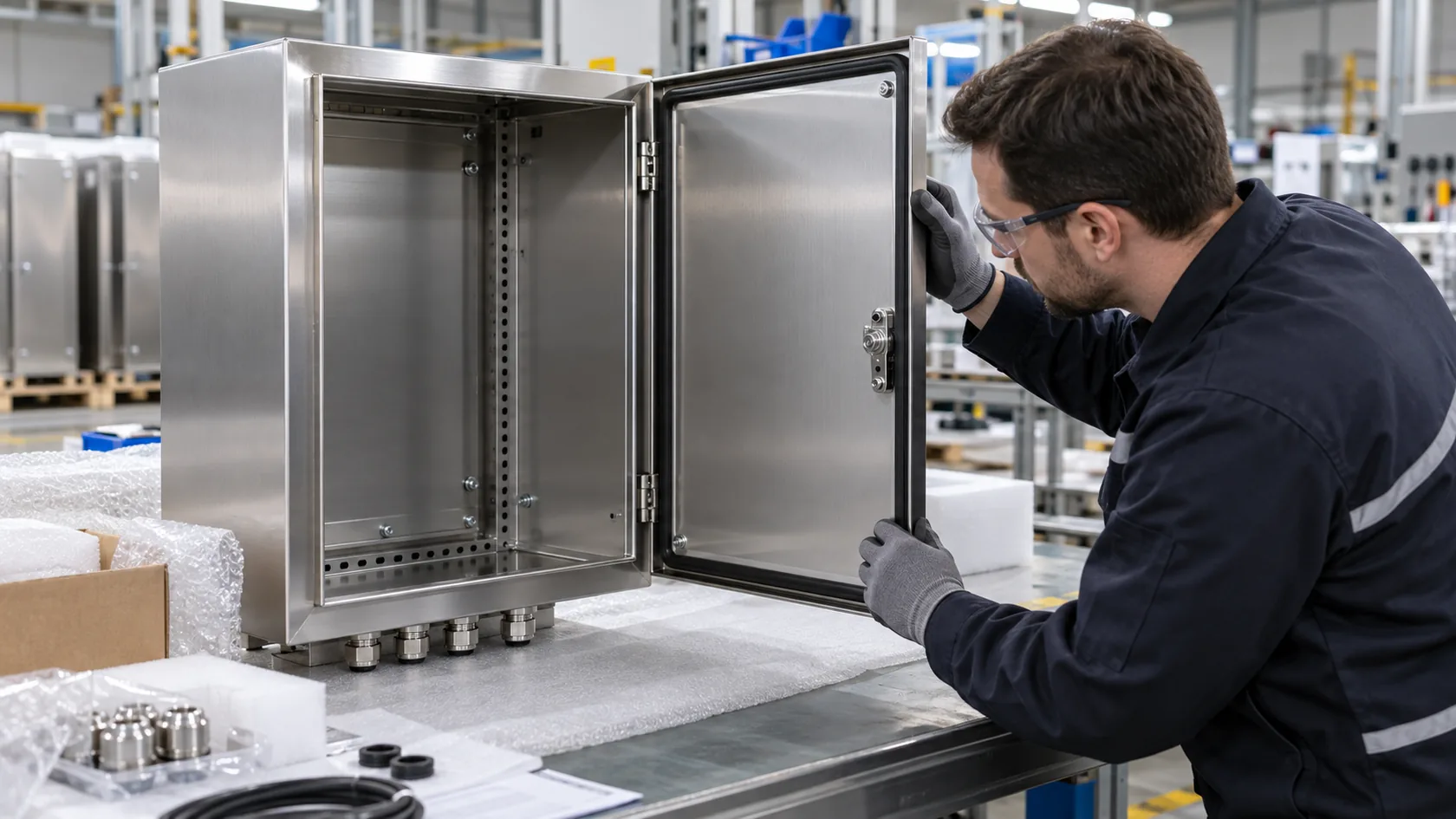
From my experience making custom enclosures, 304 and 316 are both good materials when their service conditions are respected. 316’s better resistance to chloride-related localized corrosion is valuable, but a grade alone cannot correct trapped deposits, poor drainage, unsuitable hardware, contaminated welds, or a sealing layout that holds water. In less demanding indoor work, 304 can be the sensible choice; in harsher exposures, 316 may be worth the cost; and in severe conditions, the decision may need to go beyond either grade.
The practical next step is to review the enclosure drawing with the real location, cleaning process, cable-entry plan, weld and finish requirements, and maintenance access beside it. That gives a supplier enough information to recommend a material choice that belongs to the finished product—not just to the first line of the BOM.