Skip to content
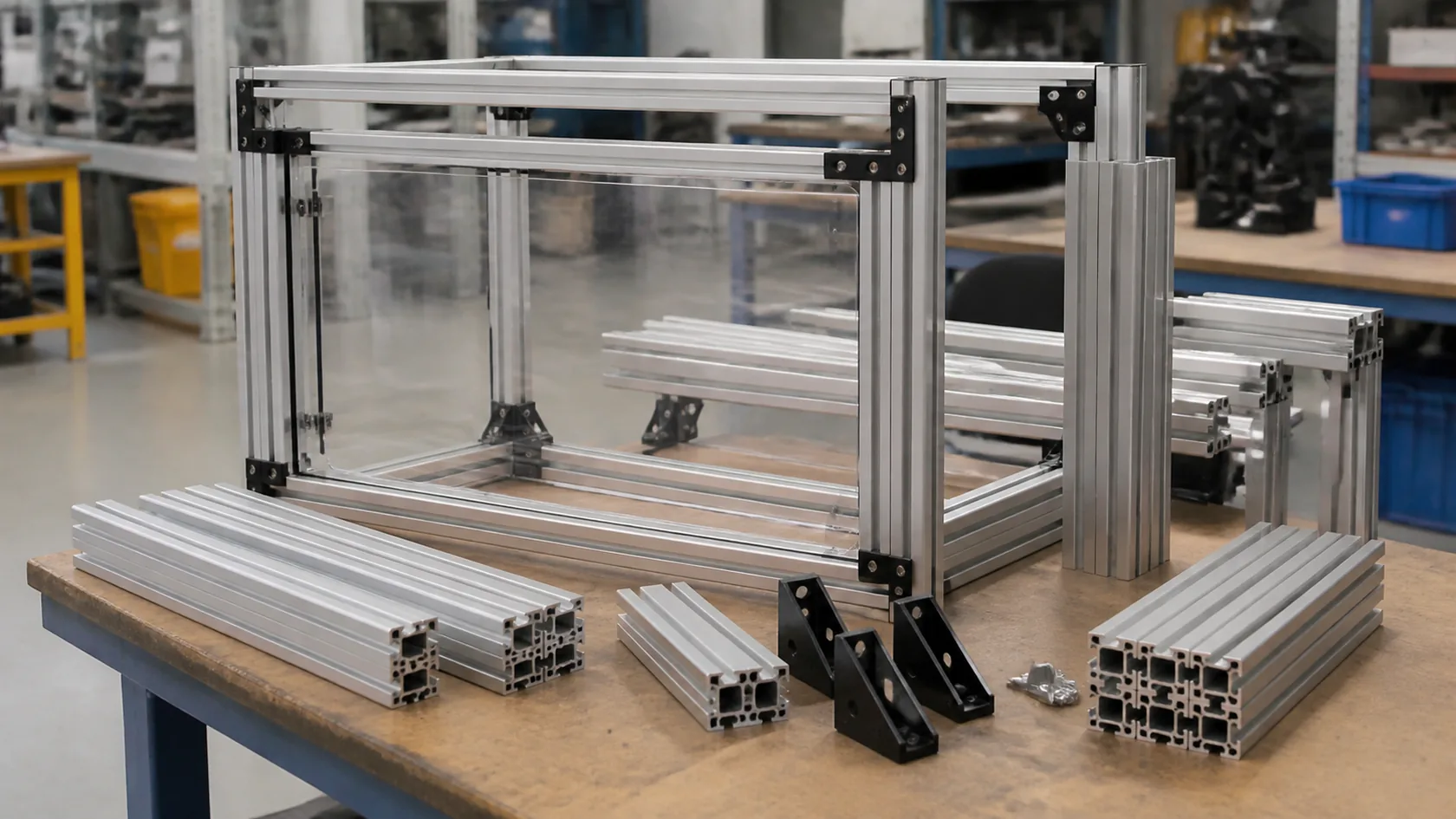
On an assembly bench, the useful thing about a T-slot frame is not the shiny aluminum. It is the moment when a technician can move a sensor bracket 30 mm, add a panel, or change a cable route without drilling the frame again. That is why this material appears around machines, workstations, test fixtures, and equipment enclosures.
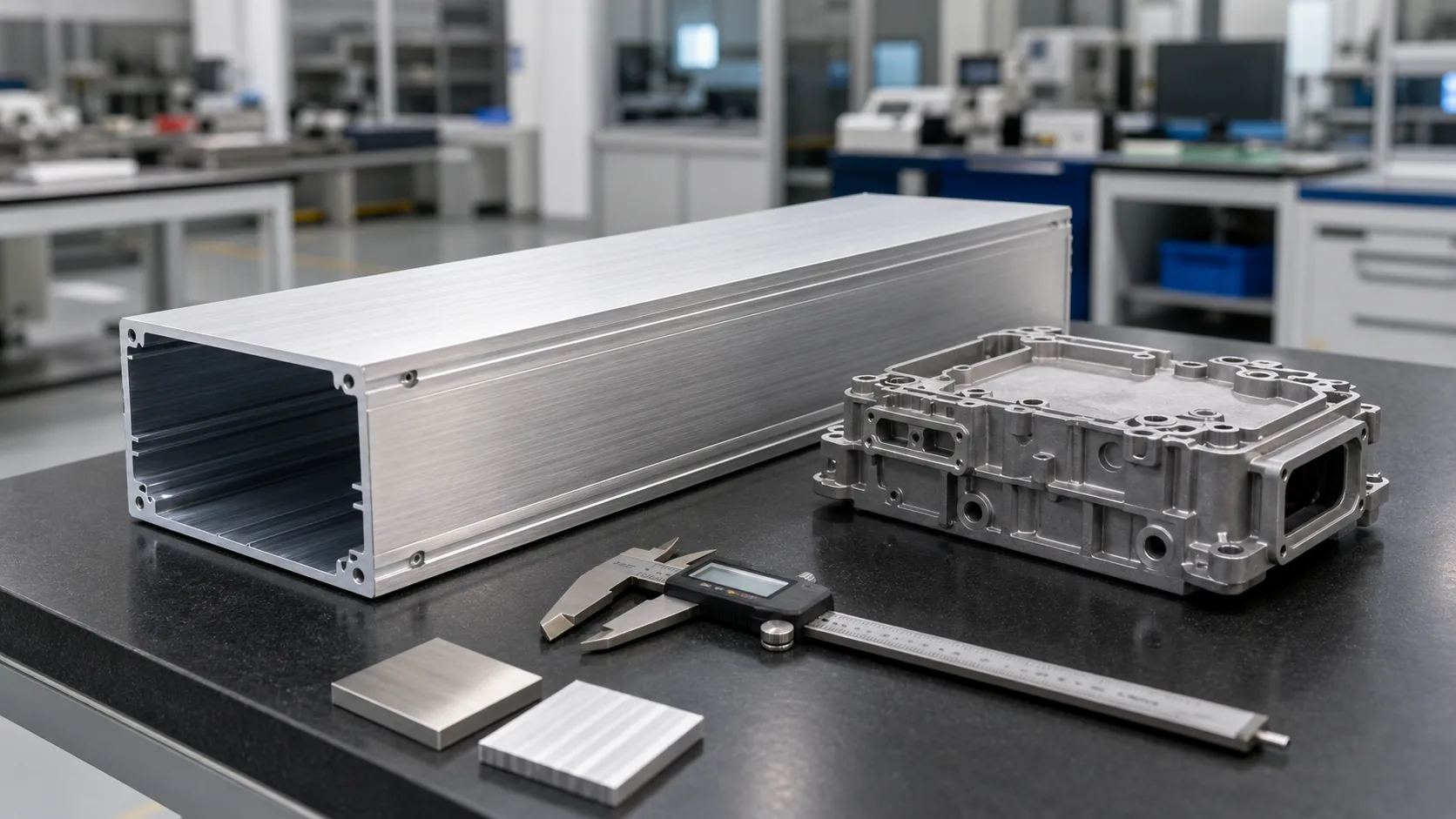
T-slot aluminum extrusion is an aluminum profile with long, undercut channels running along its length. The channels accept matching T-nuts, bolts, brackets, panels, and accessories, so separate pieces can be joined into an adjustable structural frame. Hydro describes the slots as a way to position fasteners, panels, and accessories.
The term does not identify one universal size, alloy, strength, or hardware standard. I treat “T-slot” as the name of a fastening-and-framing system, then check the exact profile drawing before we price or build anything. That small habit prevents many costly surprises later. Let’s start with what the profile actually is.
What T-Slot Aluminum Extrusion Means
The profile and the slot
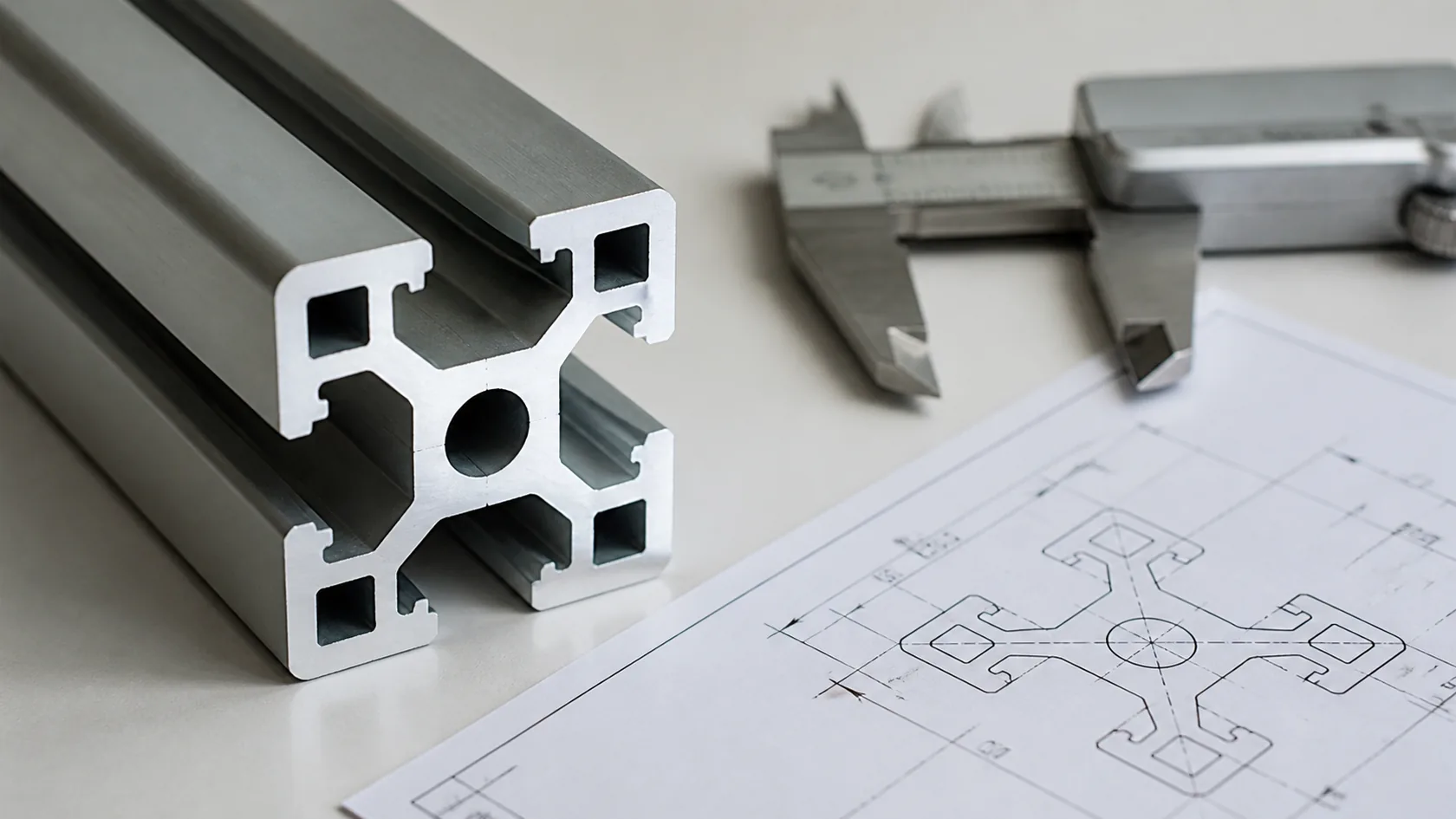
The cross-section usually looks square or rectangular, with one or more grooves on its outer faces. Each groove has a narrow opening and a wider space behind it. A T-nut fits in that wider space. When a bolt tightens a bracket against the profile, the nut grips the internal faces of the slot.
This geometry gives the profile its name. It is not a simple aluminum bar that happens to have a groove. It is a continuous mounting interface. You can attach a door hinge today, loosen it tomorrow, and shift it without changing the basic frame.
At MaidaTech, I look closely at the slot opening, nut style, and wall around the slot before I call two profiles interchangeable. A 40 × 40 mm profile may look familiar, but a mismatched nut can stop assembly completely. The next point is how that complex shape becomes a long, usable part.
How extrusion creates the shape
Aluminum extrusion starts with a heated billet pushed through a shaped die. The die creates the profile’s cross-section continuously along the length. After cooling, stretching, cutting, and often anodizing, the profile can be machined for end taps, access holes, counterbores, or special joints.
Extrusion makes it practical to put ribs, hollow areas, and several fastening slots into one piece. That is why a T-slot profile can be stiff for its weight while still offering mounting faces. It also means straightness, twist, flatness, and slot dimensions are manufacturing requirements, not decorative details. The Aluminum Association’s tolerance guidance is useful context when a project needs more than normal commercial limits.
In our quotation review, I separate “looks straight” from a stated tolerance requirement, especially for long sliding doors, joined panels, and accurate fixtures. Once the profile is understood, the assembly method makes its value much clearer.
How a T-Slot Frame Goes Together
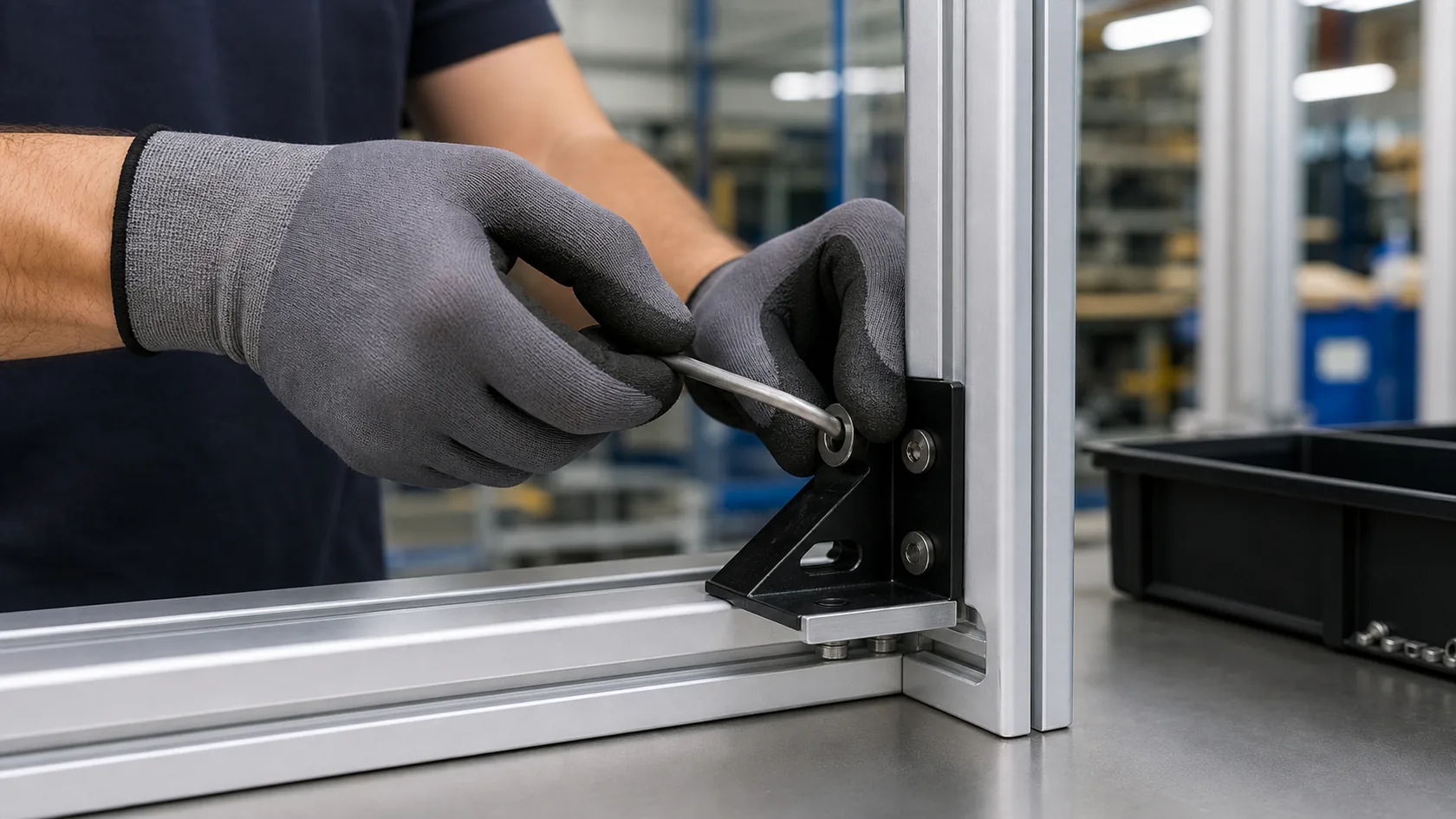
T-nuts, bolts, brackets, and internal connectors
The basic connection is simple: insert a T-nut, place a bracket or accessory, and tighten a bolt. There are also hidden internal connectors, end fasteners, joining plates, gussets, feet, handles, hinges, cable clips, and panel-retention parts. Each system has its own rules for thread size, slot width, connector clearance, and machining.
External brackets are easy to inspect and adjust. Internal connectors create a cleaner exterior but can require end drilling or access holes. Neither is automatically better. The right choice depends on load, appearance, assembly access, and whether the frame may change later.
I normally choose the simplest joint that can carry the real load and still be assembled reliably by the customer or installer. A beautiful hidden joint is a poor choice if a field technician cannot reach the bolt after a panel is fitted. That leads directly to the key advantage of this system.
Why adjustment is the system’s main advantage
T-slot frames are modular. A shelf can move. A safety panel can be removed. A sensor can slide into position. A prototype can become a production aid without remaking every structural member. This adaptability is often more valuable than the raw material cost of the profile.
It also reduces the penalty for late changes. In a welded frame, a new bracket may mean cutting, welding, cleaning, and repainting. In a T-slot frame, it may mean adding hardware and moving a nut. That does not make the frame maintenance-free; bolts still need correct torque and critical joints need inspection.
From the factory side, I see the biggest savings when the customer identifies likely adjustment points early, rather than treating every face as fixed. With that in mind, here are the jobs where T-slot framing earns its place.
Where T-Slot Framing Works Well
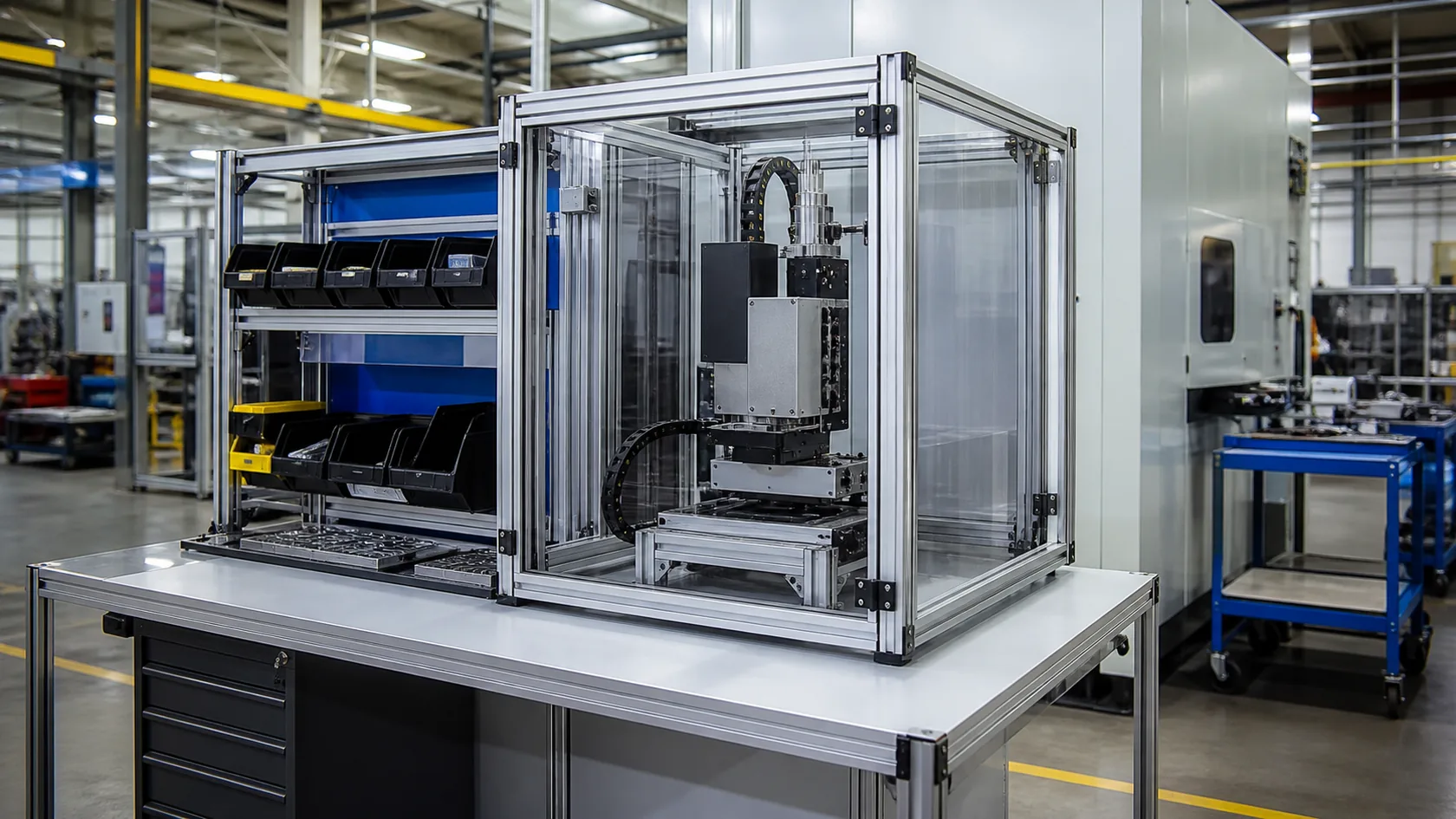
Machine guarding, workstations, and fixtures
T-slot framing is widely used for machine guards, workbenches, inspection stations, parts racks, light automation cells, material-handling aids, and test fixtures. A profile accepts clear polycarbonate, sheet panels, mesh, doors, lighting, and accessories without turning the frame into a custom welding project.
The TSLOTS product library shows how broad the accessory and application ecosystem can be. That ecosystem matters because the profile is only part of the system. A frame becomes useful when compatible fasteners, feet, door hardware, panel parts, and cable management are available.
For a machine guard, I judge the door loads and panel retention before selecting the most convenient-looking profile. A lightweight frame can be fine for a fixed screen but not for a tall, frequently opened door that will twist at the hinges. The same thinking applies when the frame meets an enclosure.
Equipment supports and enclosure integration
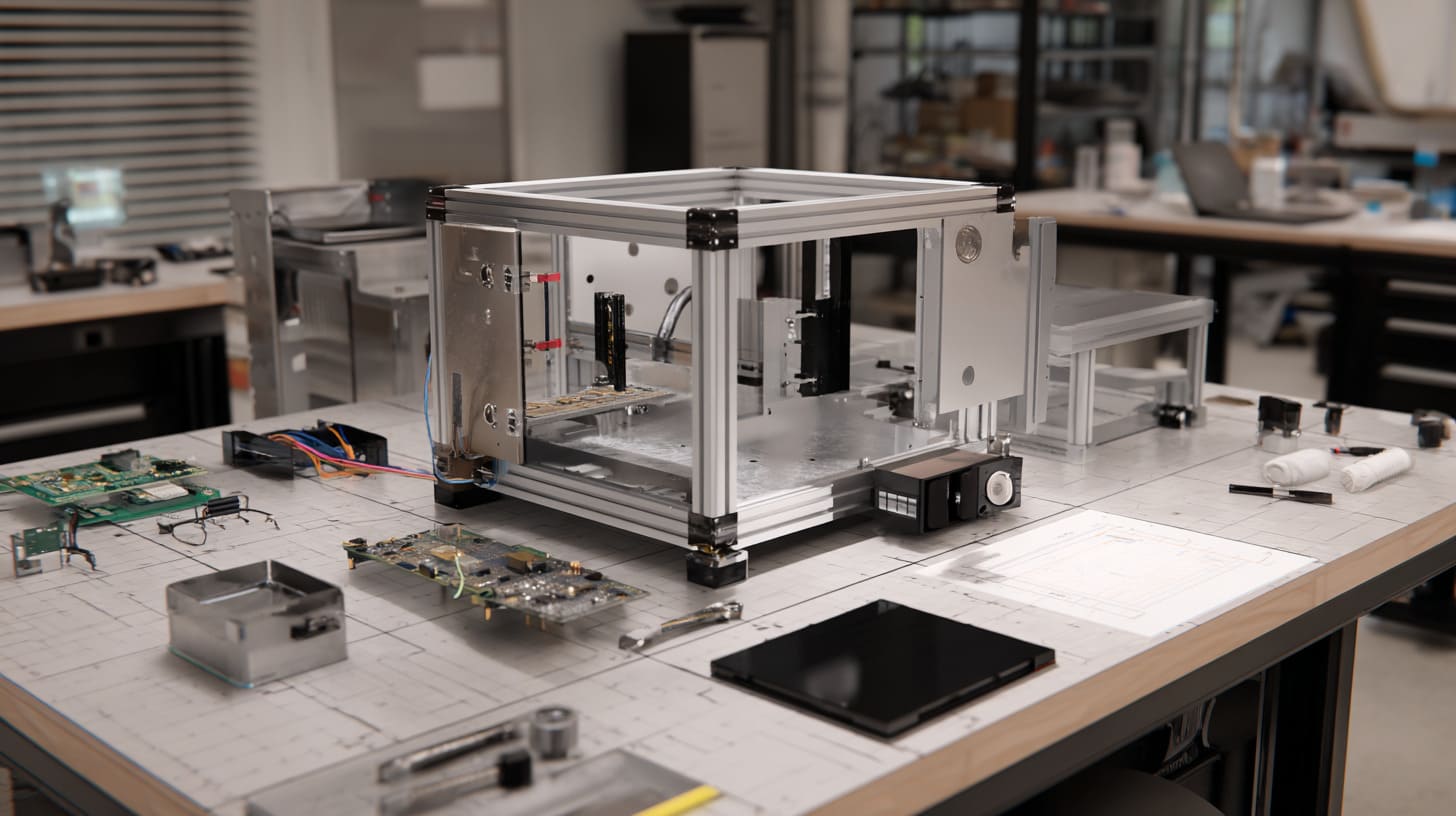
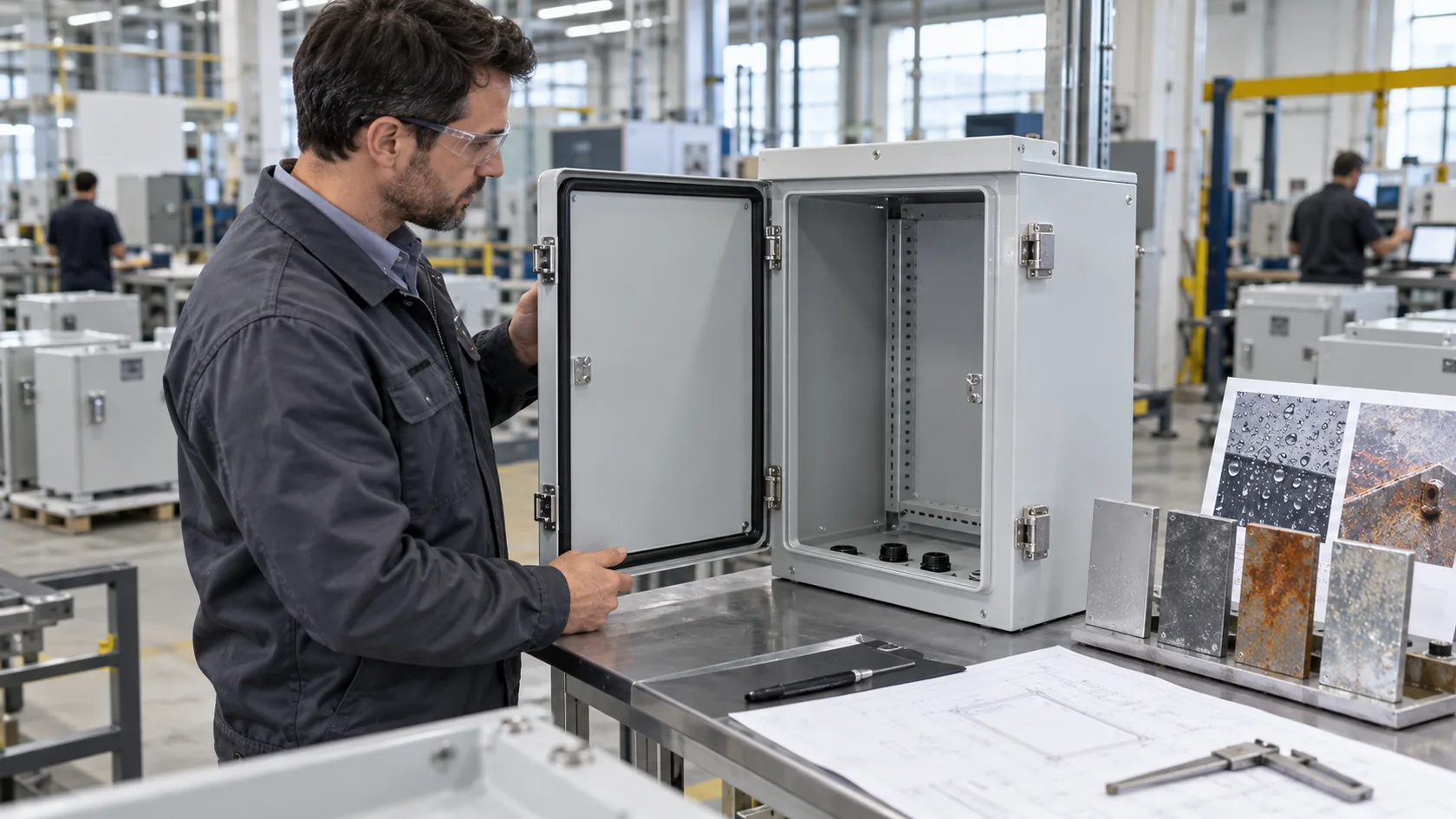
Many projects combine T-slot framing with a custom aluminum or sheet-metal enclosure. The frame may hold the machine guard, display, control box, cable tray, or mounting plate. The enclosure protects electronics; the frame provides an adjustable structure around it.
This combination is practical when access, cable routing, and future upgrades matter. We can design an enclosure with mounting flanges or brackets that match the selected profile system, then keep removable panels and service space where technicians need them. It avoids forcing one fabricated housing to solve every structural job.
When we integrate an enclosure with a frame, I check service clearances and fastening locations before the enclosure drawing is released. A neat CAD model can still fail in the field if a cover cannot open past a post or a cable gland faces a rail. The next job is selecting the profile itself.
Choosing Profile Size and Series
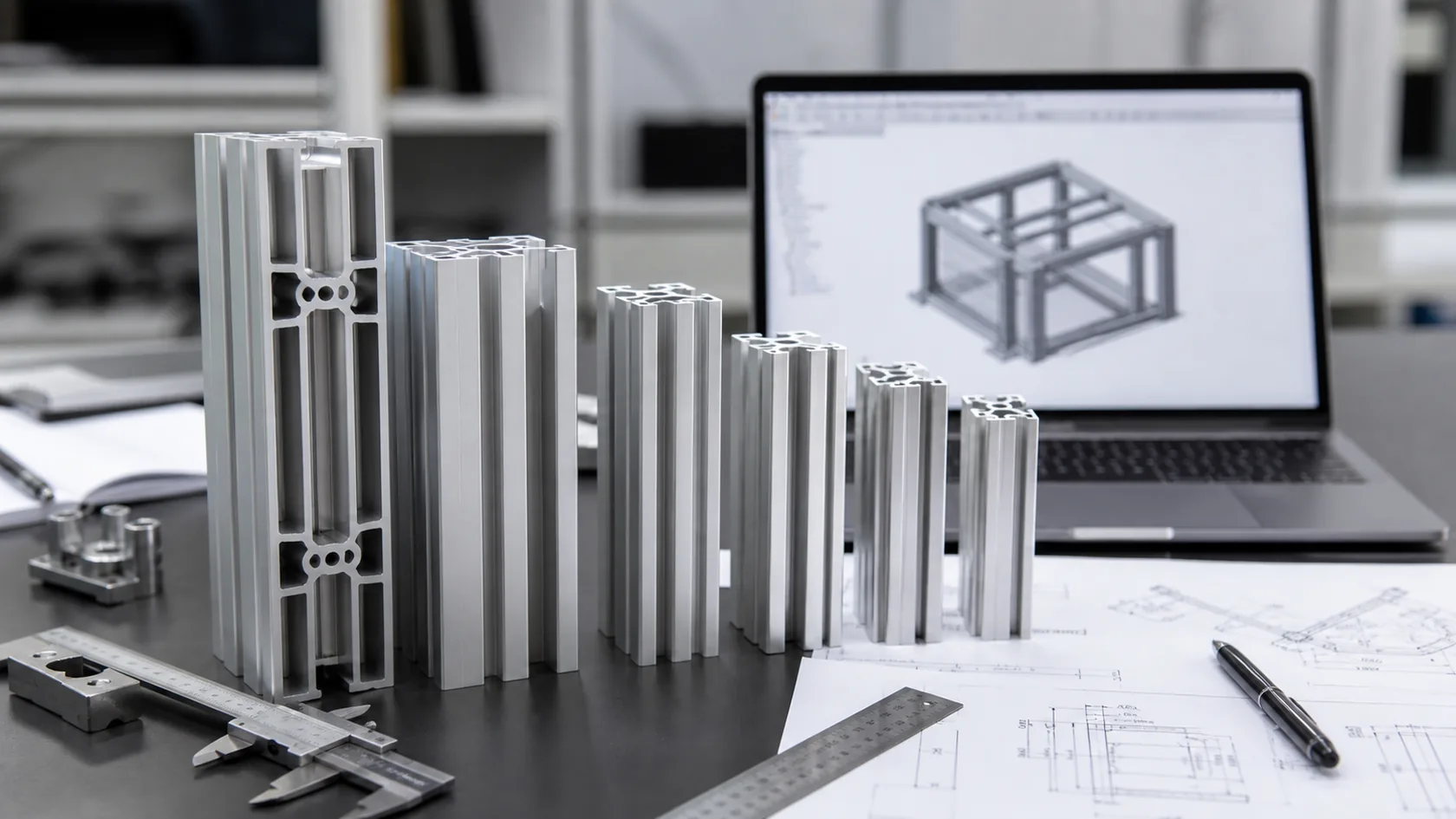
Metric and fractional families
Metric systems commonly use names such as 20, 30, 40, or 45 series, which refer broadly to a base dimension in millimeters. Fractional systems may use designations such as 10 series or 15 series. These names are useful starting points, but they do not guarantee compatibility between brands.
The critical data are the supplier’s section drawing, slot opening, slot depth, core bore, thread system, and approved hardware. Even when two profiles have the same outside dimensions, a bracket or T-nut from one line may not lock correctly in another.
I never approve a mixed hardware list from photos alone; I ask for the profile drawing and sample hardware or a verified compatibility table. The price of a few samples is small compared with a stalled assembly line. Size is only the beginning, because stiffness comes from the exact section and how it is loaded.
Section properties, span, and load direction
A larger section generally resists bending better than a smaller one, but the result depends on span, orientation, concentrated loads, connection stiffness, and the direction of force. A rectangular profile can be much stiffer when its deeper face is oriented correctly. Long spans, cantilevered equipment, moving doors, and vibration deserve more careful analysis.
Supplier data should include mass and section properties for each part number. MayTec’s engineering resources illustrate the kind of mechanical and tolerance information that should accompany a selected profile. For higher-risk structures, use an appropriate engineering calculation rather than a general comparison chart.
My practical rule is to start with the unsupported span and the load path, not the profile’s series name. If a frame carries a heavy enclosure at one end, a thicker wall in the wrong place will not solve a poor joint or a long lever arm. Before ordering, make the specification equally clear.
What to Check Before Ordering
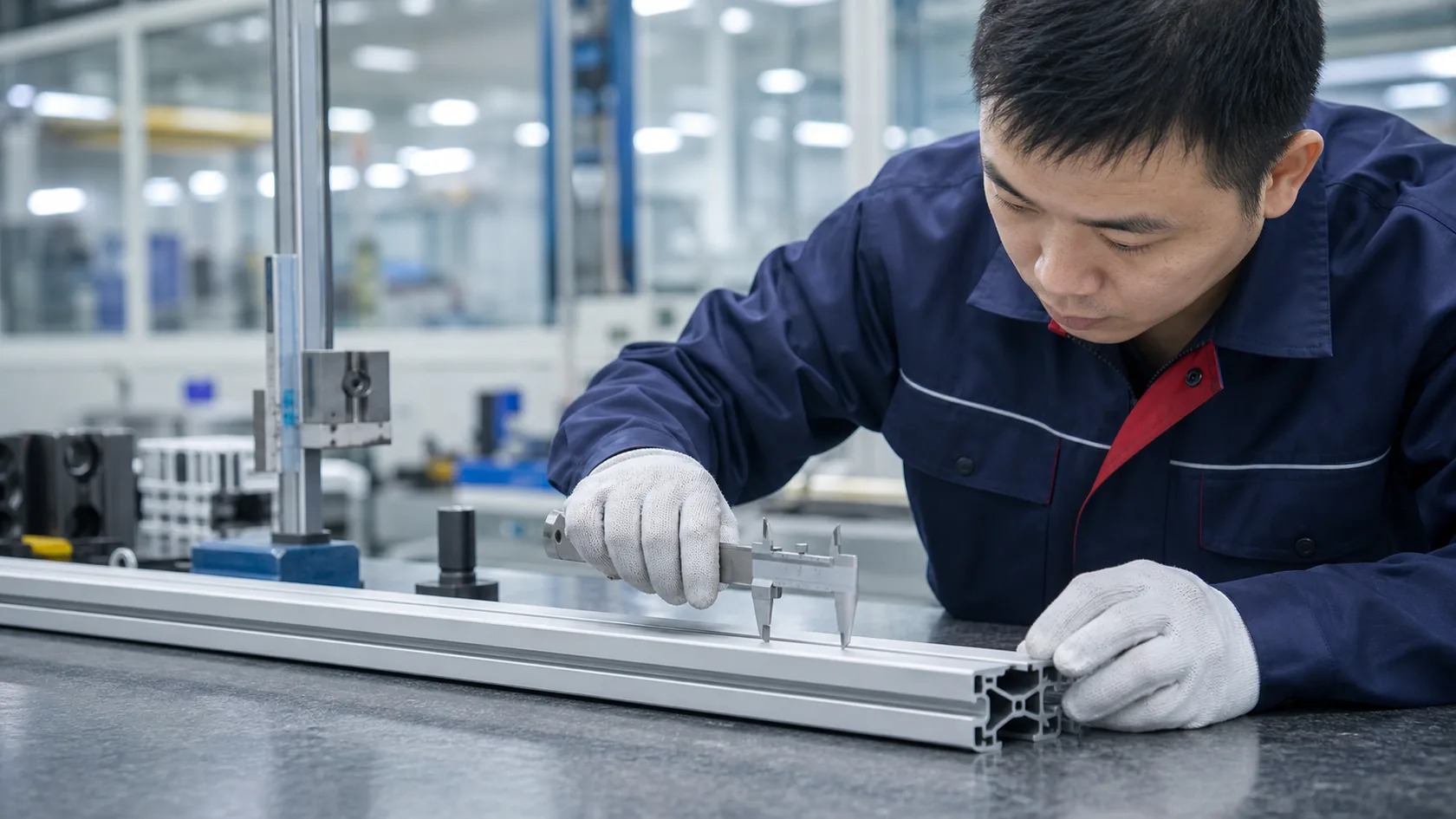
Hardware compatibility and tolerances
Put the exact profile code, alloy and temper if required, finish, length, cut tolerance, machining, and hardware family on the request for quotation. Include a section drawing and identify any critical joints. If the project uses existing brackets or nuts, send their part numbers or samples.
The Aluminum Extruders Council explains that extrusion tolerances vary by feature and requirement. That matters when a panel must align across several profiles, a seal must close evenly, or a component must slide relative to the frame. “Standard tolerance” is not precise enough for every job.
I flag critical dimensions on the drawing instead of relying on an email phrase such as “please keep it accurate.” A supplier can plan inspection only when the requirement is measurable. After compatibility is settled, manufacturing details determine whether the parts arrive ready to use.
Finish, machining, panels, and packing
Natural or black anodizing is common because it improves appearance and helps protect the aluminum surface. But finish, cut quality, deburring, drilled holes, tapped ends, countersinks, labels, and protective film should be confirmed individually. Specify panel material and thickness too, since a panel-retention strip or clamp must match it.
Long profiles need sensible packing. Scratches, bent ends, and mixed cut lengths waste assembly time. For export orders, bundle labels, carton identification, and protection for machined ends are practical requirements, not last-minute extras.
At our final check, I compare the cut list, machining map, hardware count, and packing labels with the assembly sequence. That catches a missing end tap before the goods leave, when the fix is still simple. There is one final choice: whether T-slot is the right structural approach at all.
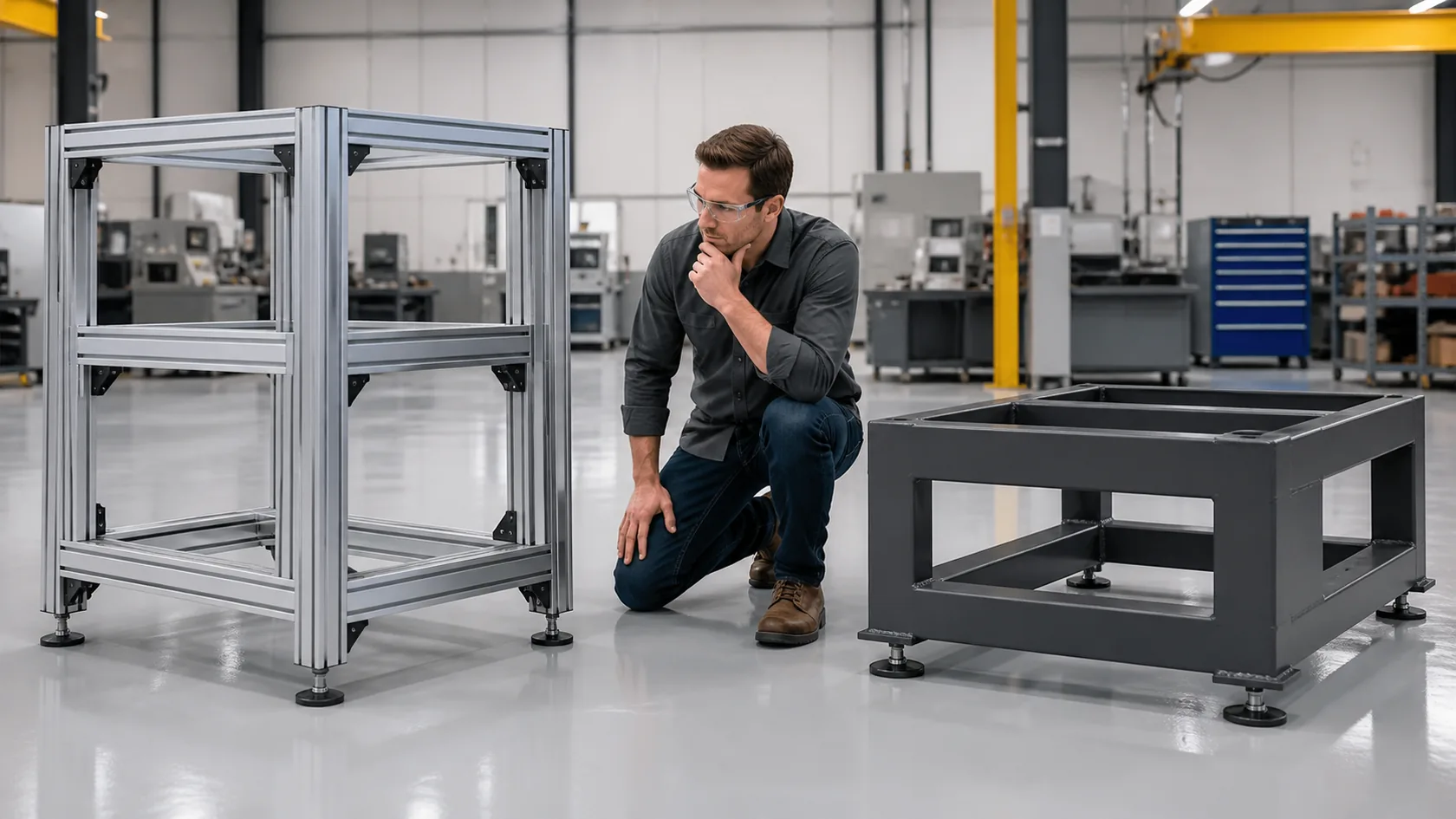
T-Slot Framing Compared With Welded Steel and V-Slot
When modular aluminum is the better fit
Choose T-slot when fast assembly, low weight, clean appearance, adjustment, reconfiguration, and accessory mounting matter. It is especially useful for guards, benches, light-to-medium equipment frames, prototypes, and production aids that may change over time. It can also reduce finishing work because anodized aluminum does not require the paint process typical of many steel frames.
For these projects, I weigh total installation and change cost, not only profile price per meter. A cheaper welded frame can become expensive when it requires rework for every sensor, panel, or cable-routing change. T-slot is often valuable because it keeps options open.
When another structure or guide system is better
Welded steel can be a stronger or more economical answer for very high loads, harsh impact, large bases, or structures that will never need adjustment. It must be engineered and protected appropriately, but it should not be ruled out just because T-slot is convenient.
T-slot should also not be confused with V-slot motion extrusion or with a precision linear guide. A standard T-slot frame can support equipment, but motion accuracy, high cycle life, contamination resistance, and demanding loads often need dedicated rails, bearings, and a proper drive system.
I advise customers to choose the system that matches the failure risk, rather than stretching a convenient profile beyond its role. That honest choice brings us back to the practical answer.
Conclusion
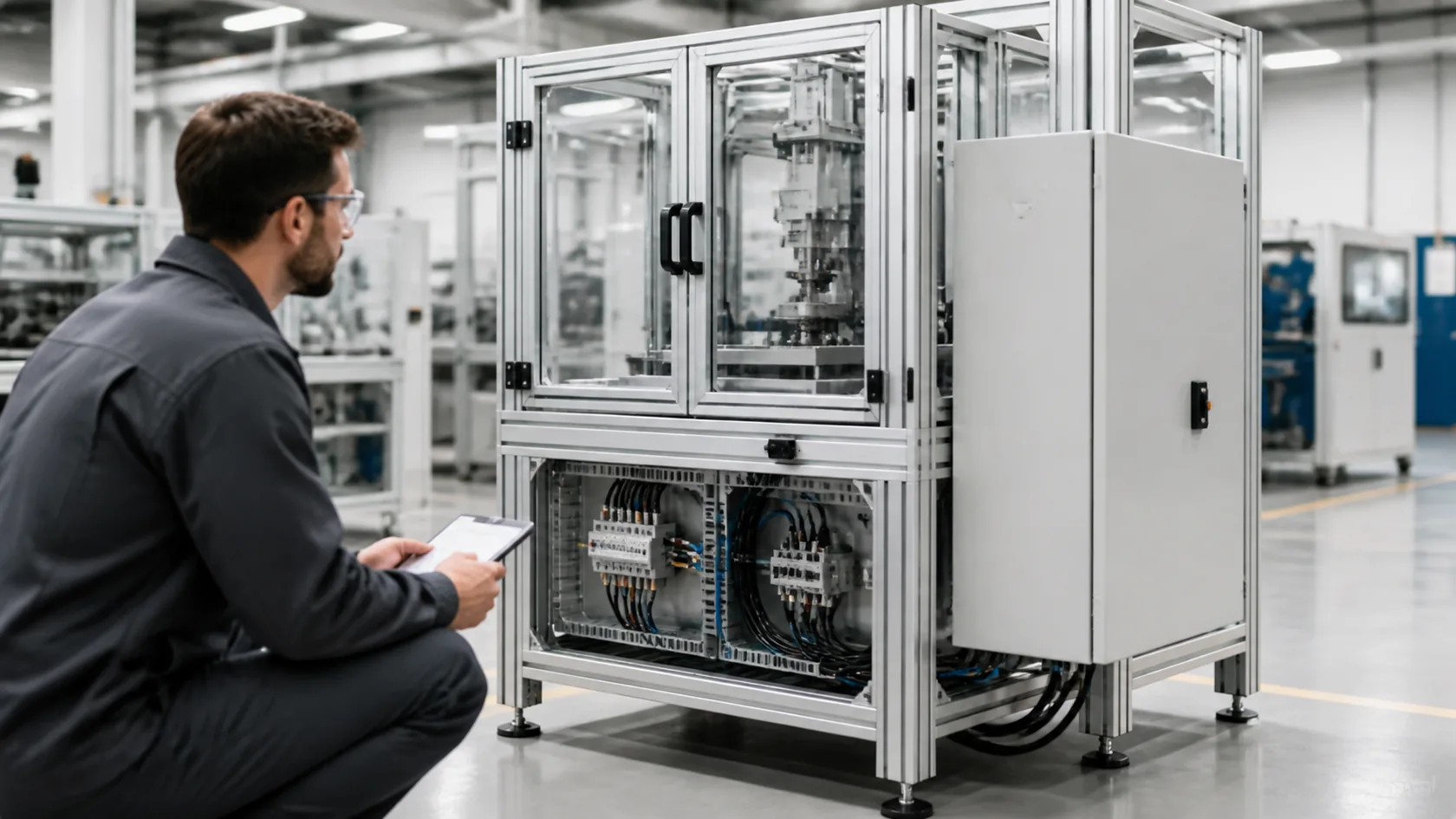
T-slot aluminum extrusion is a modular structural profile with continuous slots for T-nuts, fasteners, panels, and accessories. Its real strength is flexibility: it lets a team build, adjust, and extend a frame without welding every change.
I recommend it when the project benefits from clean assembly, reconfiguration, service access, and reliable mounting points. I also insist on checking the exact profile, hardware family, load direction, tolerances, and enclosure interfaces, because the label alone cannot answer those questions.
If you are combining a T-slot frame with a custom protective enclosure, send MaidaTech the profile drawing, load outline, and equipment layout. We can review mounting points, panel access, finish, and manufacturability before the small details turn into a production delay.