Skip to content

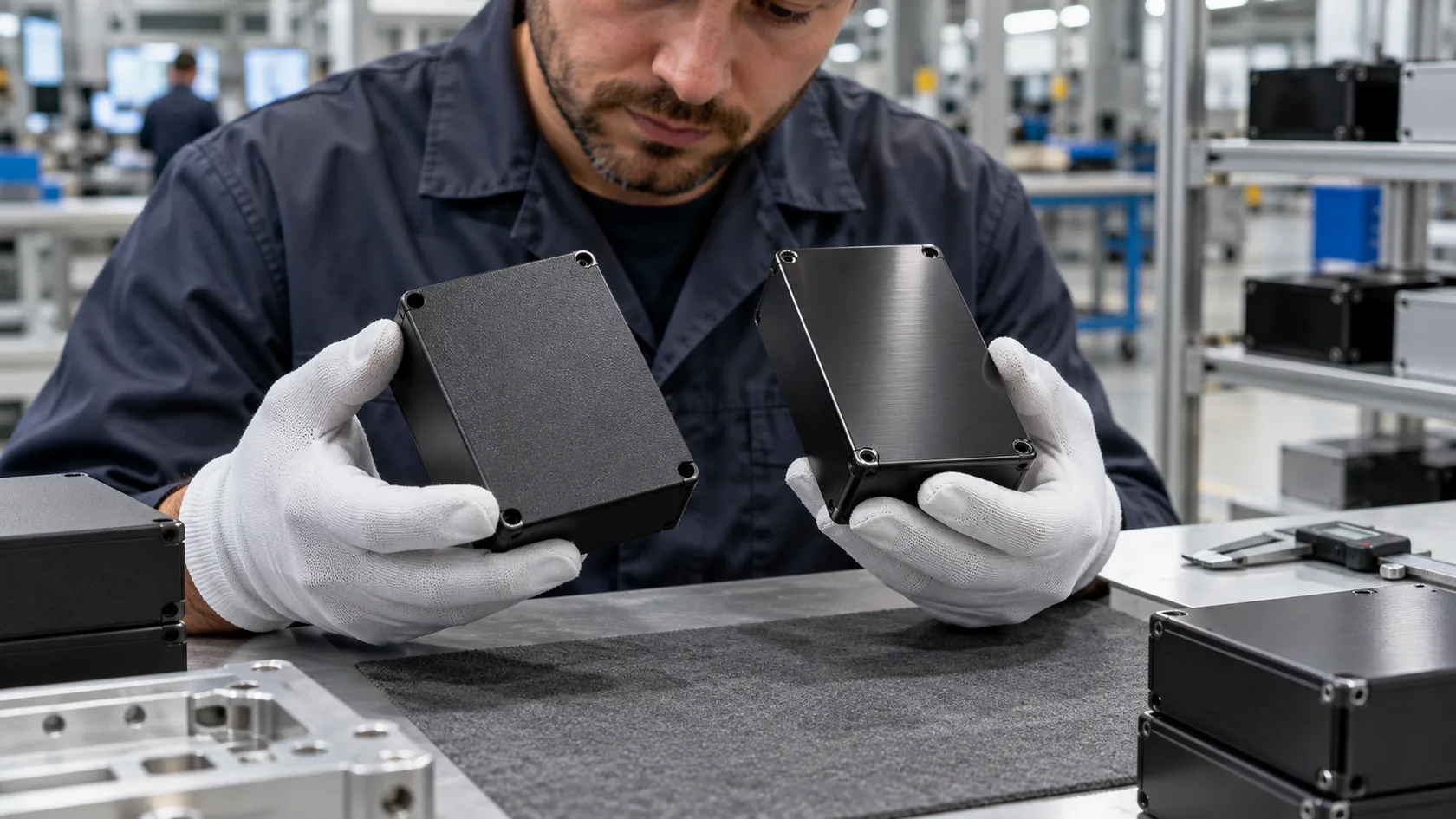
On an enclosure quotation, "black finish" can look like a small line item. In production, it often controls the sample appearance, where electrical contacts can sit, what happens at sharp edges, how a part is handled, and what must be checked after it returns from the finisher. That is why I do not treat powder coating and anodizing as interchangeable color choices.
Both can be sensible finishes for a custom aluminum enclosure. Powder coating adds an organic coating over prepared metal; anodizing is an electrochemical process that grows an aluminum-oxide layer from the surface. The better choice depends on the alloy and process route, the visible surfaces, the service exposure, the required interfaces, and the way the finished enclosure will be assembled. It is not decided by the word "premium" on a drawing.
My practical rule is to choose the finish after the enclosure has been viewed as an assembled product. A clean black sample has little value if its lid no longer fits a gasket, its connector flange has been insulated, or its color cannot be reproduced on the next lot. Start with the job the finish has to do.
Start With the Enclosure’s Real Job
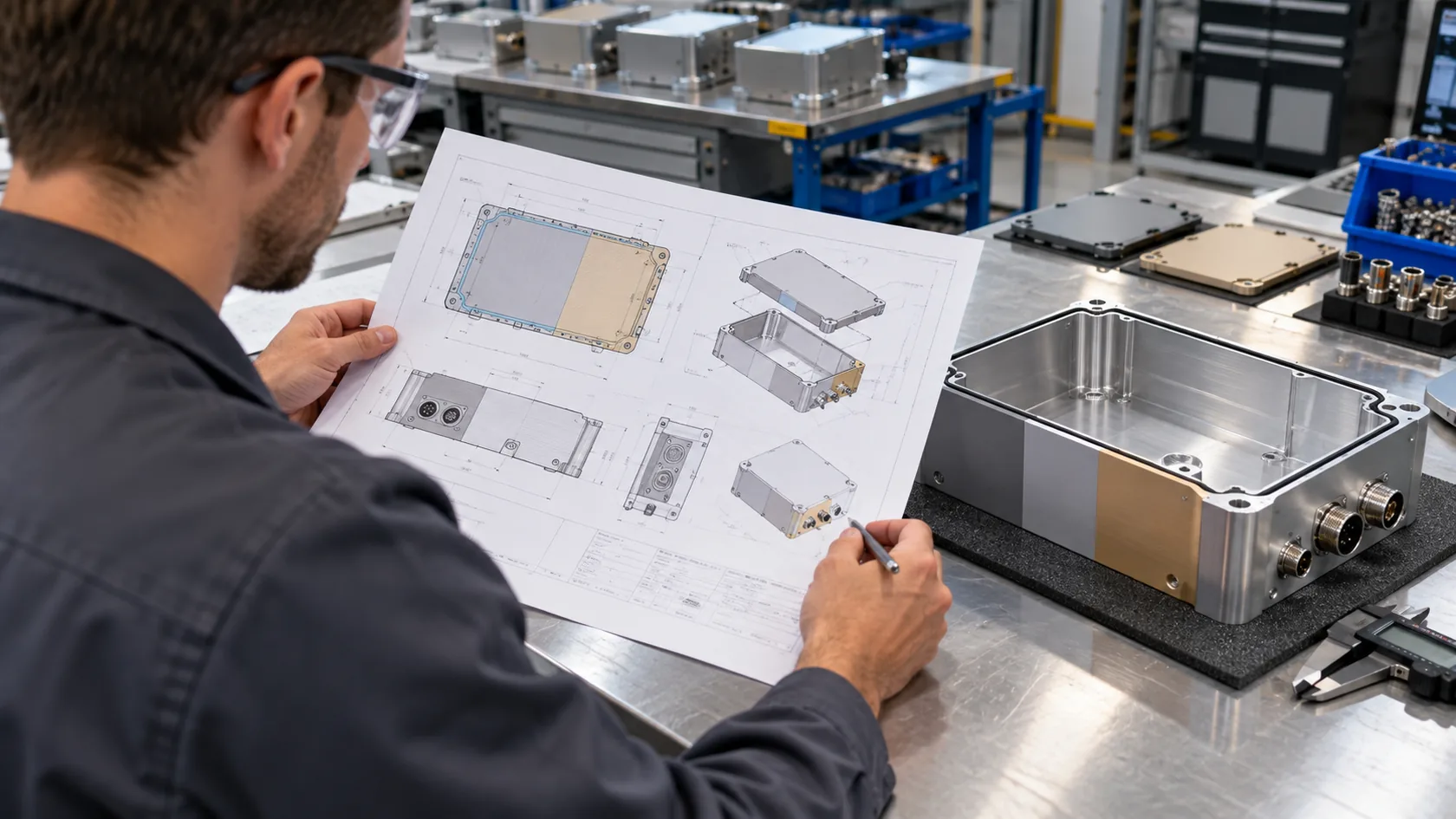
Turn a broad request into specific requirements
An enclosure may need to protect electronics, carry a brand color, tolerate handling, survive outdoor exposure, dissipate heat, provide a protective-earth interface, or help form an EMC seam. Those needs do not automatically point to the same finish. A desktop controller, an outdoor sensor, and a machined instrument housing can all be aluminum yet need different finish plans.
| Requirement | Question to settle before selecting a finish | Why it changes the choice |
|---|---|---|
| Appearance | Is a close color match required across parts, lots, or alloys? | Alloy and surface preparation can influence anodized appearance; powder systems offer a broad color range. |
| Exposure | Is the enclosure indoors, outdoors, coastal, washdown, or near process chemicals? | Finish chemistry, pretreatment, edge coverage, drainage, and maintenance all become relevant. |
| Wear | Will operators slide, handle, clamp, or repeatedly open the product? | The actual contact mode matters more than a general claim of durability. |
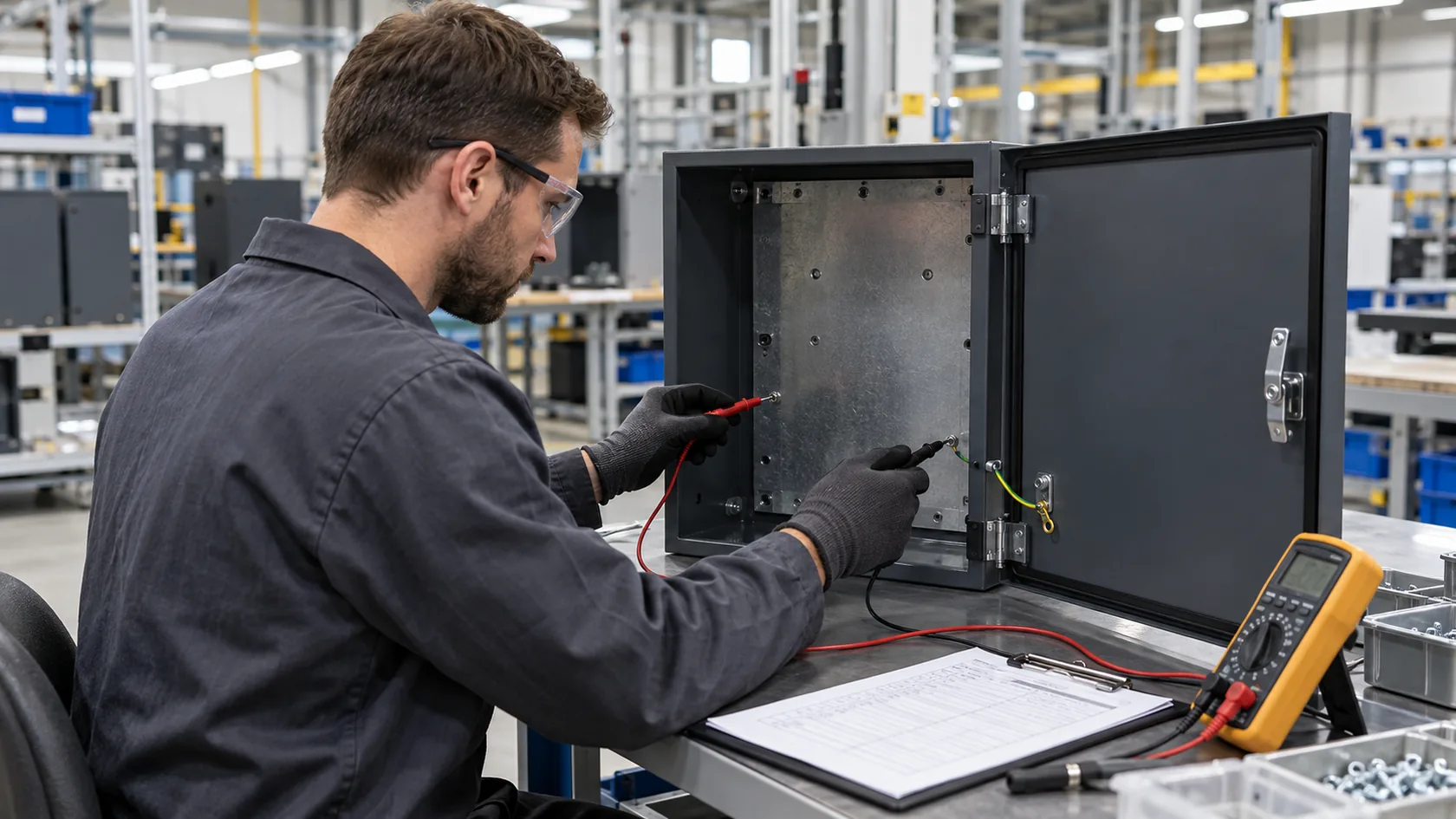
| Electrical interfaces | Which lands, seams, connector shells, or earth points must be conductive? | Both finishes can interrupt direct metal-to-metal contact. |
| Fit and assembly | Are there tight bores, threads, gasket lands, press fits, or cosmetic mating edges? | The finished dimensions and mask boundaries need to be controlled. |
The Aluminum Anodizers Council’s specification guidance makes the same useful point: alloy, mechanical preparation, chemical preparation, coating type, environment, and intended appearance all belong in the specification. From the factory side, I want those facts before I price a finish, rather than trying to rescue them after the first sample has already been colored.
Once the functional questions are clear, the process difference becomes much easier to use rather than merely describe.
Understand What Each Finish Changes
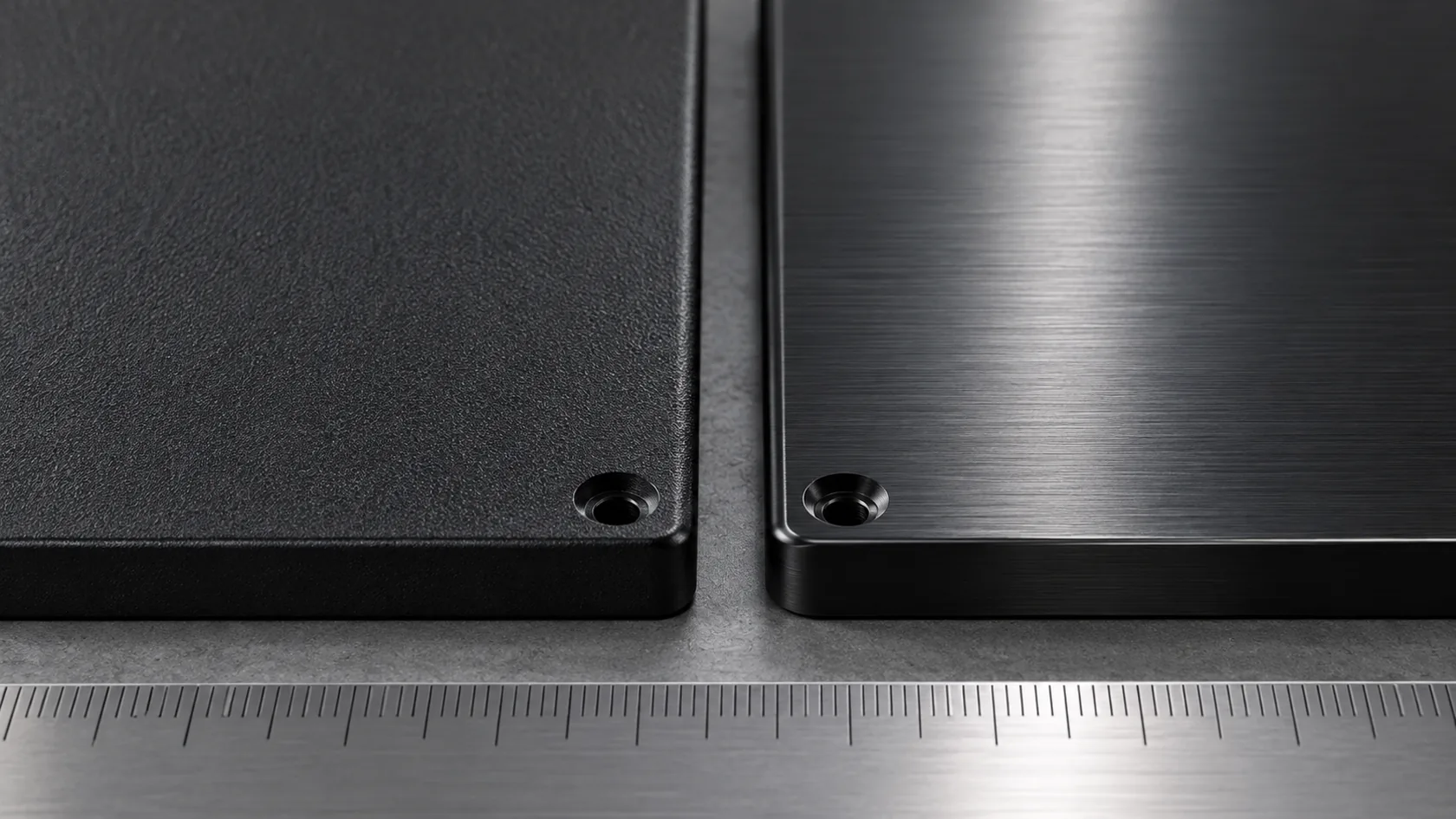
Powder coating builds a film; anodizing changes the surface
Powder coating is commonly applied by electrostatic spray and then cured. The Powder Coating Institute describes it as a process that uses electrostatic spray deposition on a metal substrate. The result is a coating system whose appearance and protection depend on the alloy preparation, pretreatment, powder formulation, application, cure, film uniformity, and handling.
Anodizing grows an oxide layer from the aluminum surface. The AAC anodizing reference guide notes that anodic response, color overtones, and practical thickness ranges vary by alloy. It is therefore risky to expect a drawing note such as "black anodize" to produce the same visual result on a 6063 extrusion, a 6061 machined cover, and a cast component without sample approval.
| Finish route | Often useful for | Important limitation to manage |
|---|---|---|
| Powder coating | Broad color selection, textured or smooth visual treatments, and a coating system designed around the service environment | Coverage at edges, recesses, threads, and mating features must be planned and inspected. |
| Decorative anodizing | A metallic aluminum appearance, controlled cosmetic treatments, and parts where the base-metal surface is part of the look | Surface scratches, weld zones, alloy differences, and machining marks can remain visible or become more apparent. |
| Hard anodizing | Selected applications needing a harder oxide surface and a defined wear-oriented finish | It is not a universal cosmetic finish; thickness, alloy response, dimensions, and point loading require review. |
I am careful with phrases such as "more durable." A hard anodized sliding part and a powder-coated outdoor cover are solving different problems. The sensible comparison is a specific failure mode—abrasion, chip damage, UV change, corrosion at an edge, cleaning chemical exposure, or a cosmetic scratch—under the real installation conditions.
That difference in construction also changes the features we must protect before the part reaches finishing.
Design the Part for the Finished Dimensions
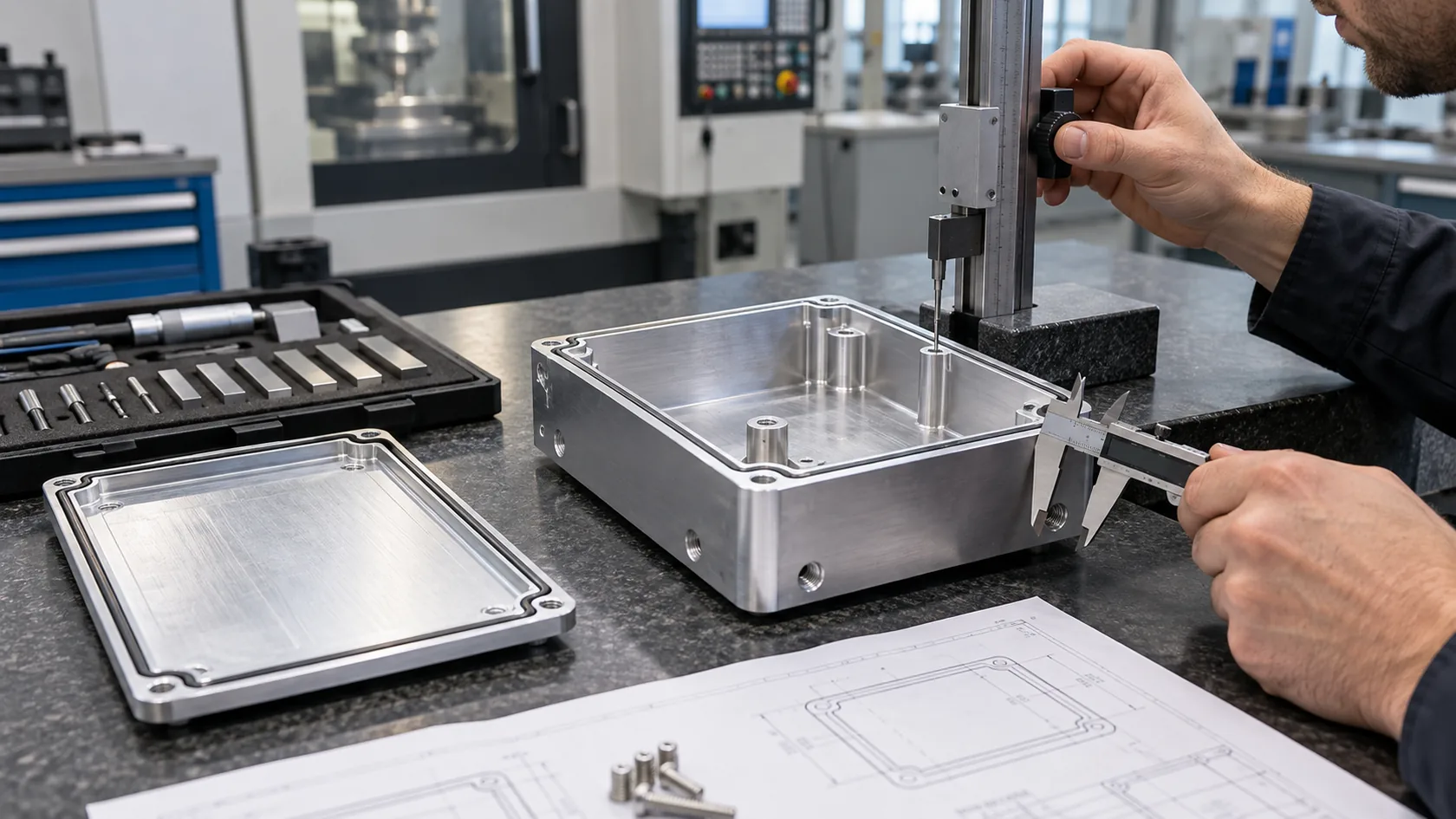
Do not release a bare-metal fit as a finished-product fit
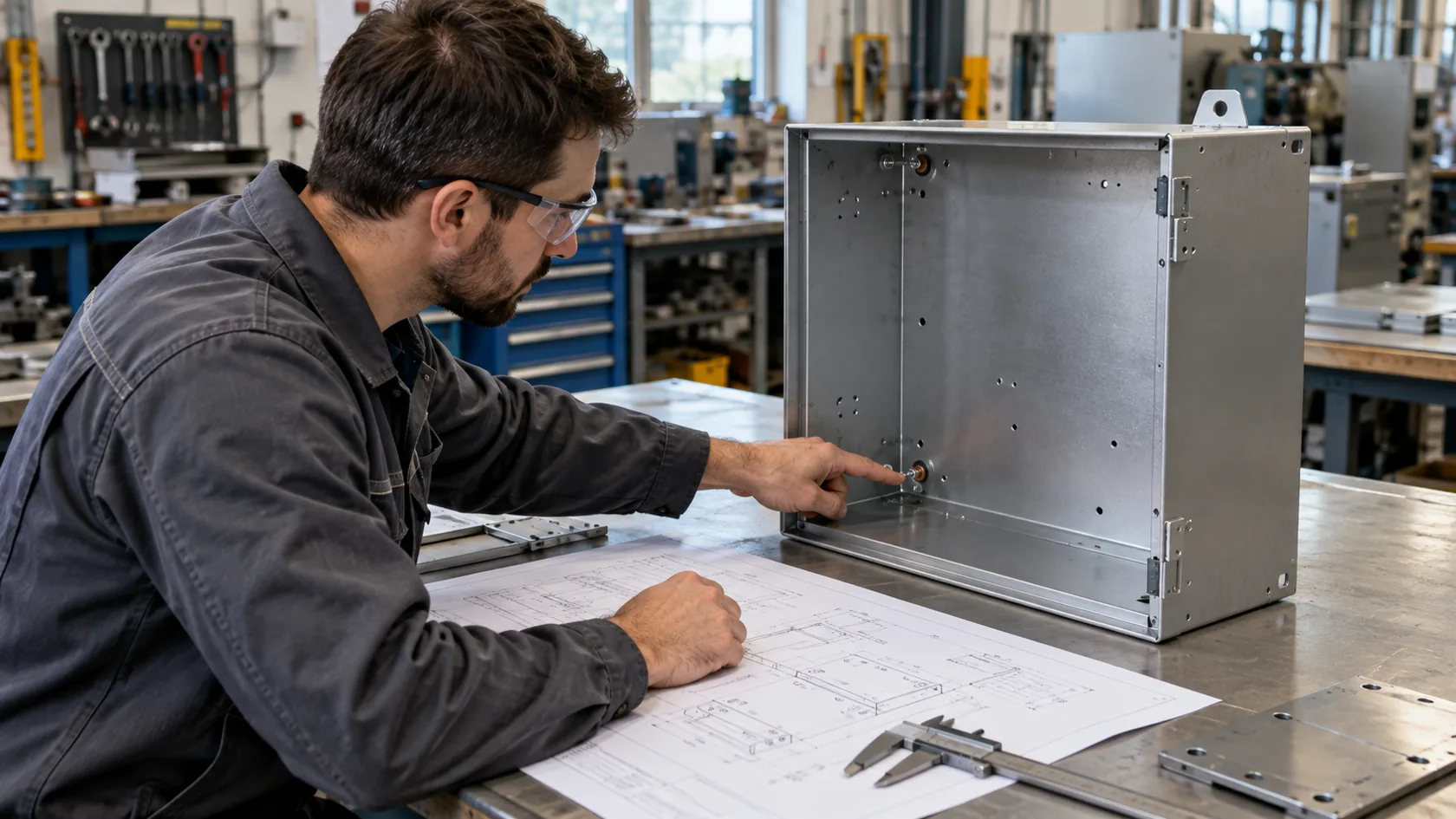
Threads, close-fitting covers, gasket grooves, press fits, laser-mark areas, connector cutouts, and machined sealing lands deserve a finish review before the drawing is released. A finisher needs to know whether a feature is cosmetic, functional, masked, post-machined, or subject to a defined final-size requirement. "Finish all over" is easy to write and often expensive to correct.
Powder coating can be very practical on a roomy enclosure, but a coating on a thread or a close telescoping fit can make assembly difficult. Anodizing also affects dimensions and can matter in tight interfaces; the AAC’s reference guide describes anodic growth as a combination of penetration into the base metal and buildup at the surface. The appropriate allowance depends on the specified process and thickness, so it should come from the qualified finisher and drawing requirements rather than a generic shop rule.
For a custom enclosure, I normally flag these zones separately:
- Threads, grounding studs, threaded inserts, and internal fastening points
- Lid-to-body joints, gasket tracks, O-ring grooves, and sealing faces
- Connector cutouts, display windows, heat-sink contact pads, and press-fit locations
- Cosmetic A-surfaces, logo zones, and areas where racking or contact marks are acceptable
- Sharp external edges, cut ends, and recessed corners where coverage or handling may need extra attention
The mistake I see most often is discovering the critical boundary only after a good-looking finished part will not assemble. A one-page finish map, agreed by machining, finishing, assembly, and quality, is cheaper than hand-removing a coating from every part in the first batch.
Geometry is only one part of durability. The next question is how the selected finish behaves in the actual environment rather than in a generic product photo.
Match Outdoor Protection to the Exposure
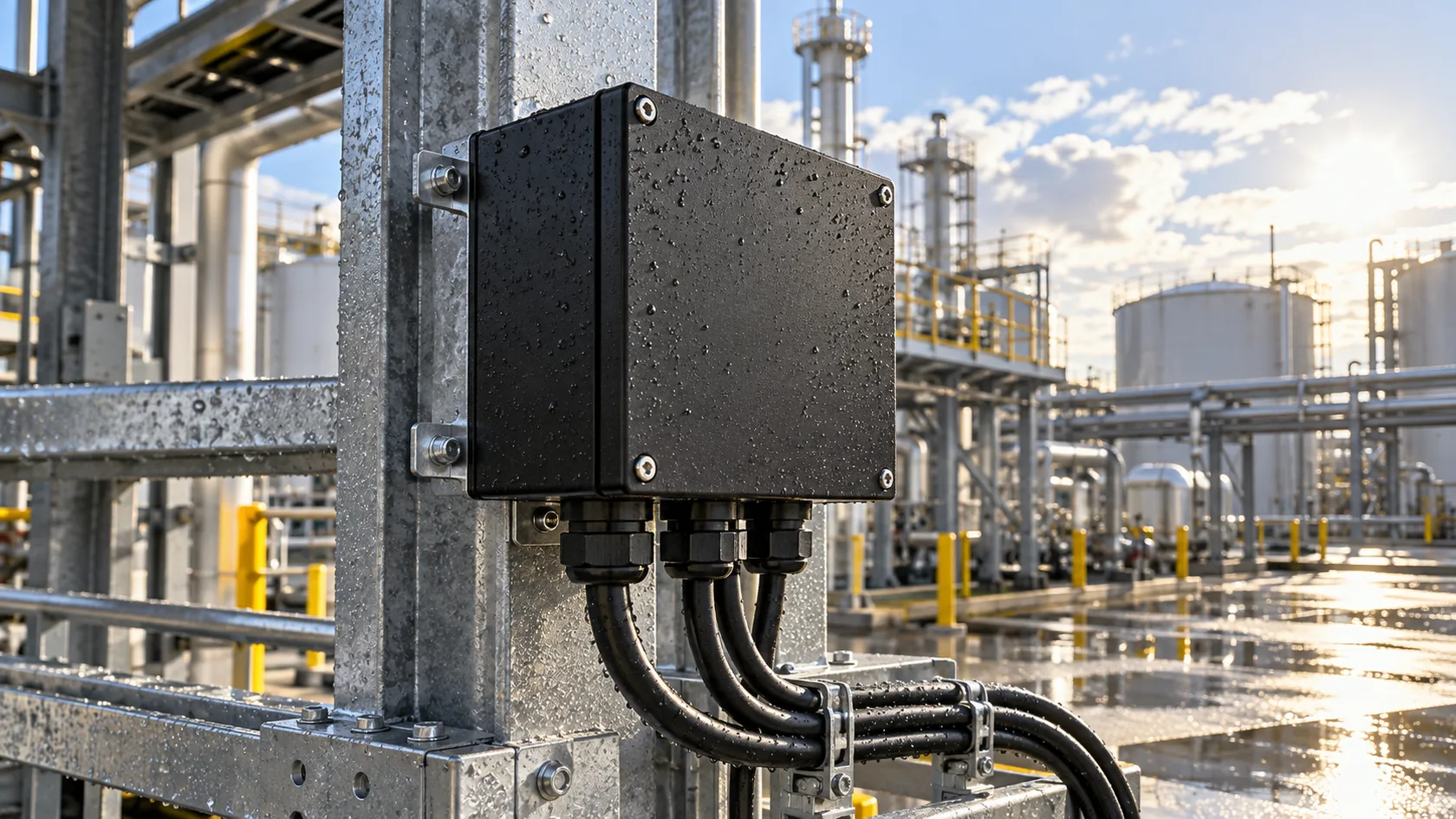
Separate UV, moisture, salts, and trapped water
For exterior equipment, "outdoor" is not enough information. Direct sunlight, daily condensation, coastal salt, road de-icing residue, industrial fumes, cleaning chemicals, mounting orientation, standing water, and maintenance access can all change the most relevant risk. The bare aluminum alloy, joint design, fasteners, and cut edges are part of the protection system as well.
The Powder Coating Institute notes that weatherability is an important end-use consideration: some coating chemistries are better suited to exterior UV exposure than others. For example, it says polyester and acrylic powder coatings have good UV-light stability, while epoxy and epoxy-containing hybrids are generally not preferred where outdoor appearance is important. That is a material-selection conversation, not a reason to specify simply "outdoor powder."
Anodizing can offer useful atmospheric corrosion resistance when the alloy, oxide type, thickness, sealing, finish preparation, and service exposure are suitable. NIST’s anodizing reference explains that sealing supports optimum corrosion resistance for anodic oxide. It does not make an unfinished assembly immune to crevice corrosion, incompatible metals, chemical attack, or poor drainage.
For outdoor enclosures, I would ask the buyer and finisher to review these together:
- The actual installation orientation, drainage paths, and locations that can retain moisture.
- The coating or anodize system, pretreatment or seal, target appearance, and any project-specific qualification basis.
- Exposed cut edges, post-finish machining, fastener interfaces, and dissimilar-metal contact.
- The cleaning method, expected service access, and whether a local repair is acceptable cosmetically and technically.
Salt-spray hours or UV claims mean little without the named method, specimen configuration, edge treatment, scribe condition where relevant, and acceptance criteria. I prefer a project-specific test plan to a number copied from an unrelated powder data sheet.
Environmental protection also has to coexist with electrical function, especially when an enclosure carries safety or EMC responsibilities.
Keep Electrical and Sealing Interfaces Intentional
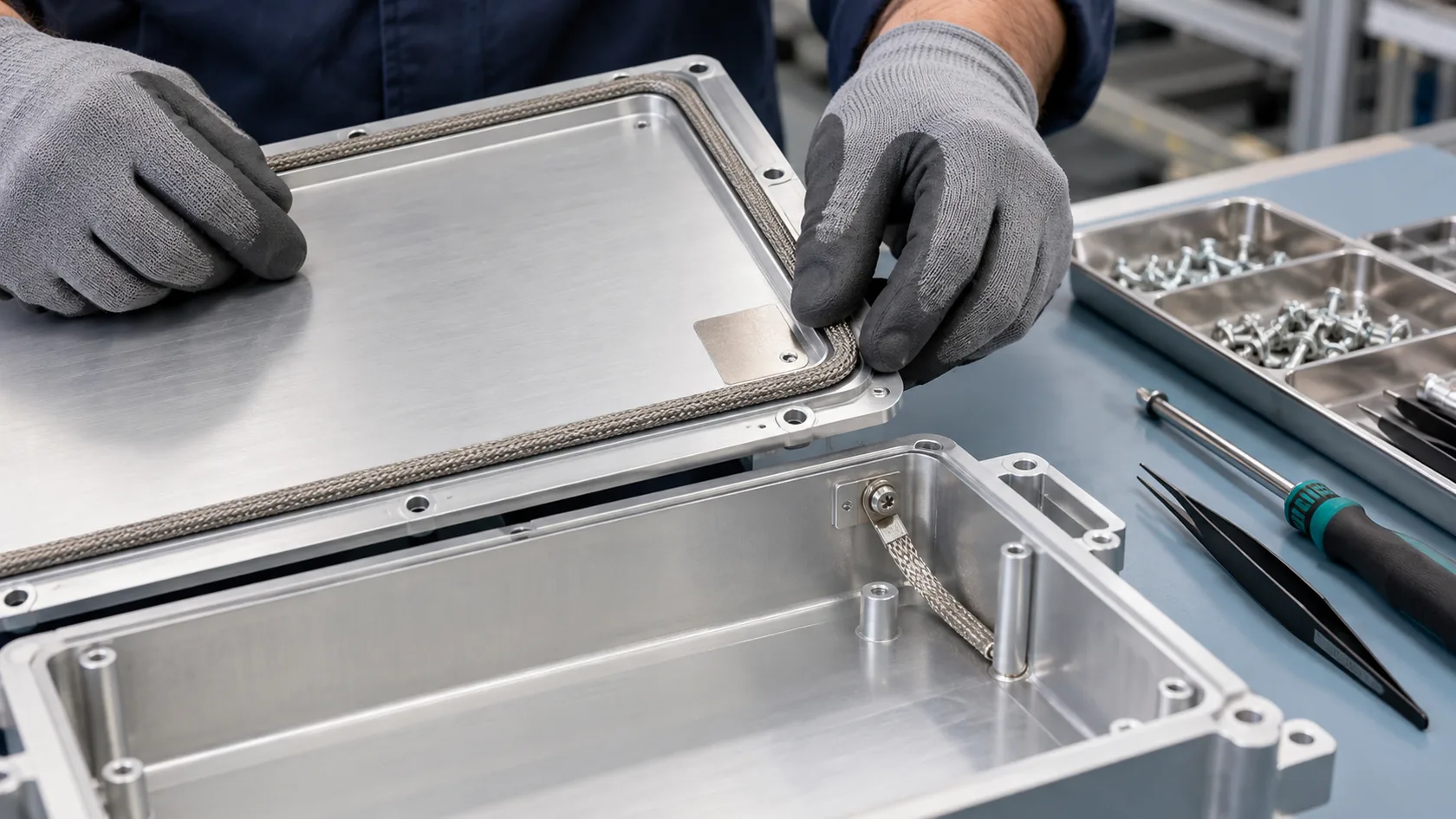
A protective finish is usually an insulating boundary
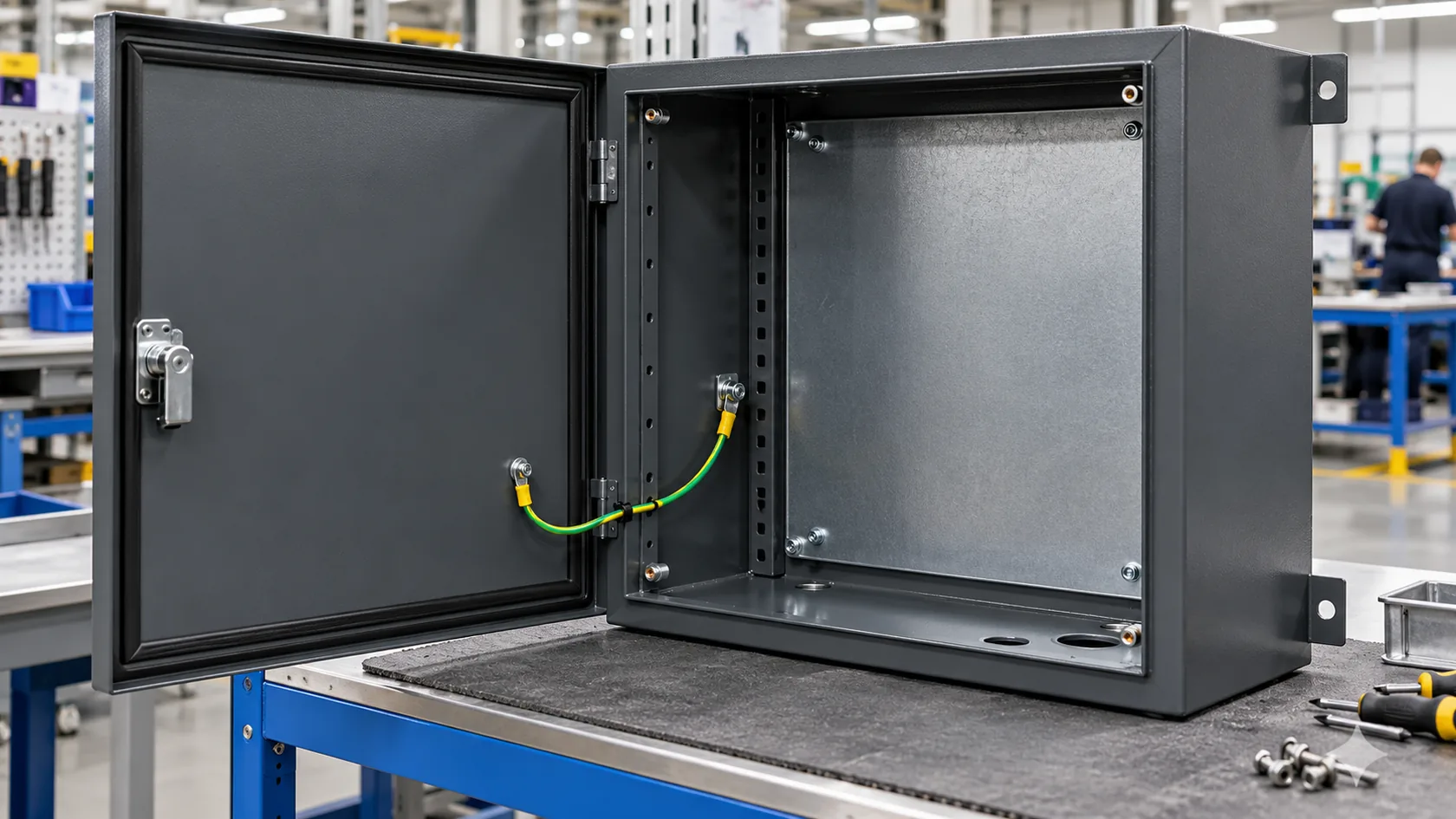
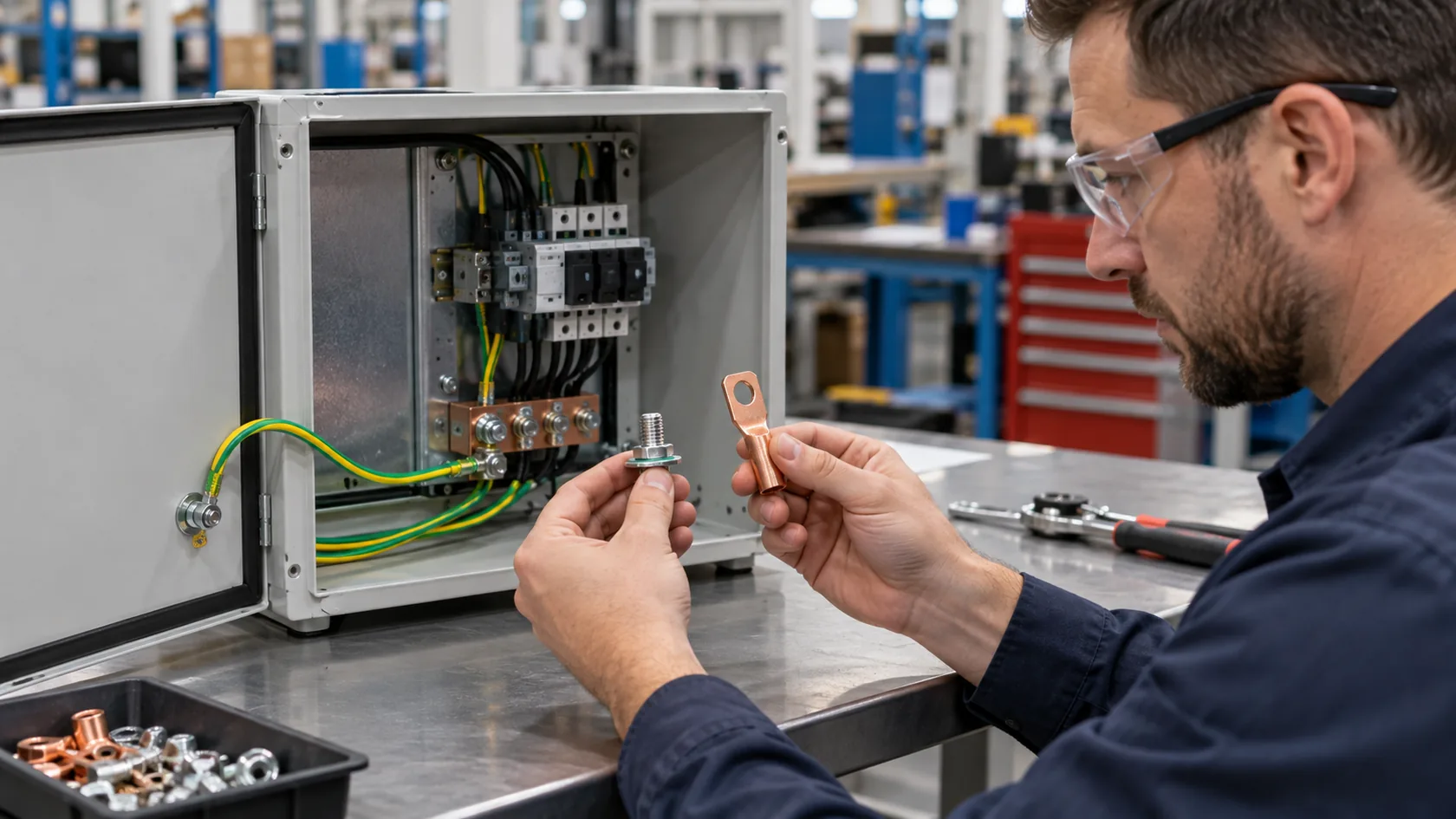
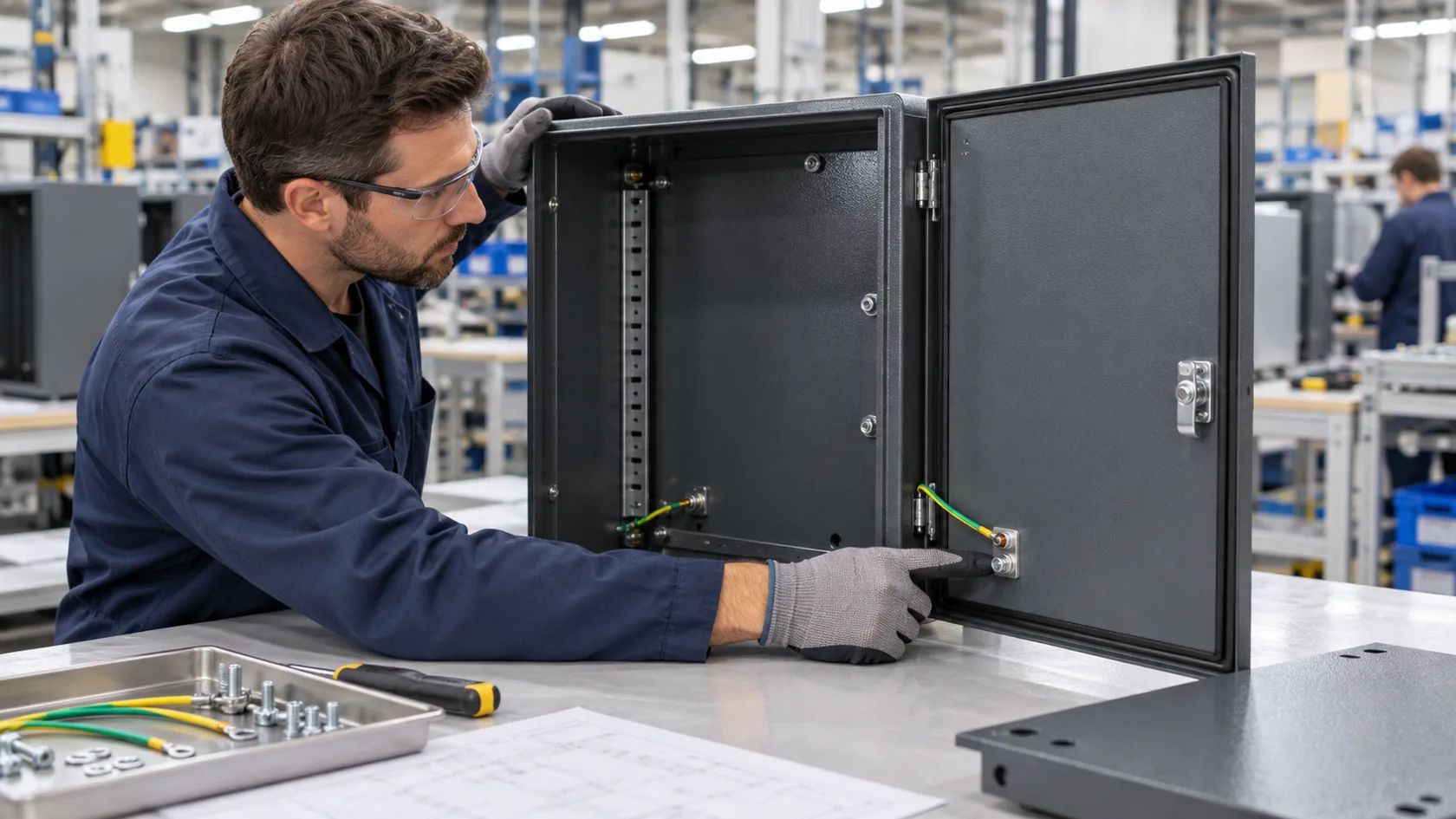
Powder coating is normally nonconductive. Anodic oxide is also electrically insulating, which is why anodizing needs special attention around conductivity-sensitive interfaces. A grounding symbol, a serrated washer, or a conductive gasket does not remove the need to define the surface condition and assembly stack at the intended interface.
This matters at protective-earth points, lid-to-body electrical seams, cable-shield terminations, connector flanges, internal chassis mounts, and heat-transfer interfaces. The European Commission’s EMC guidance describes the objective at equipment level: electromagnetic compatibility depends on the finished apparatus, not simply on the material of its housing.
| Interface | Detail to agree before finishing |
|---|---|
| Protective-earth connection | Approved hardware, prepared contact surface, corrosion plan, assembly process, and product-defined verification |
| Lid or cover seam | Whether a conductive path is required, gasket type, flange condition, compression, fastener pattern, and test plan |
| Cable shield or connector shell | Intended termination path, cutout treatment, gasket stack, and accessibility for assembly |
| Environmental gasket | Groove geometry, compression control, mating-surface condition, drainage, and real cable-entry configuration |
I would never specify a broad bare-metal patch only because someone later may need continuity. Bare aluminum oxidizes too, and an exposed patch can create a corrosion or cosmetic problem. A better drawing identifies the exact contact land, treatment if required, hardware, environmental protection, and inspection method. Protective bonding, RF shielding, thermal contact, and sealing are related interfaces, but they are not the same requirement.
Once those zones are mapped, the final choice often comes down to what can be made consistently at the intended order quantity.
Compare Cost, Appearance, and Repeatability
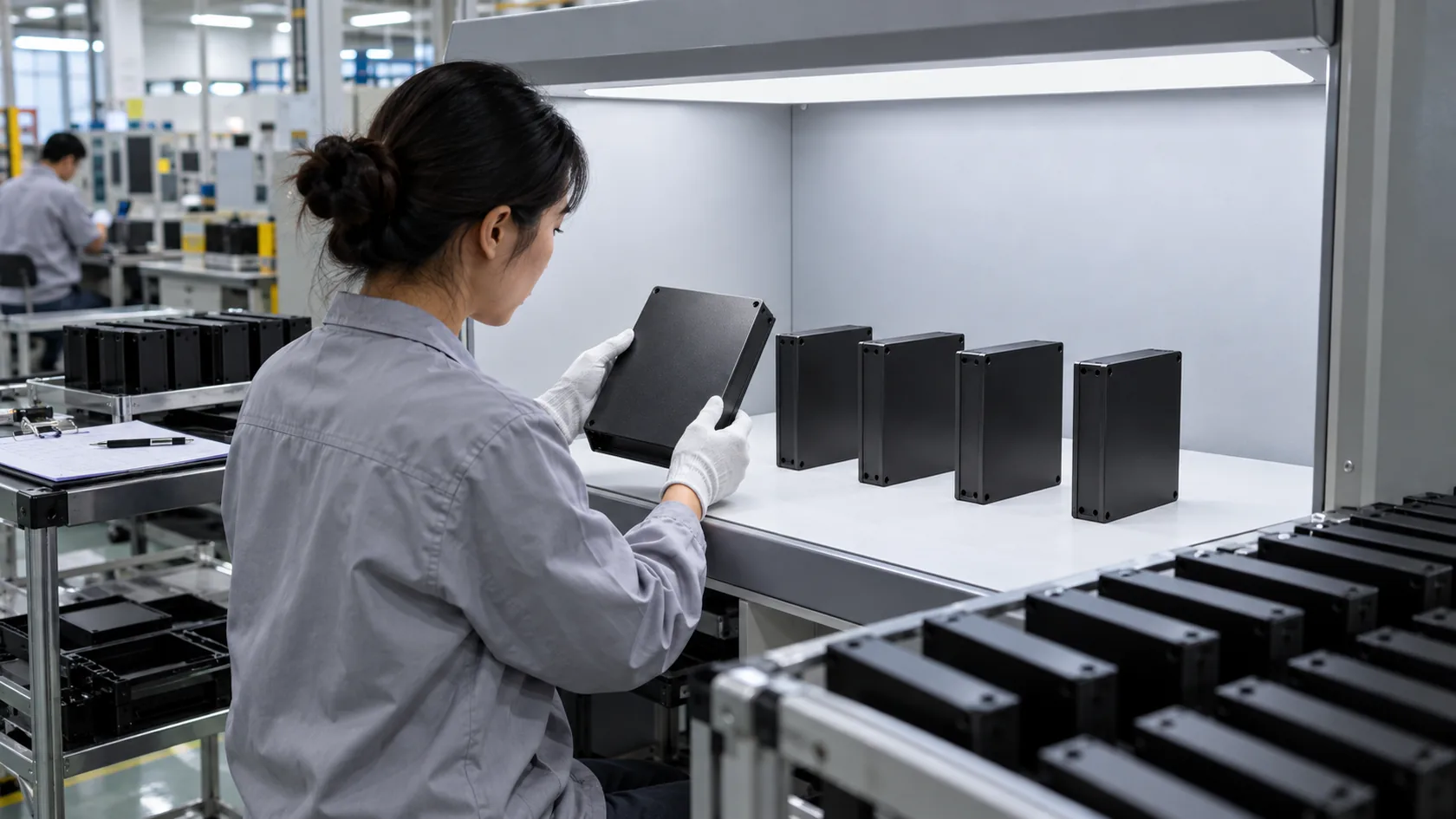
The lowest piece price can hide the highest approval cost
The finish cost is more than the coating or anodizing charge. It can include racking, masking, stripping or rework, extra handling, post-machining, sample panels, color approval, protective packaging, and the time lost when a finish issue is found after assembly. Quantity matters, but geometry and acceptance criteria can matter just as much.
Powder coating can be attractive when a project needs a defined color, texture, or a surface system matched to a broad enclosure. It also gives the design team many visual options. Anodizing may fit a product that benefits from a metallic aluminum character, a particular surface preparation, or a specified oxide finish. Neither finish automatically wins on cost, quality, or premium appearance.
| Quotation question | Why it prevents a surprise |
|---|---|
| Which alloy, temper, fabrication route, and visible surface are being quoted? | Material and surface condition influence the final result. |
| What masks, plugs, or post-finish operations are included? | A missing mask can turn a functional feature into a manual rework item. |
| What sample or color standard establishes acceptance? | "Black" and "matte" are not complete cosmetic specifications. |
| How are racking points, handling marks, and protected faces controlled? | Every finishing route needs a practical holding method. |
| What inspection record follows the first article and later lots? | It converts a one-time sample approval into a repeatable process. |
My preference is to approve a representative finished sample under agreed lighting and viewing conditions, with the real lid, gasket, connectors, logo method, and hardware installed. A loose color chip or a bare-metal sample cannot reveal every production issue. If two finish options are still close, sample both on the actual alloy and geometry before committing to a large run.
The final step is to put the decision into a drawing and inspection plan that a supplier can actually execute.
Write a Finish Specification the Factory Can Build
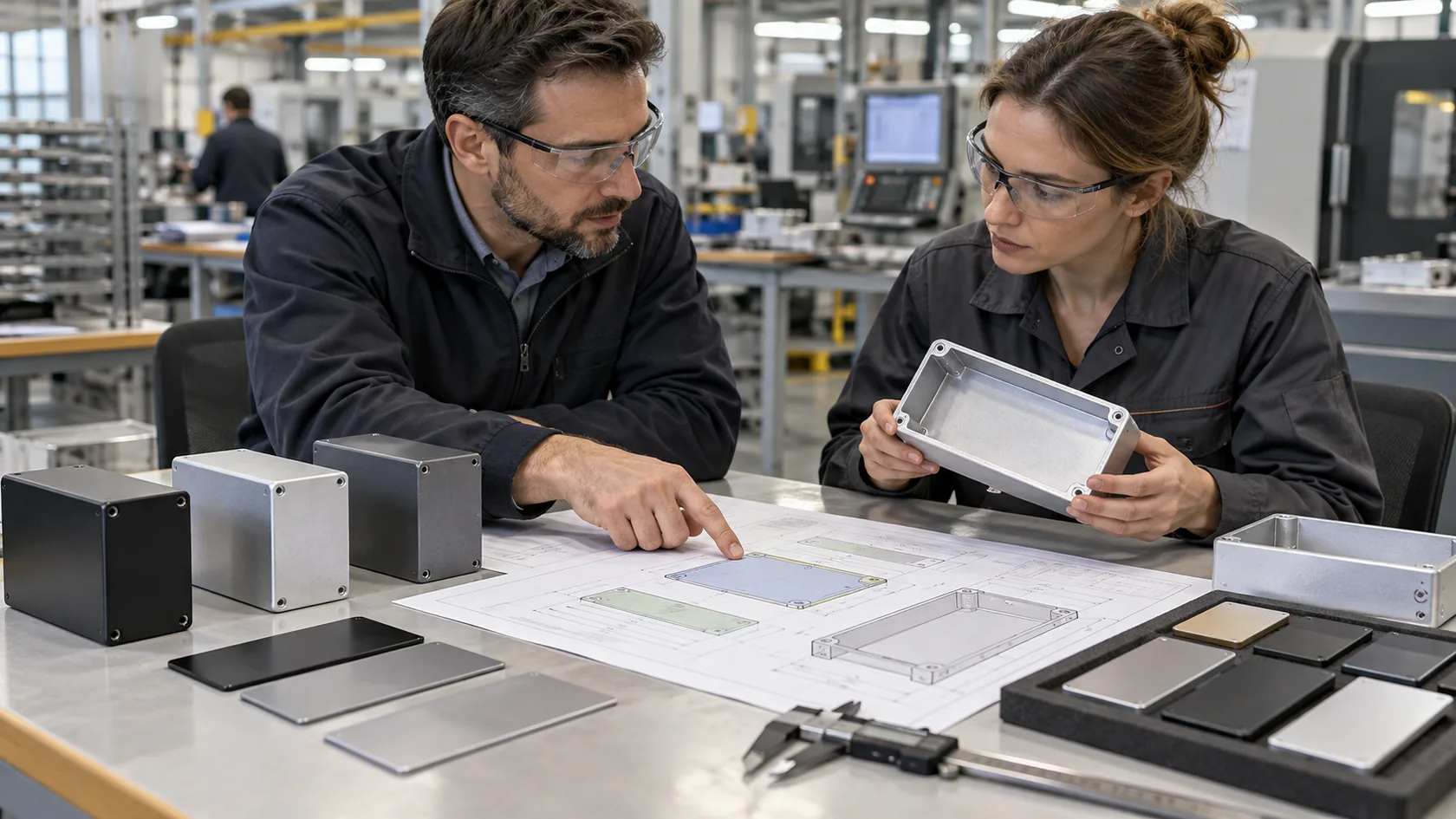
Specify the system, not just the color
A useful finish callout tells the factory what must be achieved and where it applies. It should not claim a test result or standard that has not been selected for the product. When an anodizing standard is required, the AAC overview of MIL-A-8625 is a useful reminder that type, class, thickness, inspection, and performance requirements need to be called out deliberately; the correct revision and customer requirements still control the purchase document.
For either finish, a practical drawing package can include:
- Base alloy and temper, fabrication route, and cosmetic surface designation
- Finish process, color or appearance target, gloss or texture if applicable, and approved reference sample
- Applicable zones, masking boundaries, threads and contact lands, and permitted racking locations
- Final dimensions or features controlled after finish, plus any approved post-finish operation
- Exposure assumptions, cleaning restrictions, and application-specific qualification or inspection requirements
- First-article and lot inspection evidence, including the completed assembled configuration where interfaces matter
I also recommend keeping the selected finisher involved when the design changes. A new weld, a different extrusion lot, a revised lid, an added connector, or a new gasket can change what the finish needs to accomplish. The finish note is not a decoration at the end of the CAD file; it is part of the enclosure’s manufacturing definition.
Conclusion
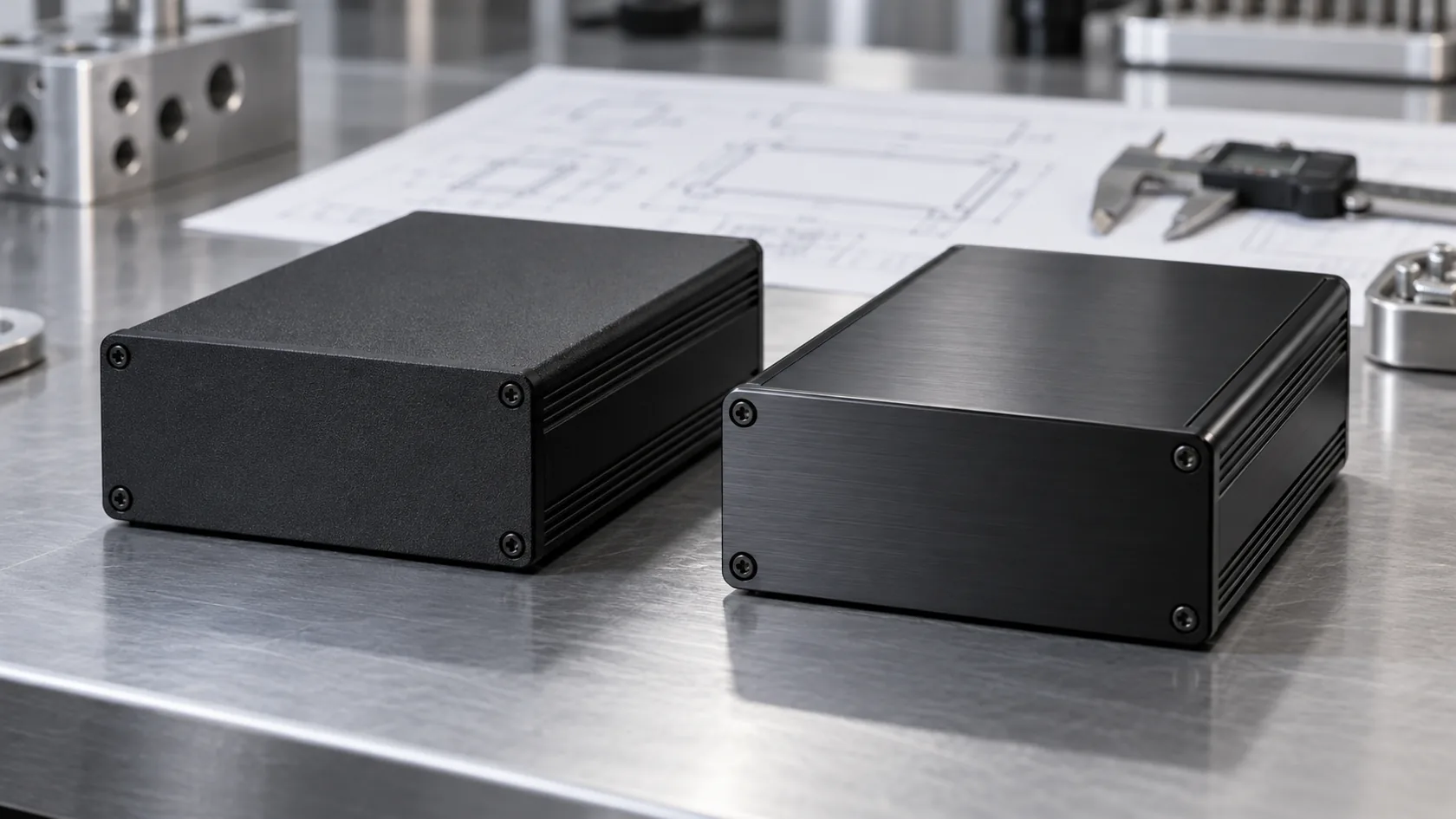
Powder coating and anodizing are both capable choices for aluminum enclosures, but they solve different combinations of appearance, environmental, dimensional, and assembly problems. Powder coating can be a strong route for color and texture choices when the coating system and feature masking suit the use. Anodizing can be a good route when its oxide surface, alloy response, appearance, and process controls match the product. Neither one repairs a vague drawing or an undefined electrical interface.
After years of quoting custom enclosures, I have learned that the best finish choice usually comes from a short review of the real alloy, geometry, exposure, contact points, cosmetic standard, and inspection plan. Send those details with the drawing and we can help compare powder coating and anodizing before a finish sample becomes an expensive design change.