Skip to content

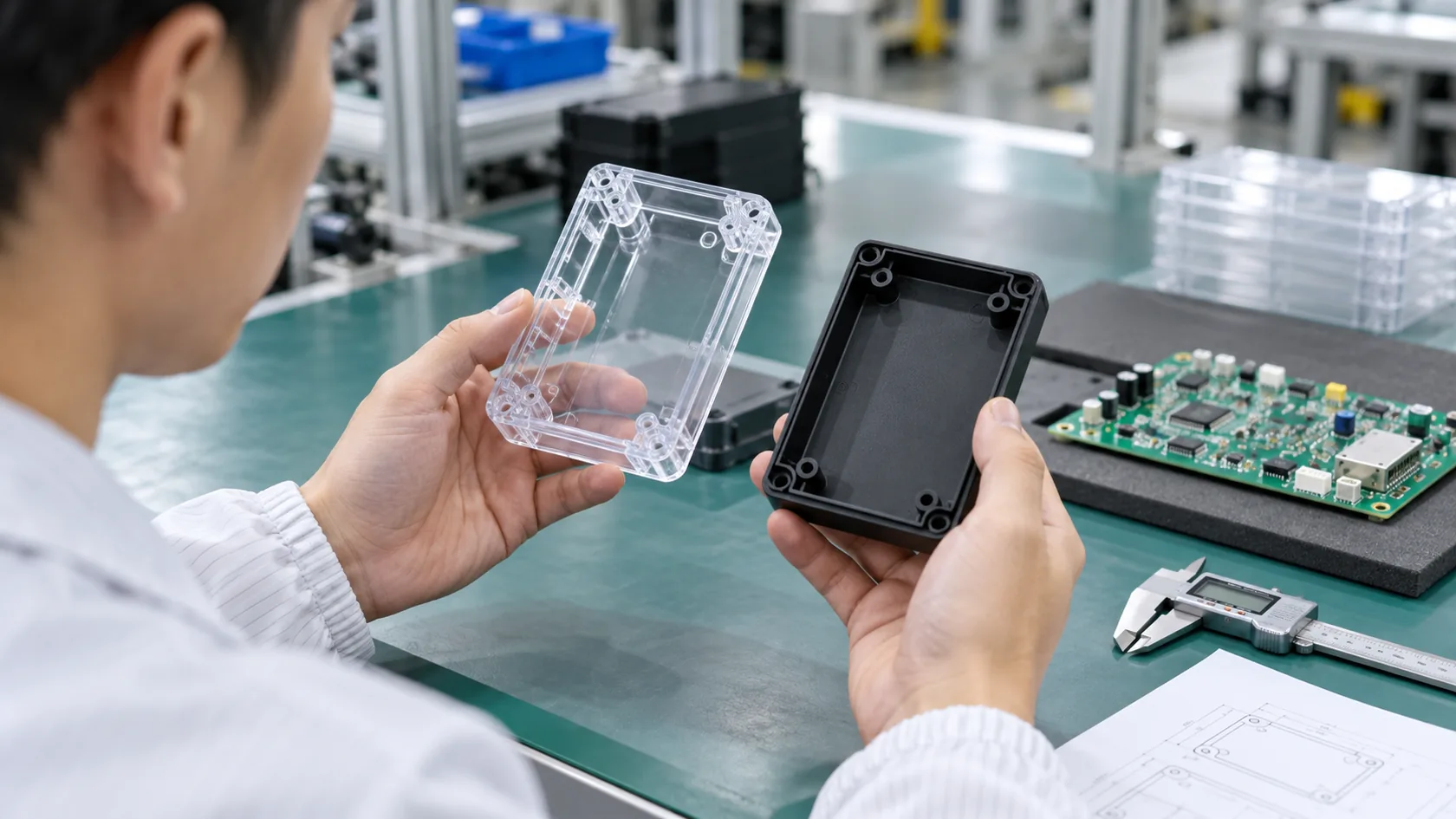
Most days in my factory start the same way. I open my inbox, download a drawing, and see one quiet note in the title block: “Enclosure: IP54.” No extra context. No photos of the site. Just those four characters deciding the future of a project.
On my side of the world, that small code is never “just” a label. It decides whether a control box survives steam from a cleaning hose, fine dust in a packing room, or random splashes from a worker who is in a hurry and not reading any spec sheet. It also decides how much my client pays for sealing, gaskets, and machining.
Many of my buyers are people like Davide from Finland or John from Hungary. They design good electronics. They know their market. But they do not live inside enclosure factories every day. They see IP44, IP54, IP65, IP66 on different datasheets and think, “These look close. Which one is safe, and which one is overkill?”
From my side at MaidaTech, IP54 sits in the “middle ground.” It is not a flimsy office box. It is not a fully sealed outdoor warrior. It is that working-class level where dust is present, water appears sometimes, and people still want a reasonable price and normal lead time.
I have a simple habit when a new IP54 project lands on my desk: I ignore the rating for a moment and ask myself, “What will this enclosure actually suffer in ten years of real use?” That question often changes the design more than any textbook table.
If we want to use IP54 with confidence, we first need to strip away the mystery and see what this rating really says, and what it quietly does not promise.
What Does IP54 Mean?
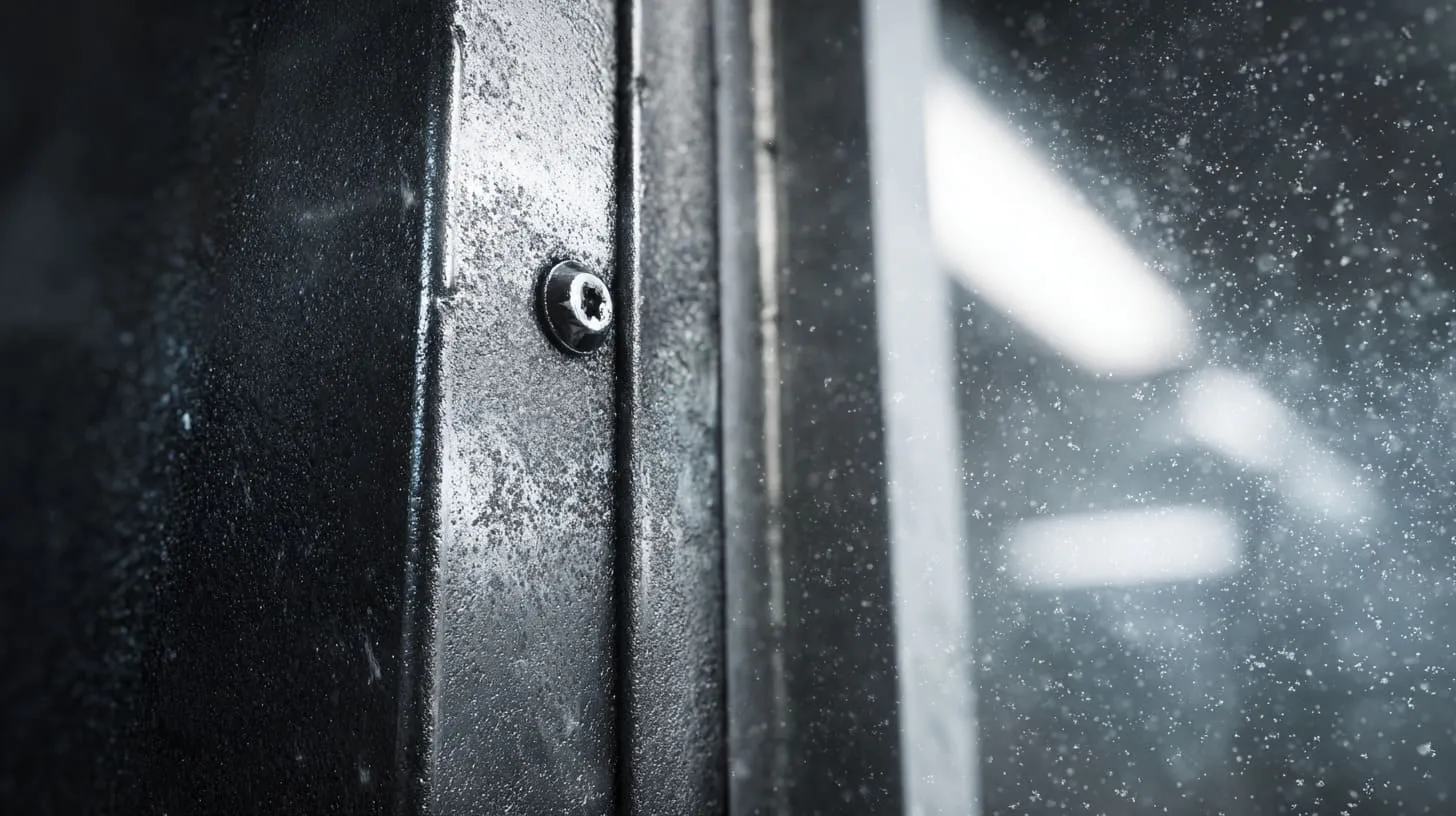
When someone asks me, “Is IP54 waterproof?” I already know the project is in danger. IP ratings are not magic labels. They are simple codes that tell us how much protection an enclosure offers against solids and water. Nothing more. Nothing less.
Understanding the IP Rating System
IP stands for Ingress Protection. The code has two digits:
- The first digit is for solids and dust.
- The second digit is for water.
A simple summary looks like this:
| Position | What it Protects From | IP54 Value | What That Value Means in Plain Language |
|---|---|---|---|
| 1st | Solids / Dust | 5 | Dust can enter, but not enough to harm the equipment |
| 2nd | Water | 4 | Water splashes from any direction will not harm the equipment |
So IP54 means:
- The enclosure stops most dust from building up in a harmful way.
- The enclosure can handle splashes from any direction, not pressure jets, not immersion.
This is very different from “dust-tight” or “jet-wash safe.” It is more like a good raincoat, not a deep-sea diving suit.
IP54 vs Other Ratings (IP44, IP65, IP66)
Engineers often put IP44, IP54, IP65, and IP66 on the same slide when they compare options. On paper they look like small steps. In real life they are big jumps in seal design, cost, and risk.
Here is a simple comparison:
| Rating | Solids Protection | Water Protection | Typical Use Case |
|---|---|---|---|
| IP44 | Objects >1 mm, limited dust | Splashing water | Indoor / sheltered outdoor, low dust, low cleaning |
| IP54 | Dust-protected (no harmful deposit) | Splashing water from any direction | Light industrial, semi-dirty rooms, basic outdoor covers |
| IP65 | Dust-tight | Low-pressure water jets from any direction | Heavy industrial, outdoor boxes, wash-down zones (mild) |
| IP66 | Dust-tight | Powerful water jets from any direction | Harsh outdoor, strong wash-down, exposed installations |
The jump from IP44 → IP54 is mainly about dust.
The jump from IP54 → IP65 / IP66 is mainly about water and sealing.
A few key trade-offs I see in projects:
- Higher IP ratings almost always mean better sealing, but also:
- More complex gaskets
- Tighter machining and flatness control
- More expensive assembly and QC
- IP54 can be enough when:
- Dust exists but does not form thick layers
- Water comes from incidental splashes, not cleaning guns
- Staff do not spray directly into vents and doors
- IP65 or IP66 is safer when:
- There is frequent hose cleaning
- The enclosure is fully outdoors in heavy rain
- Failures would stop a whole line or cause safety issues
On tricky projects, I treat IP54 like a light shield and ask myself, “If the worst-case mess happens here, does this light shield still hold, or do we actually need a thicker wall?”
When you understand these jumps, it becomes much easier to choose IP54 on purpose, not just because it sits in the middle of a list.
Materials and Design for IP54 Enclosures
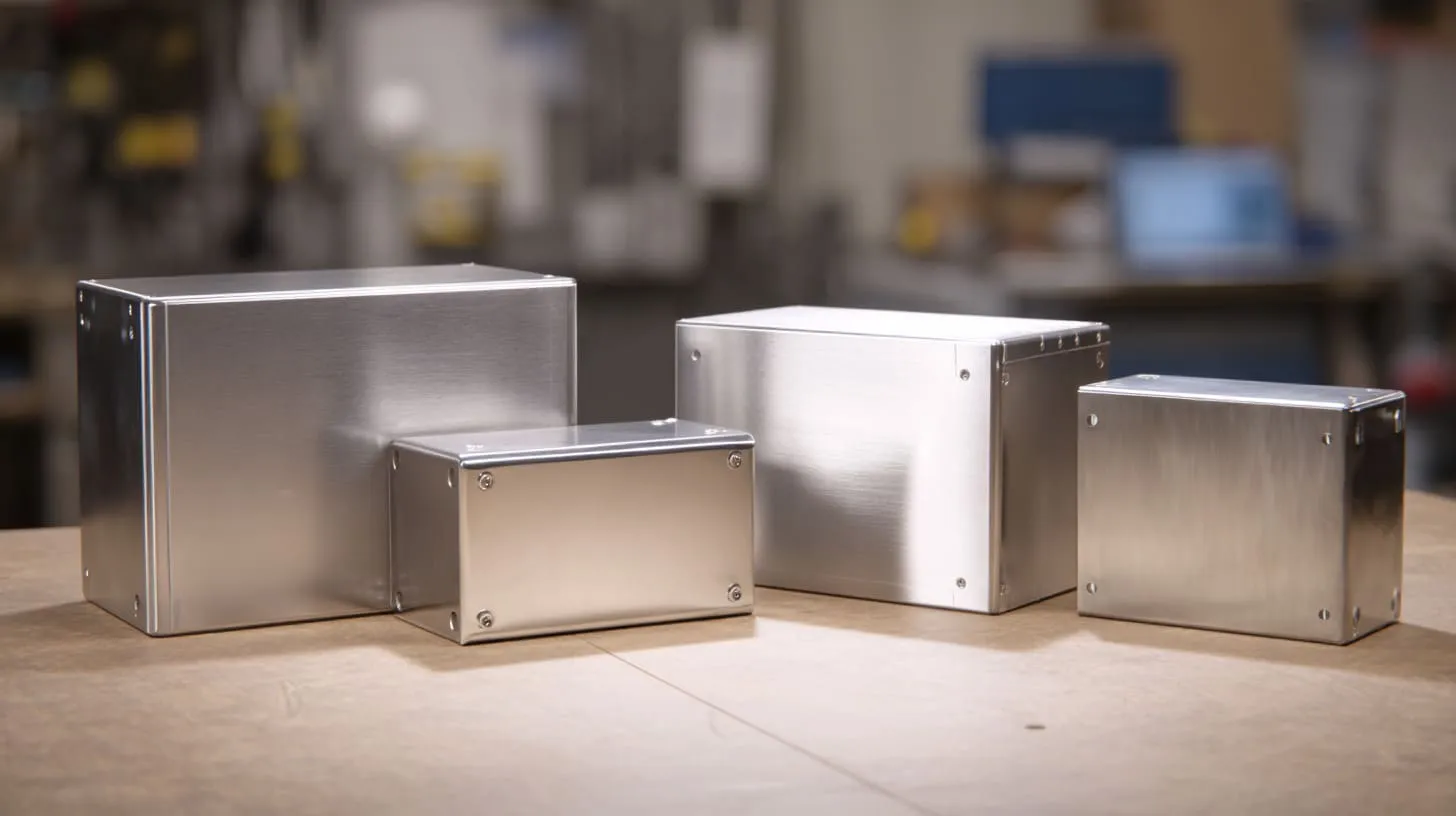
The rating code tells us what level of protection we aim for, but the materials and design decide whether we can actually reach it and keep it for years. I often see good electronics packed inside the wrong box. The label says IP54, but the real life story says “maybe.”
Common Materials Used
For IP54 enclosures, I usually see four main material families:
- Aluminum (often 6061 or 5052)
- ABS plastic
- Polycarbonate (PC)
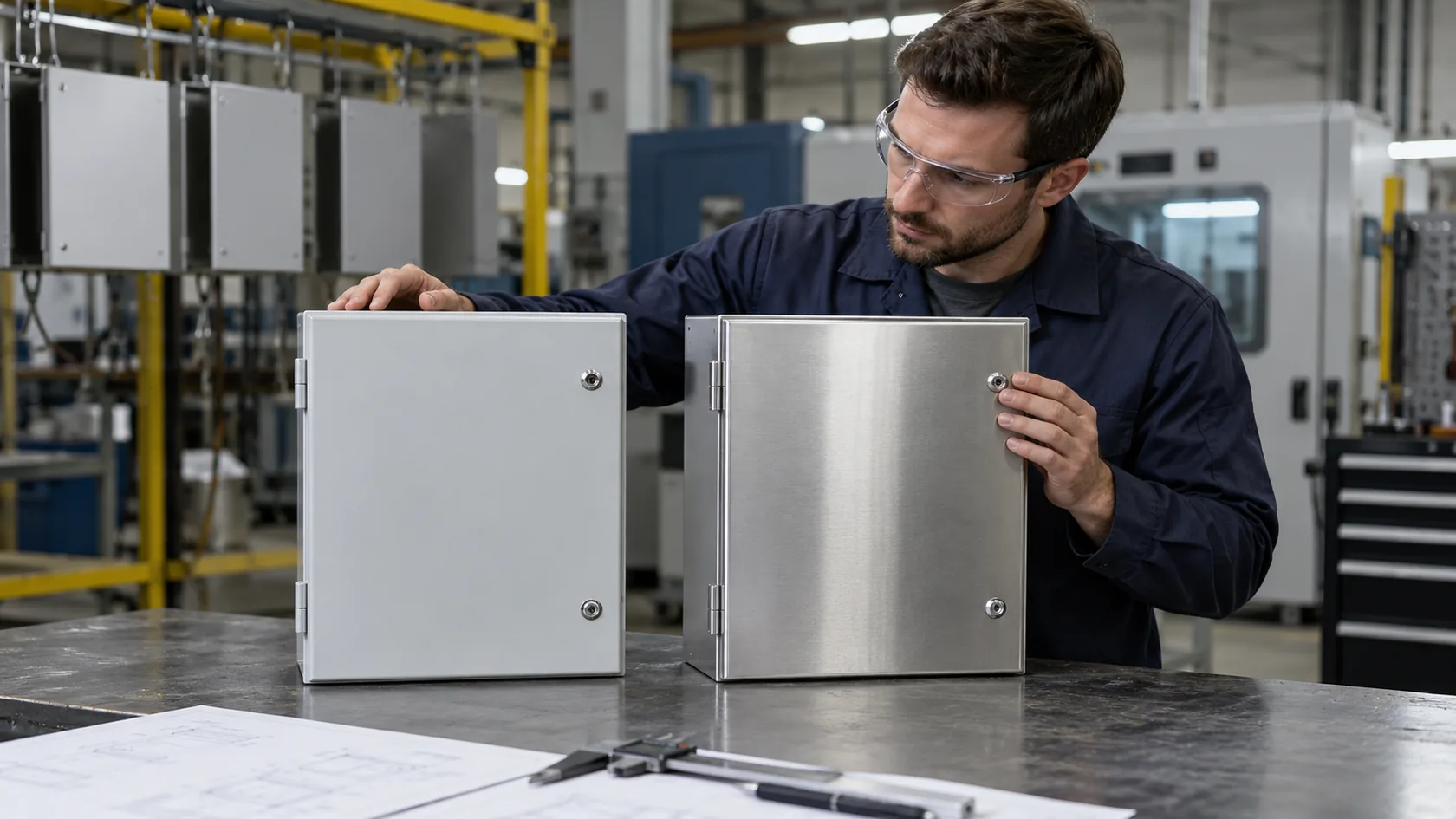
- Stainless steel
Each one has its own mix of strength, cost, and appearance.
| Material | Strength & Durability | Corrosion / UV Behavior | Typical Use in IP54 Projects |
|---|---|---|---|
| Aluminum | Strong, light, good for machining | Needs coating or anodizing near sea / outdoors | Control boxes, industrial electronics, OEM housings |
| ABS Plastic | Good impact resistance, easy to mold | Weak against strong UV, can yellow or crack | Indoor devices, low-cost electronics, junction boxes |
| Polycarbonate | Very tough, good impact, better UV grades | Can scratch, needs care for appearance | Outdoor sensors, light boxes, IoT nodes |
| Stainless Steel | Very strong, heavy, great corrosion | Good for harsh or hygienic environments | Food plants, chemical areas, tough wash-down zones |
For many B2B projects with my clients, aluminum and polycarbonate cover most needs. ABS is fine for indoor use where UV is not strong. Stainless steel appears when hygiene or aggressive chemicals become the key concern.
When we choose a material, I rarely ask “Which one is the strongest?” first. I usually start with “Which one will give the maintenance team the least trouble after five years?” because long-term behavior is where many IP54 stories break.
Gasket and Sealing Considerations
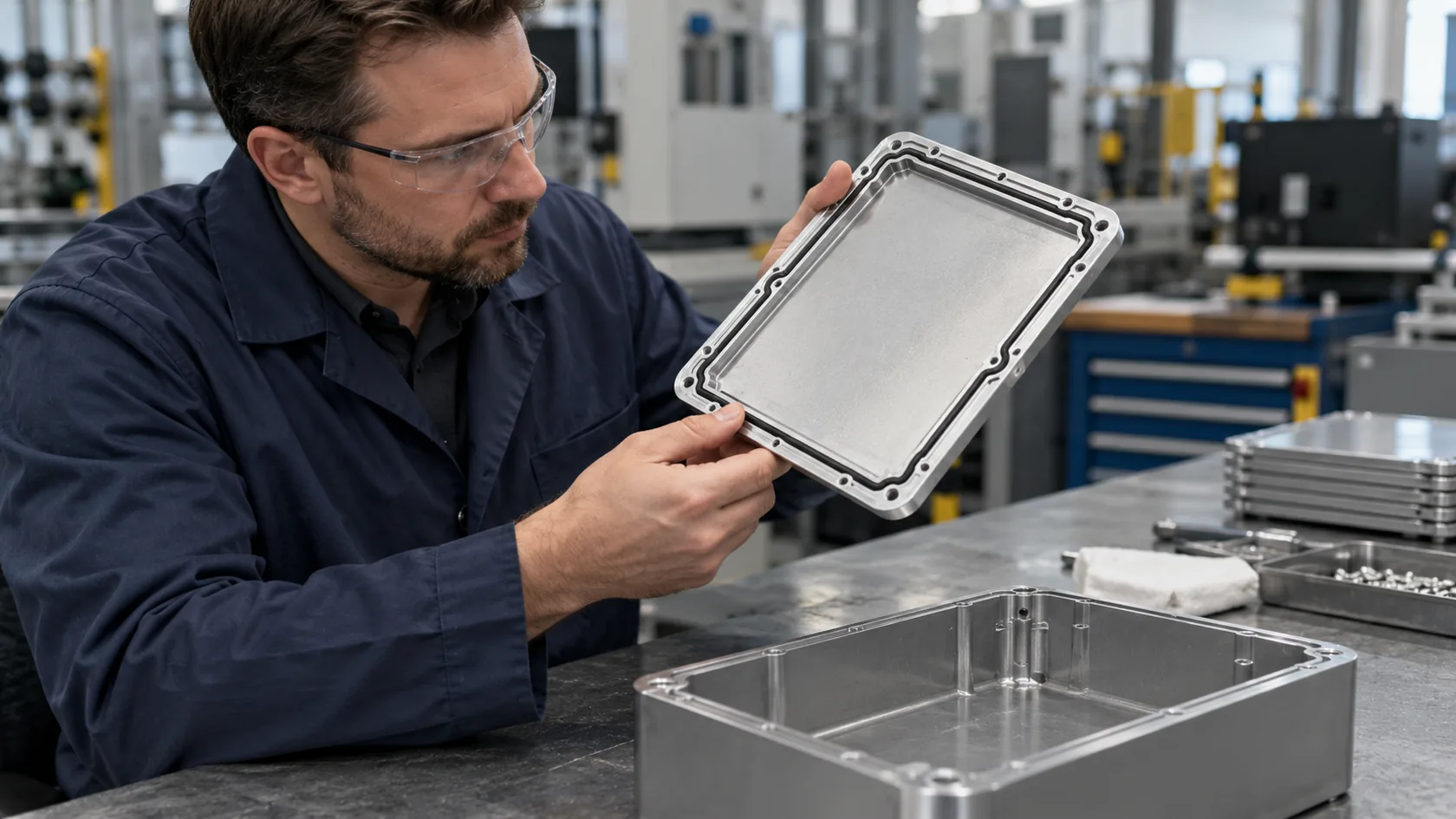
An IP54 enclosure without a proper gasket is like a solid door with no frame. It looks strong in CAD, but in the field it leaks through every small gap.
Common gasket types we use include:
- Foam gaskets – easy to compress, good for doors and covers
- Silicone gaskets – good temperature range, stable over time
- Rubber (EPDM, neoprene) – good general sealing, affordable
Simple comparison:
| Gasket Type | Pros | Cons | Typical Use |
|---|---|---|---|
| Foam | Easy to compress, cheap, good for IP54 | Can age faster, sensitive to chemicals | Indoor doors, low-pressure covers |
| Silicone | Wide temp range, good memory, clean | Higher cost, needs proper bonding | Food, medical, high temp or UV exposure |
| EPDM / Rubber | Robust, good outdoor performance | Can swell with some oils or chemicals | Outdoor boxes, industrial panels |
Design details that matter more than people expect:
- Screw positions: If screws are too far apart, the gasket does not compress evenly.
- Corner design: Sharp corners can leave micro-gaps in the gasket path.
- Surface flatness: Warped covers create “leak highways,” especially near hinges.
For IP54, we do not need extreme sealing like IP66, but we still need consistent compression along the gasket path. That means thinking about the door, hinges, screws, and even the paint thickness as one system.
Ventilation and Heat Dissipation
One of the biggest fights in enclosure design is between cooling and sealing. Electronics want air. IP ratings want walls.
For IP54, we usually aim for:
- Filtered vents:
- Mesh or louver with a filter pad behind
- Enough area for airflow, but with a drip shape that directs water away
- Positioning of vents:
- On the side or bottom, not on the top where water sits
- Away from direct hose or cleaning spray lines
- Passive vs active cooling:
- Passive: heat sinks, larger wall thickness, natural convection
- Active: fans behind IP54-rated vent covers, with serviceable filters
I like to sketch the airflow path and water path on the same drawing. Hot air moves up. Water falls down. Dust floats around lazily. When you see these paths together, many vent mistakes become obvious before the first prototype.
When we pick materials and design features for IP54, I often choose the option that reduces daily stress on the gasket, not just the one that looks best in a catalog, because tired gaskets are the silent killers of “good” IP designs.
Many teams only feel the impact of these choices when they place the enclosure in the real environment, so let us talk about where IP54 actually makes sense.
Common Applications of IP54 Enclosures
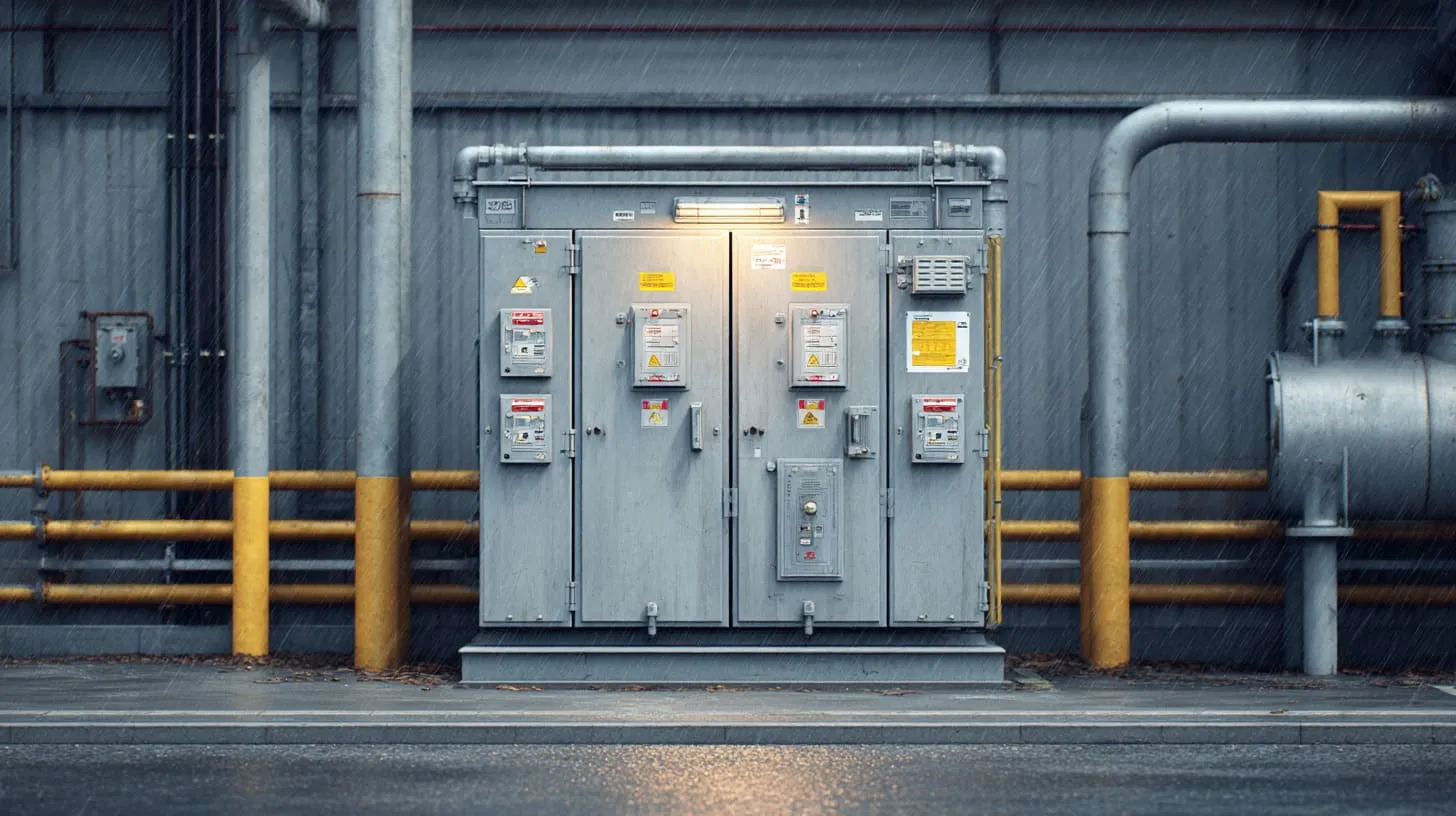
IP54 enclosures show up in that grey area where the environment is not clean, but also not a full-scale storm. Clients sometimes say, “It is kind of outdoor, but not really,” and that is usually when IP54 appears on the drawing.
Indoor/Outdoor Hybrid Environments
I see IP54 a lot in:
- Covered loading docks
- Semi-open warehouses
- Food processing zones with steam but indirect wash-down
- Industrial corridors where dust moves, but rain does not hit directly
In these places:
- Dust is present, but it usually settles slowly.
- Water appears as condensation, steam, or splash, not as direct high-pressure jets.
- People sometimes spray cleaning water nearby, but not deliberately at the enclosure.
A simple view:
| Environment Type | Main Risks | Is IP54 Usually Enough? |
|---|---|---|
| Covered loading dock | Dust, wind, rain from the side | Often yes, if not hit by direct hoses |
| Food packing corridor | Fine dust, steam, occasional splash | Often yes, if washing is gentle and indirect |
| Open roof with strong rain | Heavy rain, wind, standing water | Often no, IP65 or higher is safer |
If the cleaning team likes to use pressure washers “everywhere,” IP54 starts to look weak. If they use mops and mild sprays, IP54 is more comfortable.
Electronics and Control Boxes
For electronics, IP54 is common in:
- Basic control panels inside factories
- Junction boxes for sensors and actuators in semi-protected zones
- IoT nodes mounted under canopies or inside equipment frames
These projects care about:
- Keeping dust out of terminal blocks and PCBs
- Avoiding random splashes during routine work
- Maintaining a reasonable box size and cost
IP54 works well when:
- Cables enter through proper glands or sealed knockouts
- The enclosure is mounted so water cannot sit on the top edge
- Staff do not open the door while the area is being cleaned
Light Industrial & Consumer Applications
You can also see IP54 in lighter use cases:
- Solar inverter housings mounted under an eave or inside a balcony area
- LED drivers for indoor or sheltered installations
- Battery enclosures for small backup systems kept in dusty rooms
In these cases, the risk is more about dust and casual splashes than about industrial wash-down or mud storms.
When clients ask me “Is IP54 enough here?” I imagine the messiest person on site with the strongest hose and check if that scene still looks safe, because people and water never follow the spec sheet perfectly.
Once we know where IP54 fits, we can tackle a frequent source of confusion: the link between IP54 and NEMA ratings.
IP54 vs NEMA Ratings
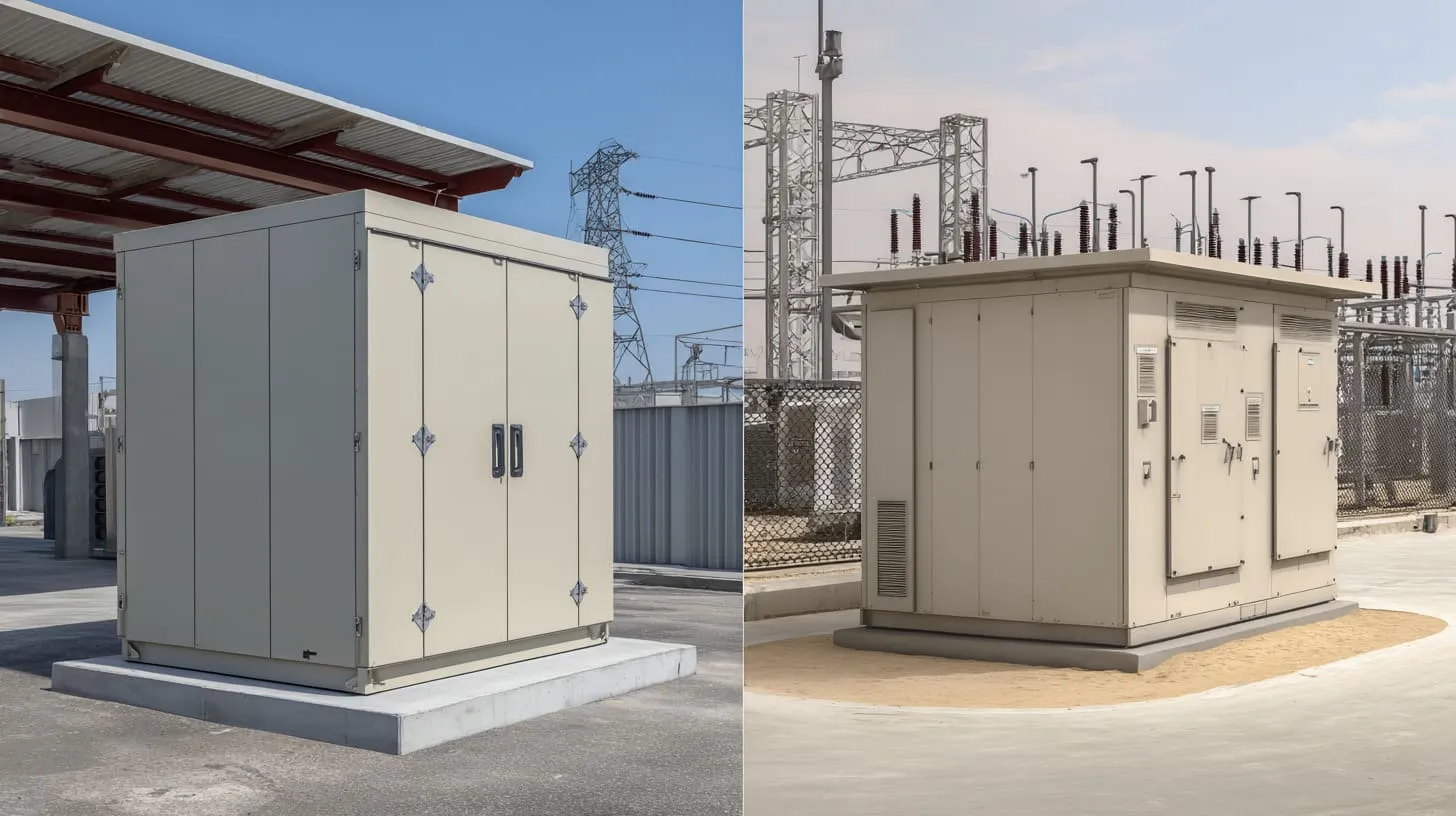
When European and North American standards meet in one project, IP and NEMA codes often collide in the same email thread. One drawing uses IP54, another uses NEMA 3 or 3R. The team then asks, “Are these the same?”
The short answer: they are related, but not identical.
Is There a NEMA Equivalent?
IP ratings come from IEC 60529. NEMA ratings come from a different standard system. Some tables try to match them, but they are still approximate because NEMA includes extra elements like corrosion resistance and ice formation.
Common rough mapping:
| NEMA Type | Approx. IP Level | Short Description (Simplified) |
|---|---|---|
| 1 | IP20 | Basic indoor protection, no water protection |
| 3 / 3R | Around IP54 | Outdoor capable, protects against rain, sleet, windblown dust |
| 4 / 4X | Around IP66 | Hose-down capable, more sealed, corrosion resistance for 4X |
So, NEMA 3 / 3R often overlaps with IP54 in real use. But:
- NEMA cares more about construction details like ice and corrosion.
- IP cares more about measured ingress of solids and water under test conditions.
I never tell a client “IP54 equals NEMA 3” in a strict way. I say, “IP54 is usually in the same protection neighborhood as NEMA 3, but we need to read the project spec very carefully.”
Choosing Between IP and NEMA Standards
Which one you use depends a lot on:
- Project location
- Sector (industrial, utility, telecom, etc.)
- End customer habits
A rough pattern I see:
| Region / Customer Type | Common Preference | Notes |
|---|---|---|
| Europe, Asia, many OEMs | IP ratings (IEC 60529) | Clear focus on dust and water ingress |
| North America utilities / OEMs | Mix of NEMA and IP | NEMA used in many legacy specs |
| Global brands | Often show both | To speak both languages in one datasheet |
When a project spec lists both IP54 and a NEMA type, I ask:
- Which one has legal weight for this installation?
- Which test report does the inspector expect to see?
- Is corrosion, ice, or wash-down part of the story?
Whenever a client mixes IP and NEMA terms in the same sentence, I slow the conversation down until we agree on which standard drives the final decision, because mismatched expectations here can ruin budgets and schedules later.
Once we know the target standard, the next step is to make sure the rating is real, not just printed in nice font.
Compliance, Testing, and Certifications

I sometimes receive drawings that say “IP54” in bold letters, but when I ask how they tested it, the room goes very quiet. A rating written in CAD is free. A rating proven in a test lab is not. That gap matters a lot if you want your product to last.
How IP Ratings Are Tested
Under IEC 60529, IP54 tests look roughly like this:
Dust test for “5”:
- The enclosure goes into a dust chamber.
- Fine dust circulates for a defined time.
- After the test, dust may be present inside, but not in a way that harms the equipment.
Water test for “4”:
- The enclosure is sprayed with water from all practical directions.
- The water has a defined flow rate and distance.
- After the test, any water inside must not cause harmful effects.
Many manufacturers use:
- Internal testing: their own chambers and spray setups
- Third-party labs: for formal reports and certificates
Both have value. Internal tests help during design and quick changes. External labs give you documents that buyers and inspectors can trust.
Relevant International Standards
For a B2B buyer like Davide or Jackson, IP54 is only one part of the compliance picture. Other standards often appear at the same time:
| Standard / Mark | What It Covers | Why It Matters for Enclosures |
|---|---|---|
| IEC 60529 | IP rating (dust and water ingress) | Basis for IP54 marking |
| CE (Europe) | Safety and EMC for many product types | Enclosure must not compromise safety |
| UL / cUL | Safety testing for North America | Material flammability, construction details |
| RoHS | Restricted hazardous substances | Material composition in plastics, coatings, etc. |
| REACH | Chemicals and substances regulations | Long-term environmental and health considerations |
Good suppliers know how these pieces interact. For example:
- Plastic material may need UL 94 flammability rating.
- Paint or coating should be compatible with RoHS.
- Cable glands must not ruin the IP54 rating when installed.
If a supplier cannot explain how they tested their IP54 enclosure or which standards their materials follow, I assume the rating is just an optimistic sticker, not a measured result.
Once the rating and compliance side is solid, most buyers start asking the more exciting question: “How far can we customize this box without breaking IP54?”
Customization Options for IP54 Enclosures
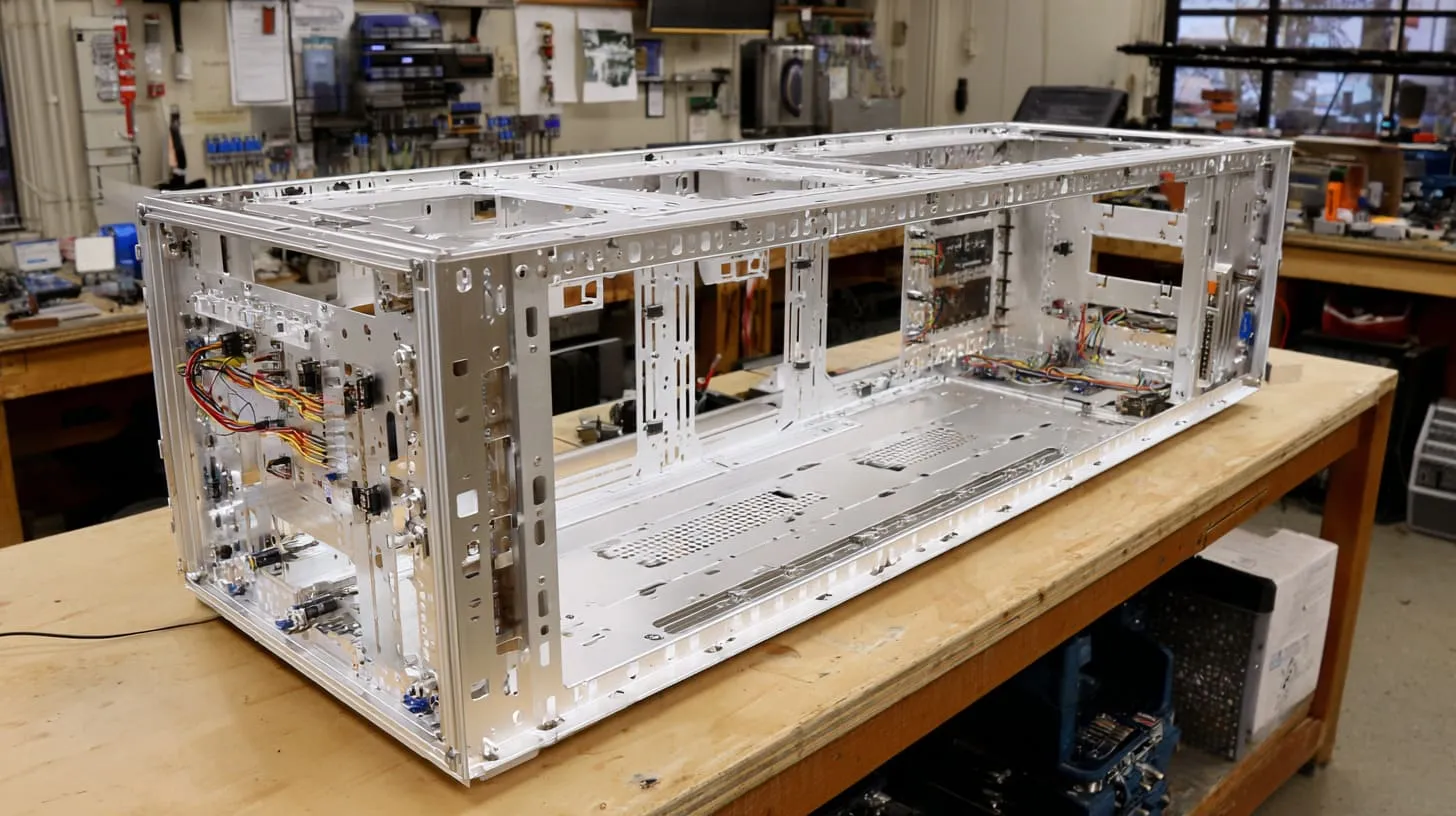
Custom work is where my team and clients spend most of our time. The base IP54 enclosure is only the starting point. Logos, cutouts, brackets, and special mounting often decide if the product feels like a premium solution or a generic box.
Logo Printing, Labeling, and Branding
For OEM and ODM buyers, the enclosure is part of the brand story, not just a shell. We often combine:
- Silk screen printing for logos and simple text
- Laser marking for sharp, durable labels on metal
- Engraving for deeper, more permanent branding
- Custom labels (stickers, plates) for serial numbers and warnings
A simple comparison from my daily work:
| Method | Best For | Durability | Notes |
|---|---|---|---|
| Silk printing | Color logos, basic text | Good if protected | Needs correct ink and surface prep |
| Laser marking | Metal logos, fine text | Very high | Great for small, dense information |
| Engraving | Deep marks, harsh use | Very high | Higher cost, more machining time |
| Labels | Variable data, certification | Medium to high (depends) | Needs correct adhesive for IP54 environment |
On IP54 projects, we try to place labels away from gasket paths and critical sealing zones. Ink, glue, and extra plates are harmless in the right place and very annoying in the wrong place.
Cutouts and Internal Mounting
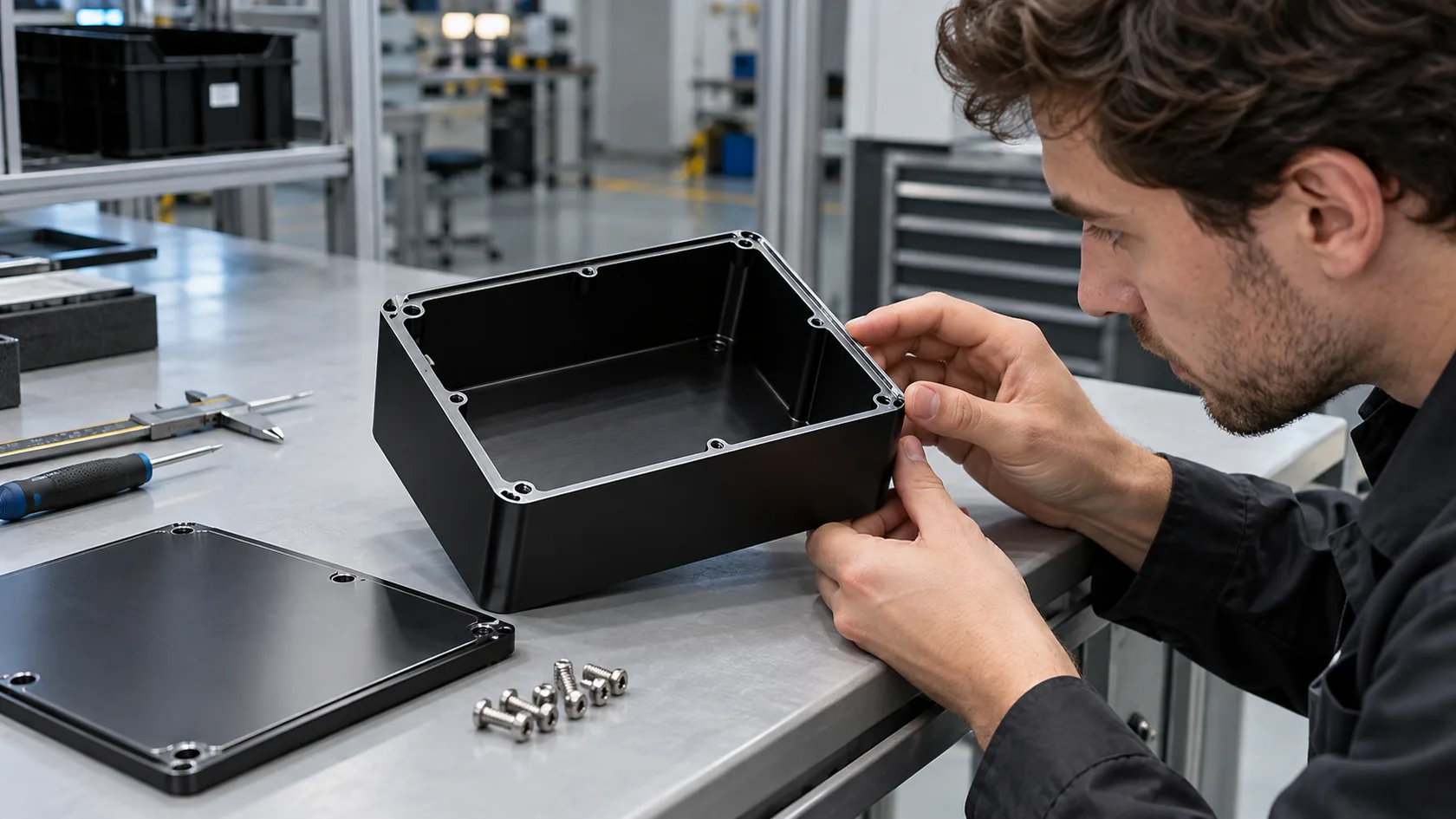
Most IP54 enclosures need custom cutouts for:
- USB, HDMI, and RJ45 connectors
- Cable glands and multi-cable entries
- Switches, push buttons, small displays
- Vent covers and filters
We usually use:
- CNC machining for aluminum and plastic
- Laser cutting or punching for sheet metal parts
- Threaded inserts for repeated assembly and maintenance
For internal mounting:
- DIN rails for terminal blocks and small devices
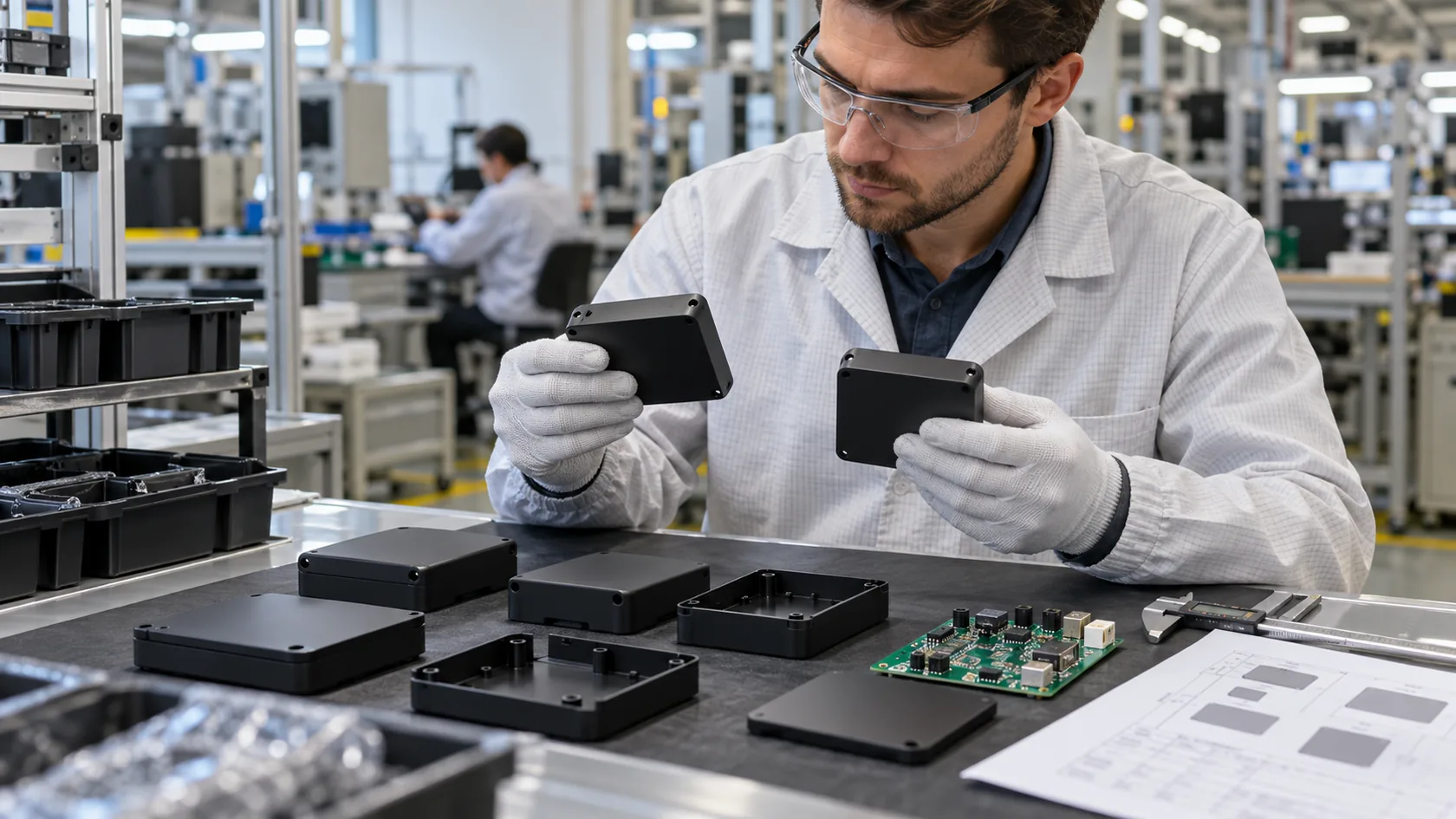
- Custom brackets for PCBs or power modules
- Standoffs for clearances and airflow
Key point: every new hole is a potential leak path. That means:
- Use proper IP54-rated cable glands.
- Keep connector groups compact so you can seal around them.
- Avoid random drilling on site; pre-engineer the layout.
When we introduce new cutouts to an IP54 design, I treat each one as a suspect until it proves itself sealed in a sample or small pilot run, because leaks love to hide in the holes we added “just before production.”
Bulk Order Considerations
For B2B buyers, IP54 projects rarely stop at one or two units. They move to hundreds or thousands. That changes how we plan the work.
Typical bulk order flow I use:
Drawings and 3D files
- STEP or STL for boards and devices
- 2D drawings for key dimensions and tolerances
Prototype stage
- 1–10 units with full machining and gaskets
- Fit checks, cable routing tests, basic water splash checks
Pilot batch
- 50–100 units to test assembly and logistics
- Adjust processes before full mass production
Mass production
- Clear quality checkpoints for machining, gasket application, final inspection
For IP54, MOQ depends on size and complexity, but we can usually balance tooling cost with custom work in a way that works for wholesalers, system integrators, and brand owners.
After clients feel comfortable with customization, the next big question is not “Can I get IP54?” but “Who can I trust to build it correctly, on time, and at scale?”
Buying Guide: How to Choose an IP54 Enclosure Supplier

Choosing an IP54 enclosure is one step. Choosing the right supplier for that enclosure is another, and it can save or destroy a project timeline. I see many good engineers stuck not because of design, but because of slow replies, unclear drawings, or hidden shortcuts in production.
Key Selection Criteria
When I help buyers think through suppliers, I usually look at a few simple but important points:
| Criterion | What to Look For in a Supplier |
|---|---|
| Experience with IP enclosures | Real IP projects shown, not only catalog text |
| Material control | Clear material specs, proof of continuity over time |
| Quality certifications | ISO systems, test reports, basic QC documents |
| Engineering support | Ability to read CAD, suggest changes, catch conflicts early |
| Communication speed | Replies within one working day on key questions |
| Sample handling | Clean samples, on-time delivery, clear labeling |
Good factories do not just say “yes” to every dimension. They push back when something hurts sealing, assembly, or long-term reliability. That friction is healthy.
Red Flags to Watch For
Some warning signs I tell buyers to avoid:
- The supplier claims many IP ratings but cannot show any actual test process.
- Drawings change between sample and mass production without clear notice.
- The sales team answers quickly when you ask about price, but very slowly when you ask about technical details.
- Photos show messy gasket application or uneven paint near gasket paths.
- They suggest drilling holes on site instead of machining them in a controlled process.
If a supplier treats the IP54 label as a simple marketing tag rather than a performance promise, you will probably feel it later in warranty costs, returns, and long support emails.
How MaidaTech Supports OEM/ODM Buyers
At MaidaTech, most of our daily work comes from people like Davide, John, and Jackson. They do not just want a box. They want:
- A custom enclosure that fits their board, connectors, and cables.
- Their own branding, labels, and packaging.
- A stable partner in China who understands both design and production.
So we focus on a few things:
- Real engineering conversation: sharing 3D models, suggesting better gasket paths, adjusting wall thickness, checking thermal behavior.
- Flexible customization: CNC cutouts, logo printing or engraving, special mounting, and custom packaging.
- Scale and timing: prototypes, pilot runs, and larger batches for export to North America, Europe, Japan, and South Korea.
When I choose a supplier for my own joint projects, I care less about who has the prettiest catalog and more about who can explain exactly how they keep an IP54 rating alive from drawing to the last box on the pallet.
If you can trust a factory to protect your electronics from dust and water, you are usually also trusting them to protect your reputation in front of your customers.
Conclusion
IP54 looks simple on paper. Two digits after “IP” and we move on. But in my daily work, that small code is the center of many long conversations between design, purchasing, production, and the people who will install and maintain the system.
I see IP54 as a practical compromise. It is strong enough for many semi-exposed environments, but not so extreme that you pay for sealing you never use. It works well when:
- Dust is present but not overwhelming
- Water appears as splashes or light cleaning, not high-pressure jets
- Staff use the equipment in a normal, slightly imperfect way
The reason I talk so much about real-world scenes, not just standards, is simple: most failures I see do not come from bad IP tables. They come from optimistic assumptions about people, hoses, dust, and time. That is why I judge every new IP54 request by asking, “What will this box really live through day after day, and can this rating handle that story?”
When a project feels uncertain, I would rather nudge a client toward a safer rating or a stronger design than watch them lose trust in the field because a “good enough” box was not actually good enough.
If you are working on a new device, control panel, or OEM project and you are still not sure whether IP54 is the right choice, feel free to treat me as part of your extended team. Send me your drawings, photos of the site, and a short description of how the enclosure will be used. I am happy to think it through with you, suggest options, and help you turn a simple code like IP54 into a real, reliable product that fits your budget and your market.