Skip to content


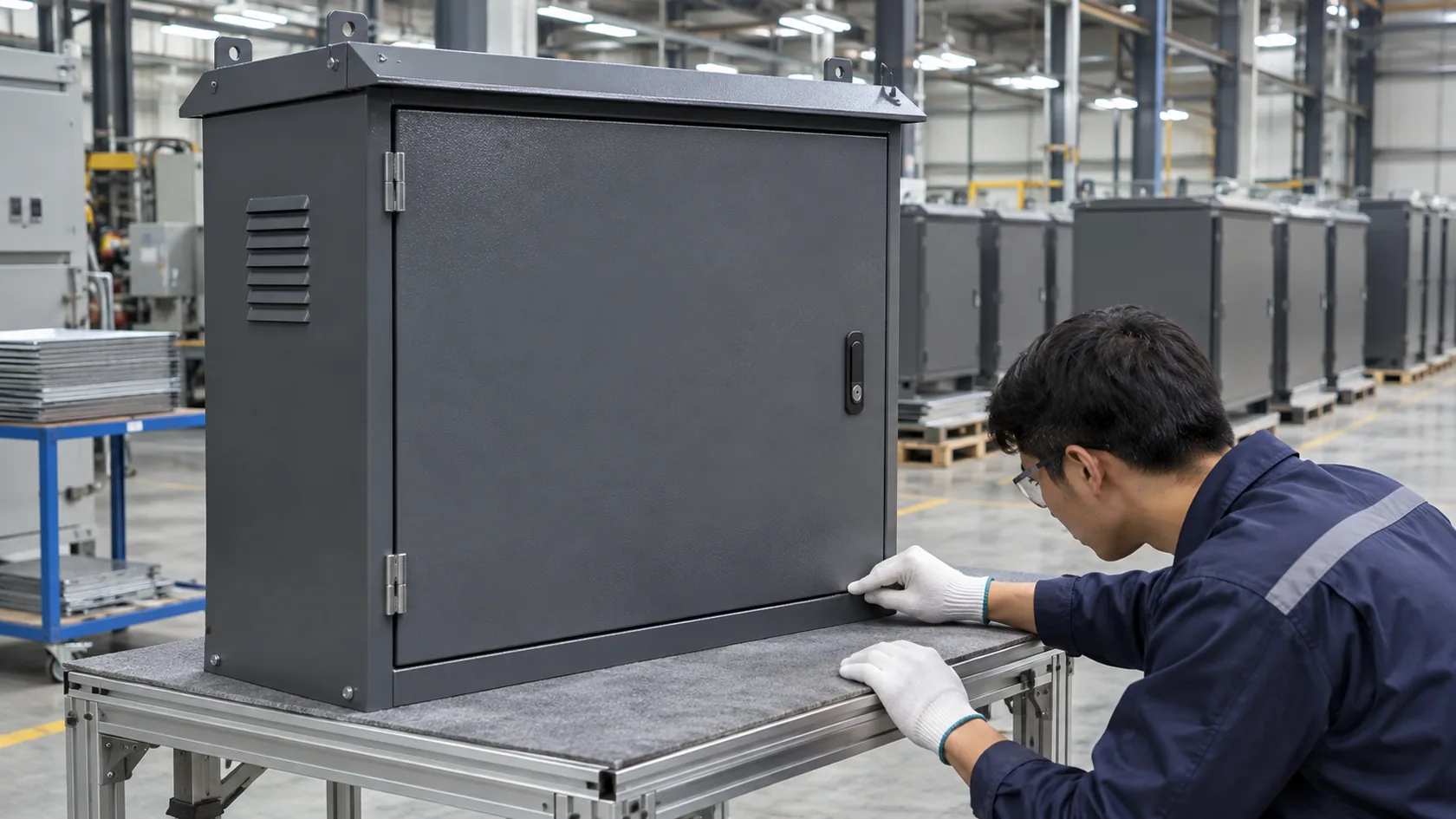
At final inspection, a steel enclosure may look exactly right: clean black panels, an even sheen, and no visible bare metal. The weak point often appears later, at a sharp bottom edge, a weld seam, a deep return, or the place where an installer adds a bracket. That is why a powder-coating failure can be frustrating to diagnose. The visible defect shows up at the end of the story, while the original cause may have entered at fabrication, pretreatment, coating, cure, or installation.
For buyers, “powder-coated steel enclosure” is a finish description, not a complete durability specification. The steel condition, geometry, cleaning, pretreatment, coating product, application controls, cure, and installed environment act as one system. In this guide, I break that system into seven common causes. The goal is not to make every cabinet more expensive; it is to identify the few details that need to be controlled before a field failure becomes a warranty discussion.
When I review a finish requirement, I start with the future path of water and damage rather than the color chip. That habit usually reveals the real risk faster than asking only for a thicker coat.
The first place to look is the steel surface that the powder must actually adhere to.
1. Surface Contamination or Weak Pretreatment
Start with the steel, not the color card
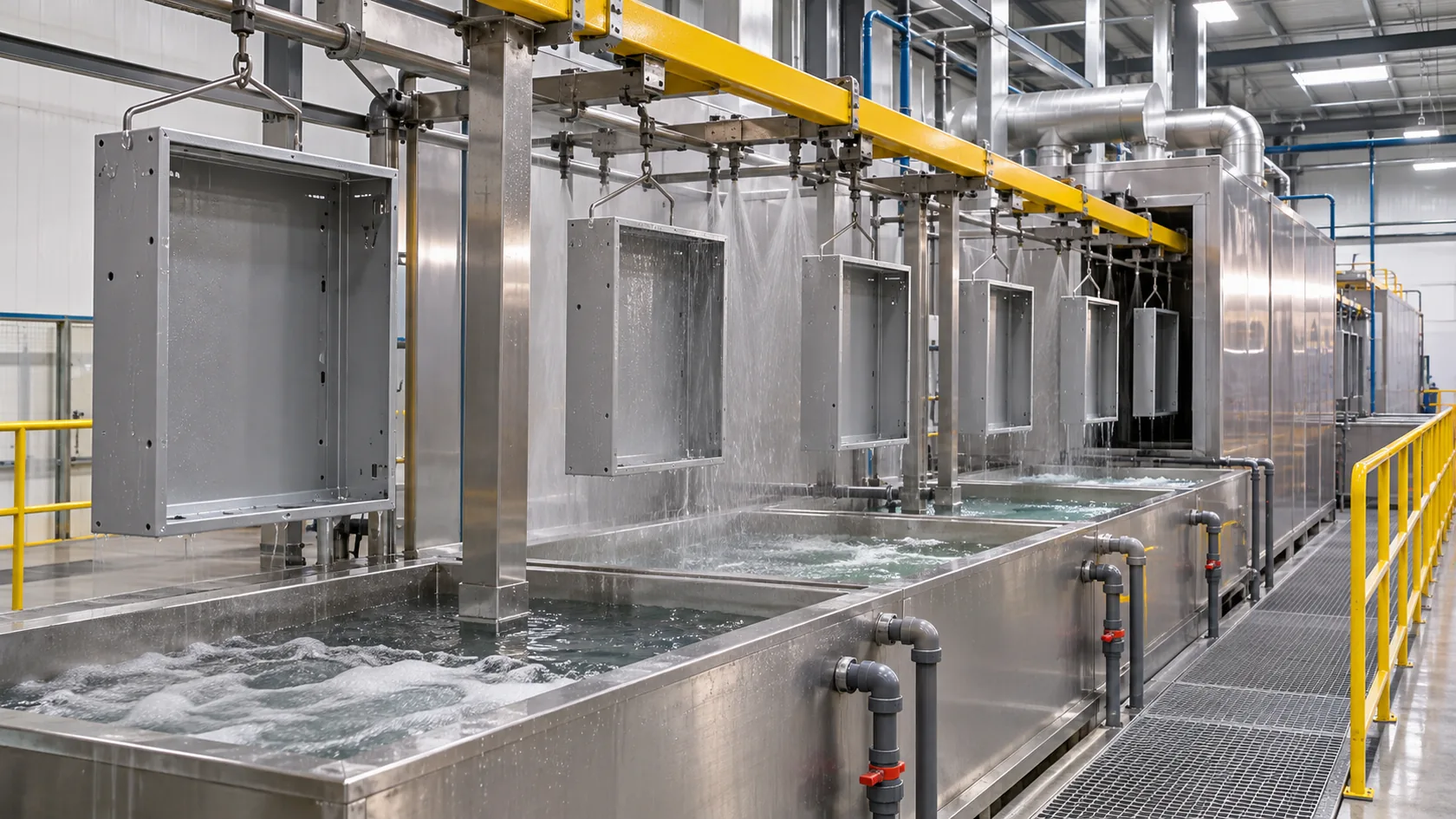
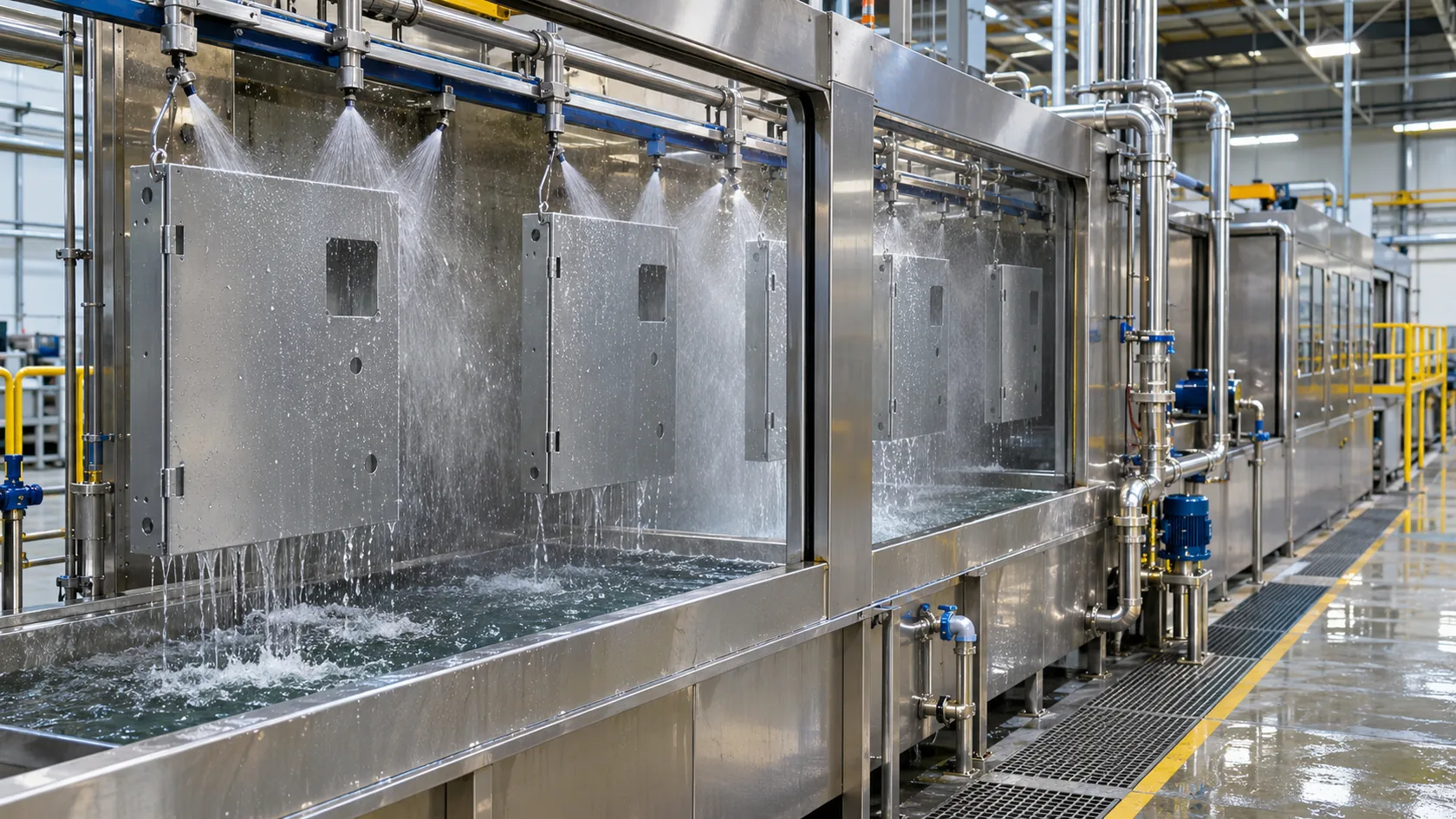
Cutting oil, forming lubricant, weld residue, grinding dust, fingerprints, flash rust, and dissolved salts can all interfere with a coating system. The powder may still look smooth after cure, but poor cleaning, contaminated rinses, incomplete drying, or unsuitable conversion treatment can reduce adhesion and corrosion resistance later. The Powder Coating Institute’s pretreatment guidance is useful here: it links adhesion to substrate cleanliness, appropriate pretreatment, and proper melt and cure.
Pretreatment is also not one interchangeable word. Iron phosphate, zinc phosphate, and other systems have different operating and environmental trade-offs. The suitable choice depends on the steel condition, exposure, selected powder, wash-line capability, and agreed validation plan. A simple indoor cover and an enclosure exposed to repeated wetting do not automatically need the same process.
Before production, ask the supplier to define the cleaning and pretreatment family, how bath condition and rinses are controlled, how parts are dried, and what prevents recontamination before spraying. On the first article, inspect weld zones, returns, and handling points as well as the easy flat face.
I do not regard a conversion coating as magic insurance. If oil or rinse residue reaches the powder booth, a sophisticated pretreatment name will not rescue the finished enclosure.
Once the surface is ready, the part still has to give the coating a realistic shape to cover.
2. Sharp Edges, Poor Weld Cleanup, and Moisture Traps

Coating cannot correct difficult geometry
Powder is a protective film, not filler metal. It cannot smooth a burr, seal an unplanned lap joint, remove weld spatter, or create drainage in a pocket that holds water. Sharp corners are especially vulnerable because coating can pull back or become thin at an edge during cure. The American Coatings Association explains how shrinkage and flow can reduce edge coverage and expose a corrosion starting point.
For enclosure fabrication, deburring and a practical edge break are not cosmetic extras. Weld seams should be cleaned, dressed where required, and reviewed for porosity, spatter, and access to the pretreatment and spray process. Folded hems, overlap joints, bottom returns, and bracket interfaces deserve a water-path check in the installed orientation. A broad painted panel can look excellent while a hidden wet seam corrodes.
| Fabrication detail | Failure mechanism | Useful release question |
|---|---|---|
| Laser-cut edge or burr | Thin, fragile coverage or chip initiation | Is the edge deburred and broken to an agreed practical condition? |
| Rough weld zone | Soil retention, poor appearance, local weak film | Can the zone be cleaned and inspected before coating? |
| Lap or folded joint | Trapped wash water or field moisture | Can it be sealed, drained, or reoriented? |
| Bracket contact face | Crevice retains water and damages the film | Is spacing, drainage, and hardware protection defined? |
In my experience, a small design change before fabrication is more reliable than trying to hide a bad edge with a vague instruction for “heavy duty” powder.
Even a well-made edge can fail if the gun cannot place enough powder where the enclosure needs it.
3. Recesses and Internal Corners Receive Too Little Powder
Make application access part of the design review
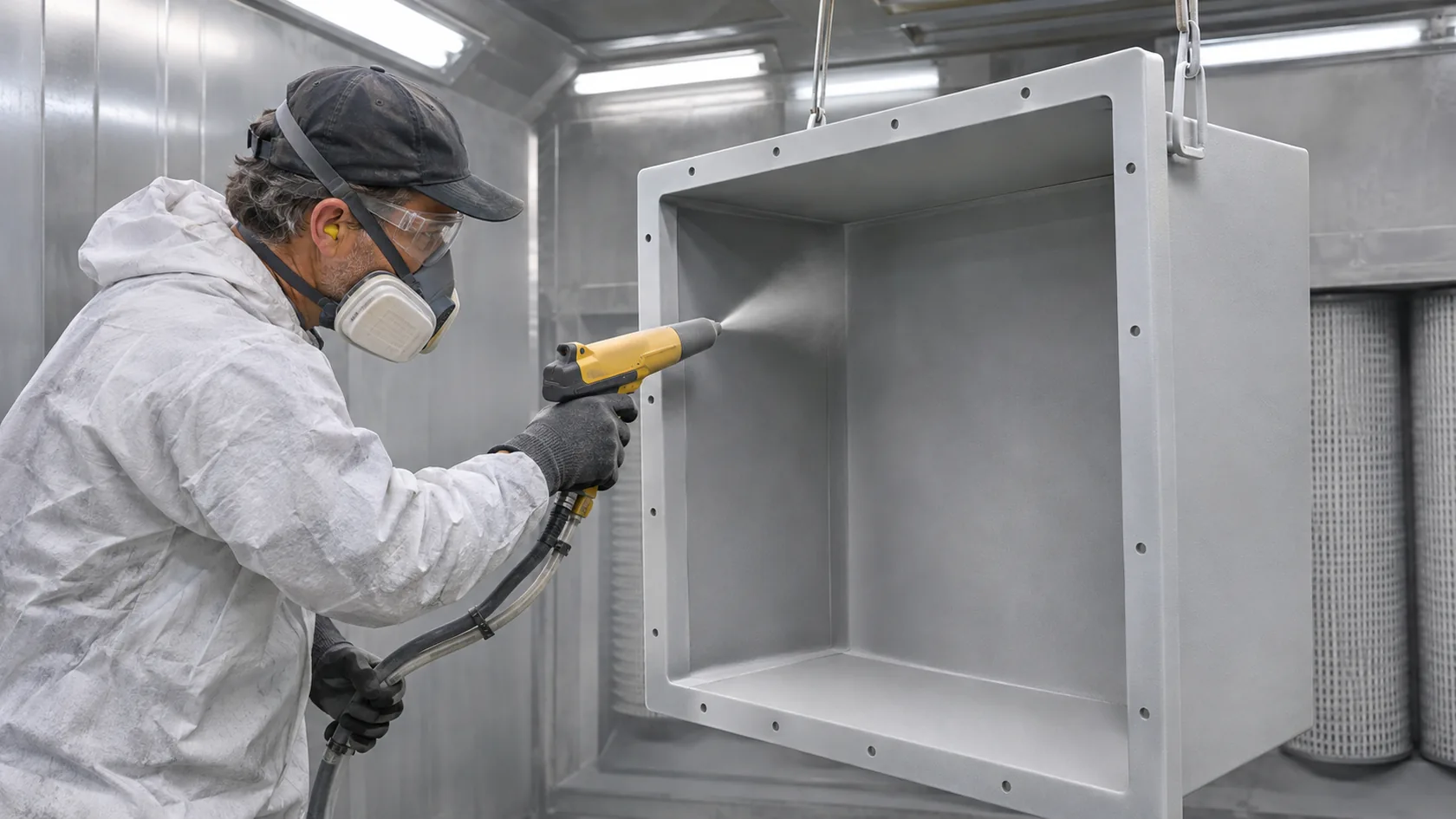
Electrostatic powder application works well on open faces, but deep recesses, narrow channels, boxed corners, returns, and closely spaced features can receive less coverage. These are often called Faraday-cage areas because the electric field can make it difficult to drive charged powder into a shielded feature. The problem is not solved by a generic high-voltage setting; gun parameters, airflow, part grounding, racking, part orientation, powder choice, and sometimes a manual pass all matter.
On a steel enclosure, inspect inner returns, deep door hems, recessed screw lands, mounting rails, and features that will later be hidden by hardware. A flat witness coupon is useful for process control, but it cannot prove that every difficult feature on a fabricated cabinet has adequate coverage. If a recess is safety-critical, corrosion-critical, or part of the external appearance, identify it on the drawing and agree how it will be coated and checked.
I flag hard-to-see features in the quotation stage because the simplest coating improvement may be a modest geometry or racking change, not extra labor after the production parts are already hanging on the line.
Coverage also needs a controlled film range; a heavier-looking surface is not a complete acceptance method.
4. Film Build Is Uncontrolled or Wrong for the Part

More powder is not an automatic repair
Too little film at an edge, recess, or weld zone can reduce the coating’s ability to protect the steel. But too much film can create its own problems: soft or uneven appearance, reduced fit at covers and threads, altered gasket lands, and difficulty at masked or conductive interfaces. The correct dry-film thickness range belongs to the named powder system and the released part geometry. It should not be copied from a different powder, panel, or cabinet.
Agree in advance on significant surfaces, measurement locations, gauge method, sample size, and the acceptance rule. ASTM D7091 covers non-destructive thickness measurement of non-magnetic coatings on ferrous and non-ferrous metals; the appropriate instrument and calibration still depend on the substrate and coating system. Use real production parts for the first-article review, particularly at external faces, edges, tight cover interfaces, and areas near masking.
| What changes on the enclosure | Why it matters | What to control |
|---|---|---|
| Thin edge or return | Early corrosion or wear can start locally | Edge preparation, spray access, and readings at feasible representative areas |
| Thick door or cover flange | Fit, latch, or gasket compression can change | Defined range on functional faces and an assembled fit check |
| Threaded or tight-fit feature | Assembly damage or poor engagement | Masking or post-process plan before coating |
| Conductive contact land | Coating interrupts the intended electrical path | Intentional masking and corrosion control, not random scraping |
I prefer a sensible, system-specific range with meaningful inspection points over the biggest number a gauge can display.
After coverage is set, the film still needs the cure profile that lets that particular powder deliver its intended properties.
5. The Cure Cycle Does Not Match the Actual Enclosure

Verify metal temperature and time, not only the oven display
Powder suppliers specify a cure schedule for their own product. The important production question is whether the actual enclosure reaches and holds the specified metal temperature for the required time. A thin cover, heavy welded base, large door, and dense rack load can heat differently even when they pass through the same oven setpoint.
Under-cure may affect adhesion, hardness, chemical resistance, and corrosion protection; uncontrolled over-bake or a mismatched cure can also affect appearance and film performance. Sherwin-Williams lists inadequate cleaning, low film thickness, and undercure among potential causes of poor corrosion resistance in its powder-coating troubleshooting guide. That is why the cure basis should be tied to the exact powder technical data and the real loading condition—not a generic oven temperature written on an RFQ.
Review the process when part mass, rack density, oven loading, powder manufacturer, color, texture, or line speed changes. The correct level of revalidation depends on the change and the project risk, but a change should not be invisible merely because the finish still looks good.
I ask for proof from the production part when the service exposure is demanding. A beautiful cover that saw the right oven display but the wrong metal-temperature profile is a poor place to save cycle time.
The selected powder must also suit the environment that enclosure will actually face.
6. The Powder Chemistry Does Not Match Service Exposure

Indoor durability and outdoor weatherability are different questions
Powder chemistry is a service decision, not simply a color decision. Exposure to sunlight can drive gloss loss and color change in systems that are acceptable for protected interior duty. The Powder Coating Institute notes that epoxies and epoxy-containing hybrids are generally not recommended where outdoor appearance is important because of their tendency to chalk, while polyesters and acrylics are commonly used for better UV stability.
That does not make one label universally better. An enclosure may face indoor abrasion, cleaning chemicals, heat, occasional wetting, constant sun, salt-bearing air, pollutants, or combinations of these. The powder product, pretreatment, substrate, and design must be selected as a system for that exposure. For an outdoor project, include UV, wetting, corrosion, water-retention, thermal cycling, local contaminants, and maintenance in the discussion. For a sheltered industrial installation, chemical and wear requirements may change the trade-off.
If corrosion testing is requested, define the method, sample or assembly configuration, exposure duration, scribe condition where relevant, evaluation rule, and approval owner. ASTM B117 cautions that salt-spray results alone seldom correlate predictably with natural environments. A test result can be useful evidence, but it is not an automatic number of service years for every installation.
I am cautious when an outdoor enclosure is specified only by color and “powder coated.” The exposure, powder product, and validation basis need to be visible on the same purchase package.
The right chemistry still depends on whether assembly and installation preserve the coating system afterward.
7. Assembly, Installation, or Maintenance Damages the System
The field condition decides the practical result
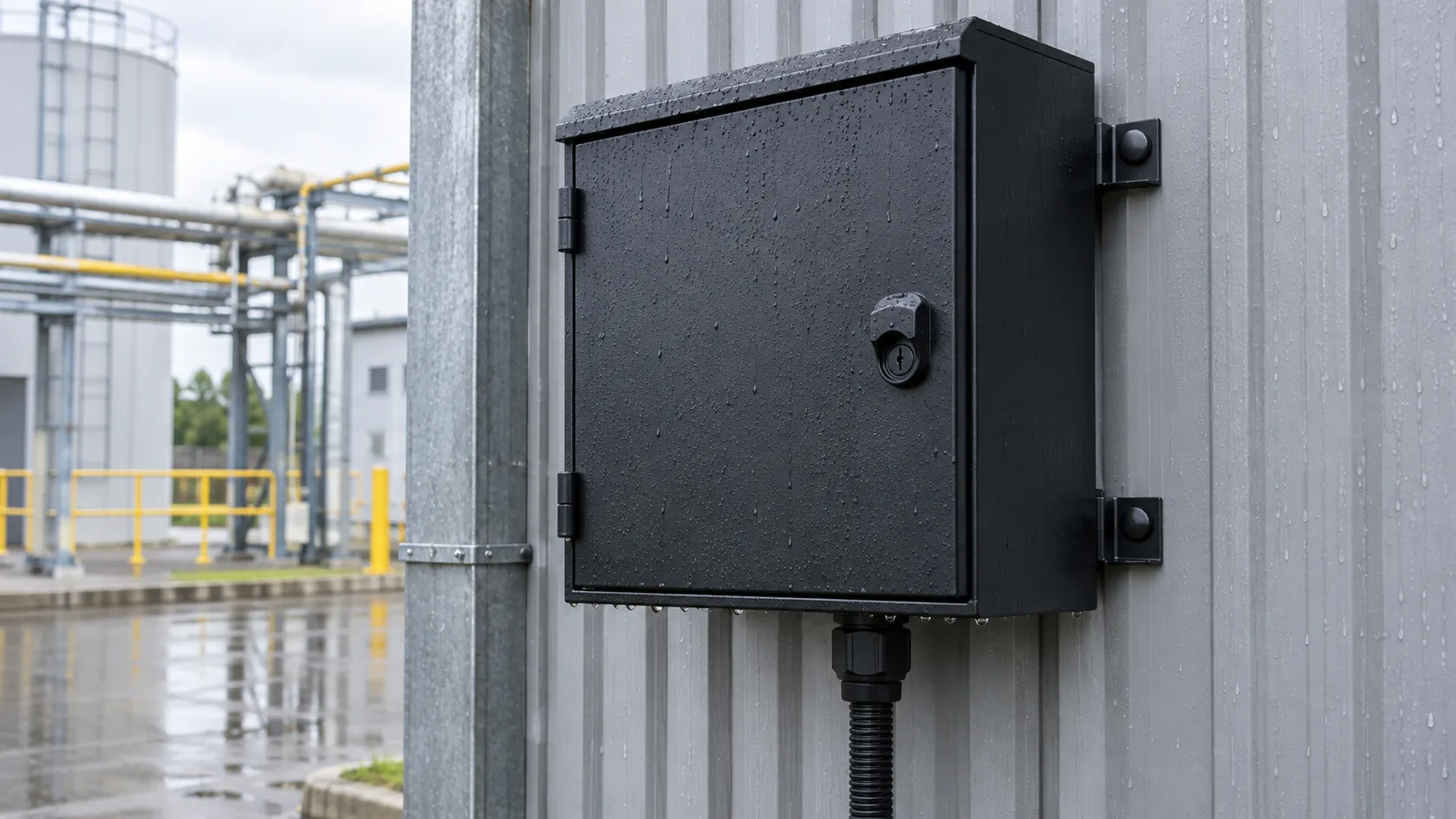
Drilling after coating, forcing fasteners through a painted interface, scraping a grounding point, dragging parts during assembly, or shipping doors without protection can expose steel after a good coating process. Brackets and rails can create crevices that remain wet. A cable entry or roof detail can turn rain into a water path. These are system failures, even though the first visible symptom may be a coating blister or rust line.
Some locations must be intentionally bare or conductive: a protective-earth interface, an EMC contact, a welded stud, a threaded engagement, or a gasket land. Define those areas before coating and give each one a corrosion, assembly, and inspection plan. Randomly removing paint at final assembly may produce a moment of conductivity and a later corrosion problem.
An ingress requirement also belongs to the installed enclosure, not to the powder coat alone. Joint geometry, gasket compression, fasteners, cable glands, connectors, vents, mounting orientation, drainage, installation workmanship, and maintenance determine how water enters or stays inside. More sealing can also affect cooling and condensation, so it needs a balanced enclosure review.
I look at the lower seam, bracket contact, cable direction, and future service access before I call an exterior finish robust. Those are the places a good factory finish most often meets a difficult real-world installation.
That last check turns seven separate causes into one practical pre-production review.
Conclusion
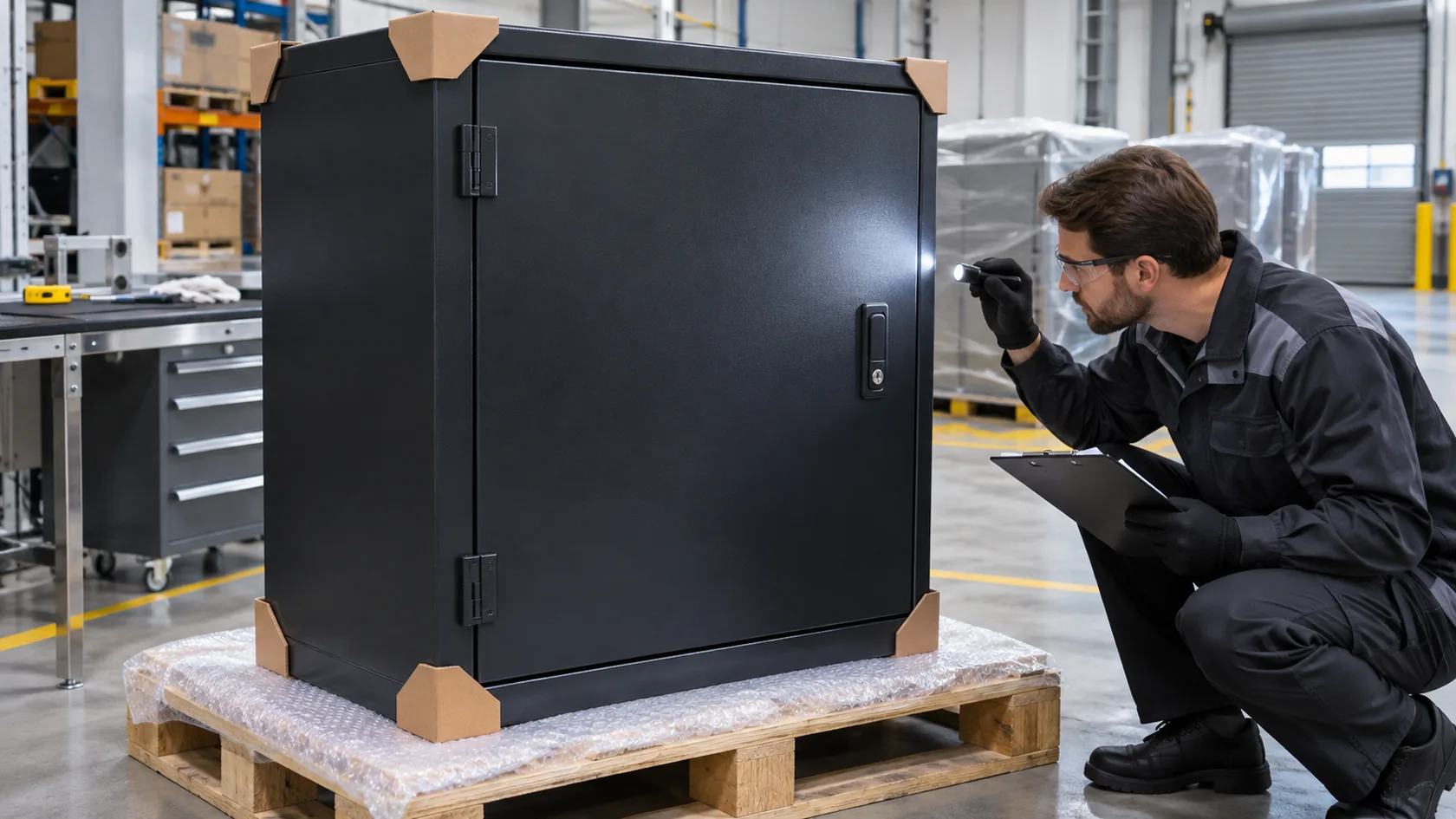
Powder coating fails on steel enclosures when the complete chain is allowed to break: contamination remains on the steel, edges and welds are hard to coat, recesses receive too little powder, film build is uncontrolled, cure does not match the part, chemistry does not match exposure, or later work damages the system. The coating may be the first thing a customer sees, but it is rarely the only decision that caused the failure.
After years of working through custom enclosure details, I have found that the most effective prevention is a short, specific release plan: the steel and fabrication condition, pretreatment route, named powder or approved equivalent, coverage and cure controls, functional masks, installed water paths, and validation method. That plan should follow the part from drawing review through assembly and packing.
If you are preparing a steel enclosure RFQ, send the drawing, service environment, mounting orientation, finish target, and any grounding, gasket, or cable-entry details. We can help review the failure-prone interfaces before the batch reaches the powder line.