Skip to content


A steel enclosure can look excellent as it leaves the coating line and still become an expensive disappointment outdoors. The wrong coating chemistry may fade or chalk in sunlight, but the right chemistry will not rescue sharp edges, contaminated welds, trapped water, or cable entries that leak. That is why a specification that simply says “outdoor powder coat” gives a factory too much room to guess.
For an outdoor steel enclosure, polyester vs epoxy powder coating is a real decision, not a color choice. It affects how the surface handles ultraviolet exposure, appearance over time, chemical contact, repair planning, and the rest of the corrosion-protection system. In my work, I start with the actual service environment and the complete enclosure—not a coating data sheet viewed in isolation.
This comparison separates the useful strengths of each chemistry from the assumptions that cause field problems later.
Start With Chemistry, Not a Generic Powder-Coat Callout
Polyester and epoxy solve different problems
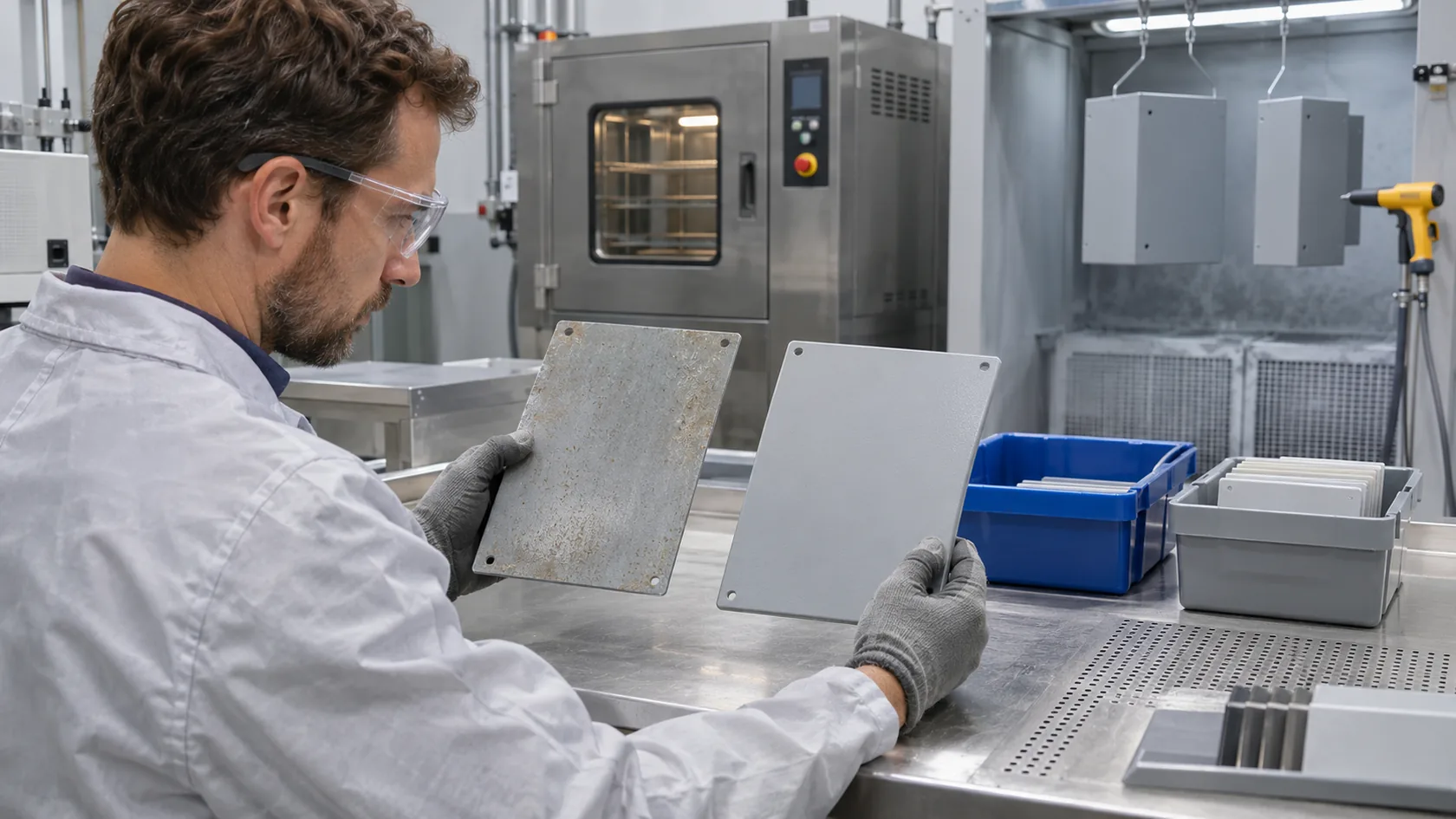
Powder coating is a broad family, not one material. Polyester and epoxy powders are both thermoset systems, but their outdoor behavior differs. The Powder Coating Institute’s guidance on weatherability notes that outdoor ultraviolet energy can cause gloss loss and color change; it describes polyesters as having good UV stability and flags epoxies and epoxy-containing hybrids as prone to chalking where outdoor appearance matters.
Epoxy can be a sensible choice when a protected environment needs a hard, functional film and relevant chemical or corrosion performance. Polyester is often the more appropriate starting point when the completed steel enclosure will see ordinary daylight and weather. “Often” matters here: the named product, cure, pretreatment, film build, substrate, and exposure still need review.
| Powder family | Typical decision strength | Outdoor caution | Useful buyer question |
|---|---|---|---|
| Polyester | Weatherability and color/gloss retention where sunlight matters | Exterior grades vary; not every polyester is the same durability class | Which exact product series is proposed and what exterior-performance basis supports it? |
| Epoxy | Tough, functional coating for suitable protected service | Direct sunlight can lead to chalking and appearance change | Is this part truly shielded from UV throughout its expected use? |
| Epoxy-polyester hybrid | Practical for many interior applications | Its epoxy content can make it a poor default for visible outdoor equipment | Is the hybrid being offered because it is stocked, or because the service environment supports it? |
I do not accept “epoxy is stronger” or “polyester is outdoor” as a finished engineering answer. Both statements leave out the system, and the system is where an enclosure earns or loses its service life.
With that distinction in place, the next question is what the installed equipment will actually face.
Map the Real Outdoor Exposure Before Choosing a Powder
A postal address does not describe the micro-environment
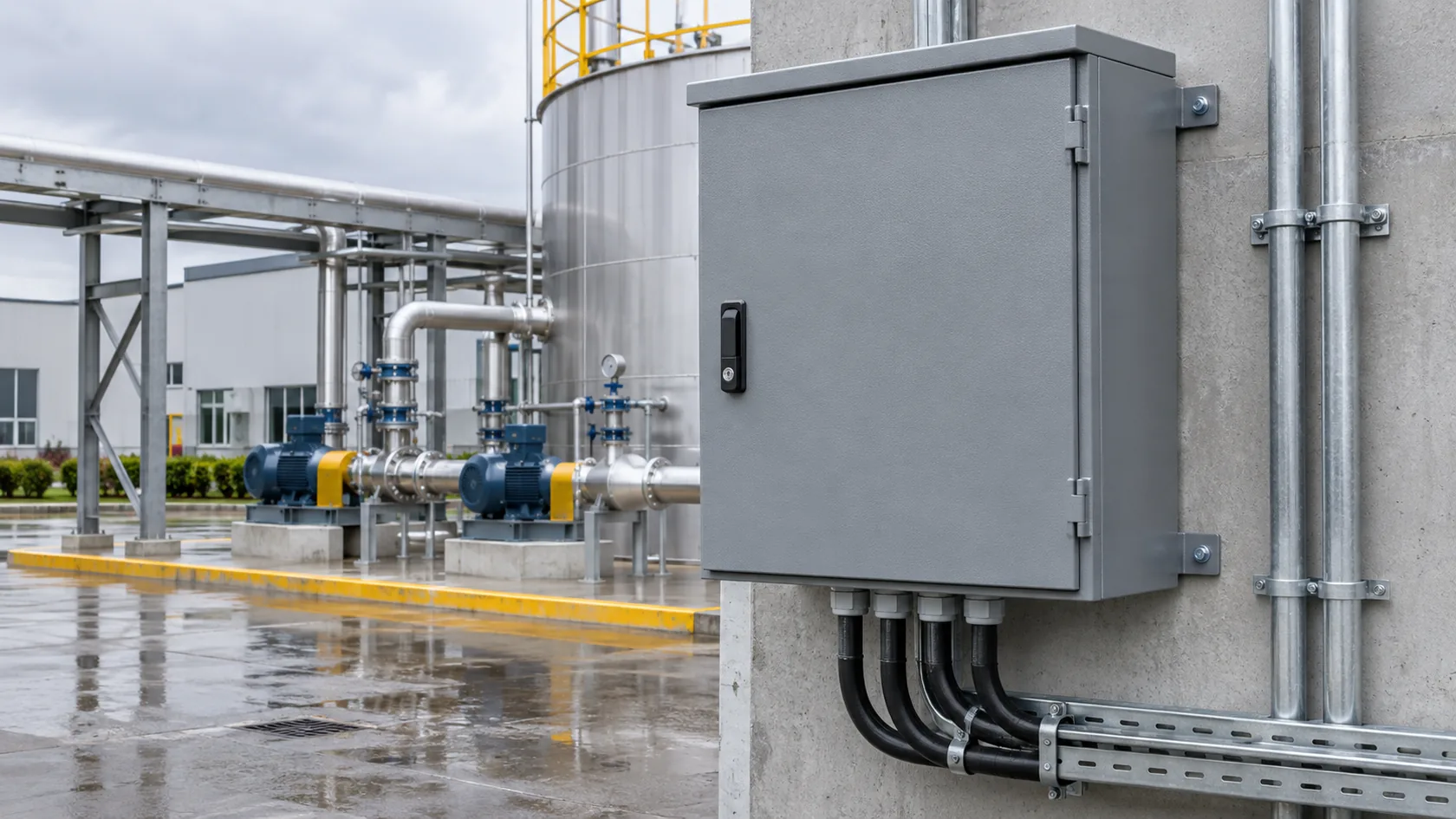
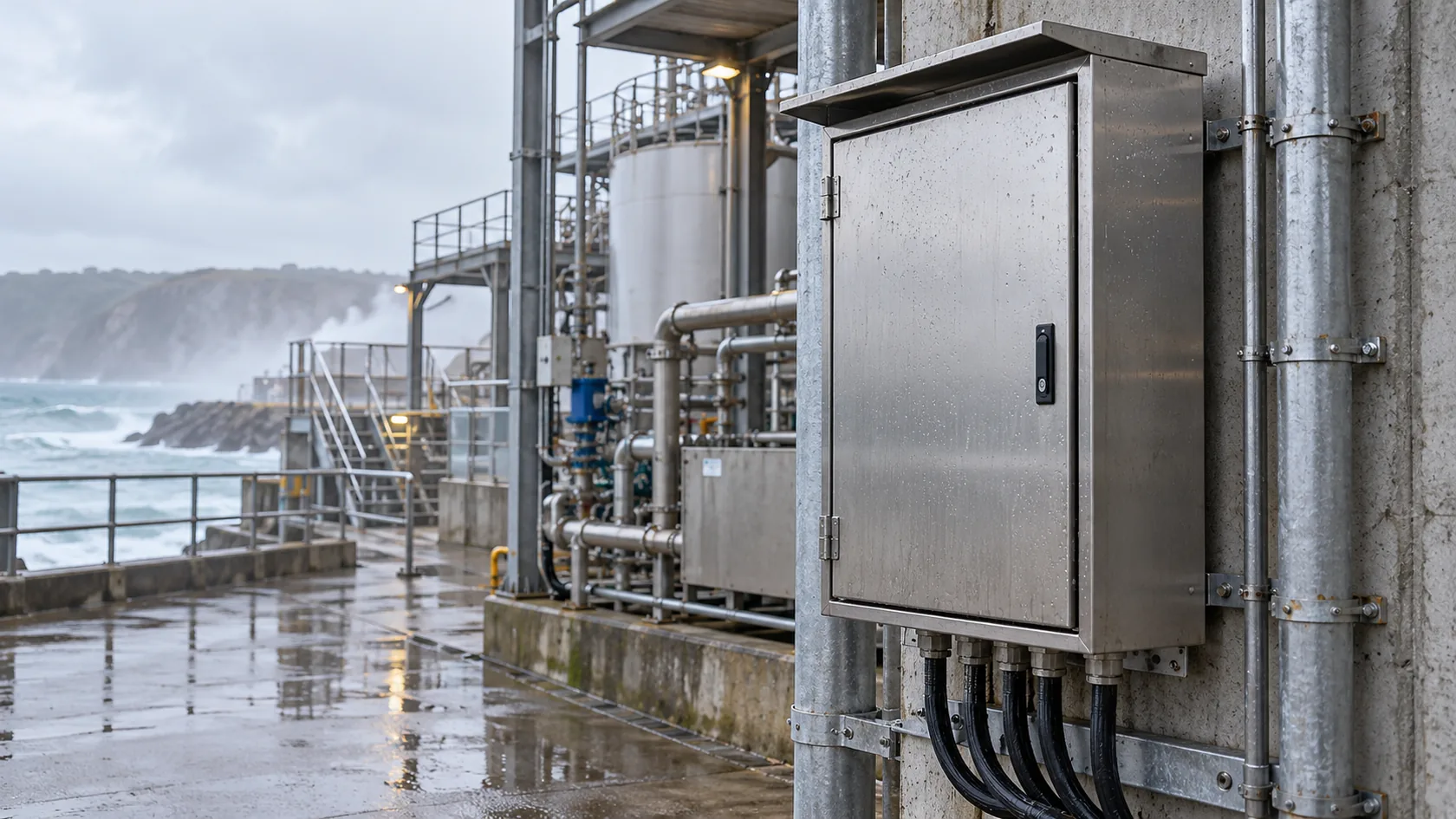
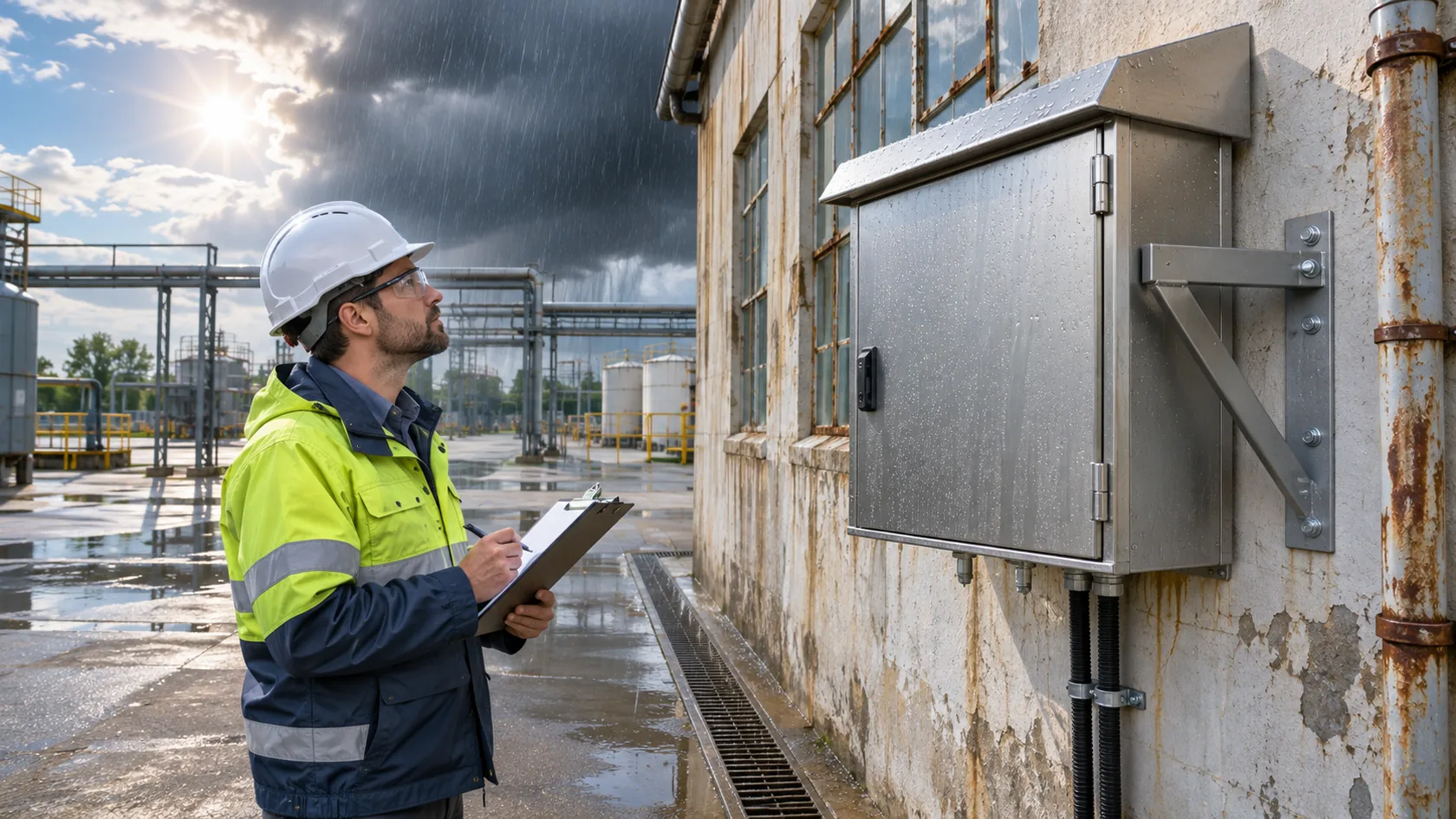
An enclosure on a shaded wall, one above a wash area, and one beside a coastal road may share the same city but not the same coating risk. Sunlight, wet-and-dry cycling, condensation, salt, pollutants, cleaning chemicals, abrasion, and maintenance access all change the decision. ISO 12944-2 is helpful because it treats corrosivity as an environmental condition and recognizes that local conditions around the component matter.
Collect the details that change the answer
- Is the enclosure exposed to direct sun for long periods, or mounted under a canopy?
- Will rain run off cleanly, or can water sit at a lower seam, roof joint, bracket, or cable entry?
- Is there salt spray, de-icing salt, fertilizer, industrial fallout, wash-down, or cleaning chemical contact?
- Will a technician open it often, scratch it with tools, or drill after coating?
- Is visual color retention important, or is the enclosure hidden inside protected plant equipment?
In quotation review, a simple photo of the intended mounting location can be more useful than a long list of vague requirements. It exposes details such as a sun-facing door, an upward-facing cable gland, or a bracket that creates a wet crevice.
Those facts usually make the polyester case clearer—or reveal when no single topcoat choice is enough.
Polyester Is Usually the Exterior Starting Point
Why it fits many visible outdoor enclosures
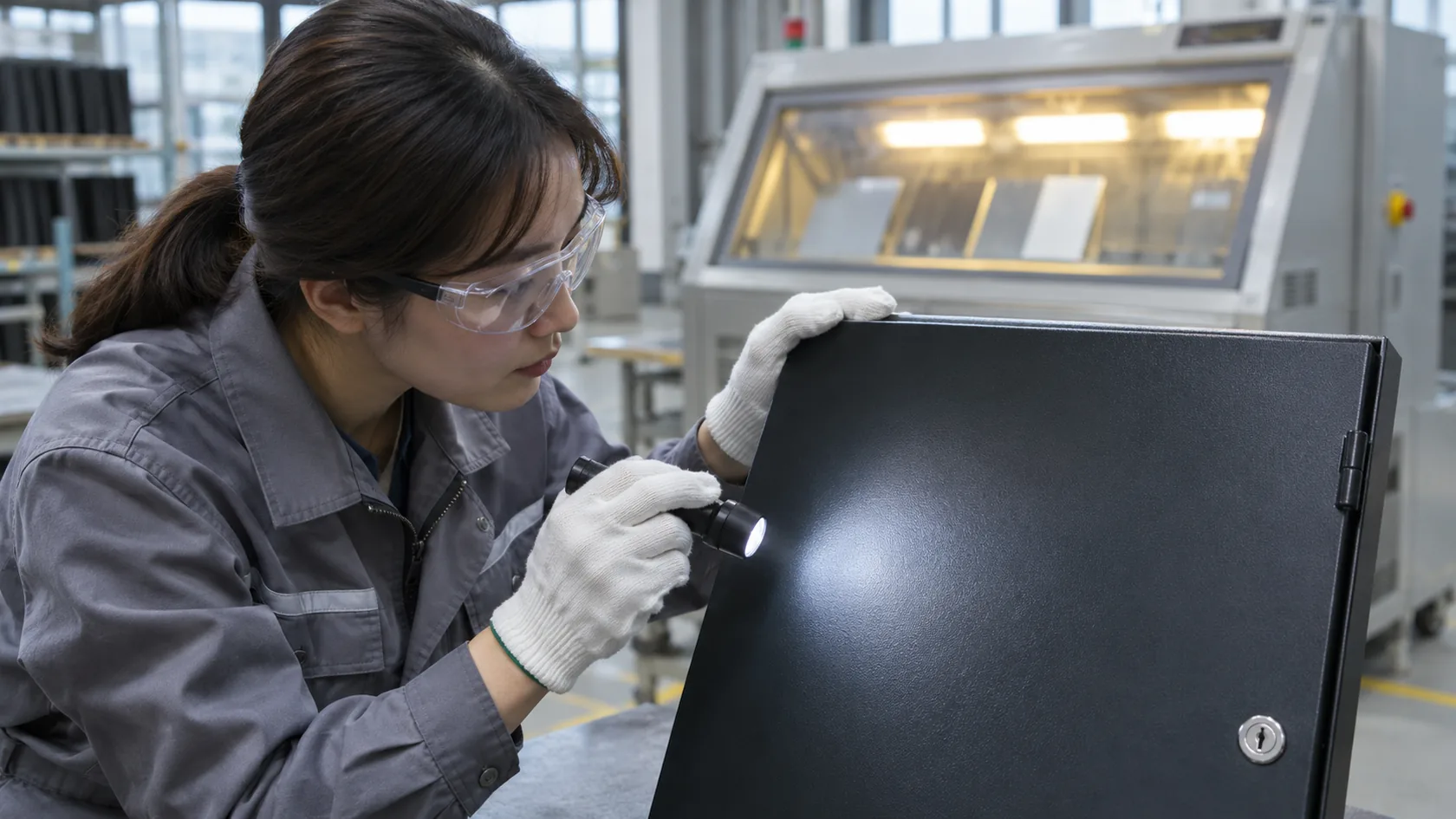
For steel boxes, cabinets, covers, and control enclosures that will live in daylight, an exterior-grade polyester powder is usually the sensible baseline. PPG similarly distinguishes polyester for components where resistance to UV sunlight is important and warns against relying on epoxy under extended direct sun in its powder-coating process guidance.
That does not mean a buyer should request “polyester” and stop reading. Standard exterior polyester, super-durable polyester, textured grades, metallic colors, matte colors, and a supplier’s approved coating system can carry different performance assumptions. Color and texture can also alter the practical inspection standard: a dark matte finish can hide a scratch that a glossy light color makes obvious, while neither one eliminates the corrosion risk at a damaged edge.
Specify a released product, not just a resin family
Where the project needs an exterior architectural-performance reference, a recognized specification may be relevant. For example, coating suppliers describe AAMA 2604 and AAMA 2605 as different exterior performance levels. Those classifications were developed for specific architectural applications, so I would not casually claim an enclosure meets them. Instead, I ask whether the powder product, pretreatment, applicator process, steel substrate, geometry, and acceptance plan actually support the requested basis.
My practical preference is to spend a little more time identifying the exact polyester product before mass production rather than spend much more later explaining why a generic exterior claim did not match a harsh site.
Polyester solves the UV question well in many cases, but it should not cause epoxy’s useful role to be ignored.
Epoxy Has a Place—Usually Away From Direct Sun
Use its strengths where the service supports them
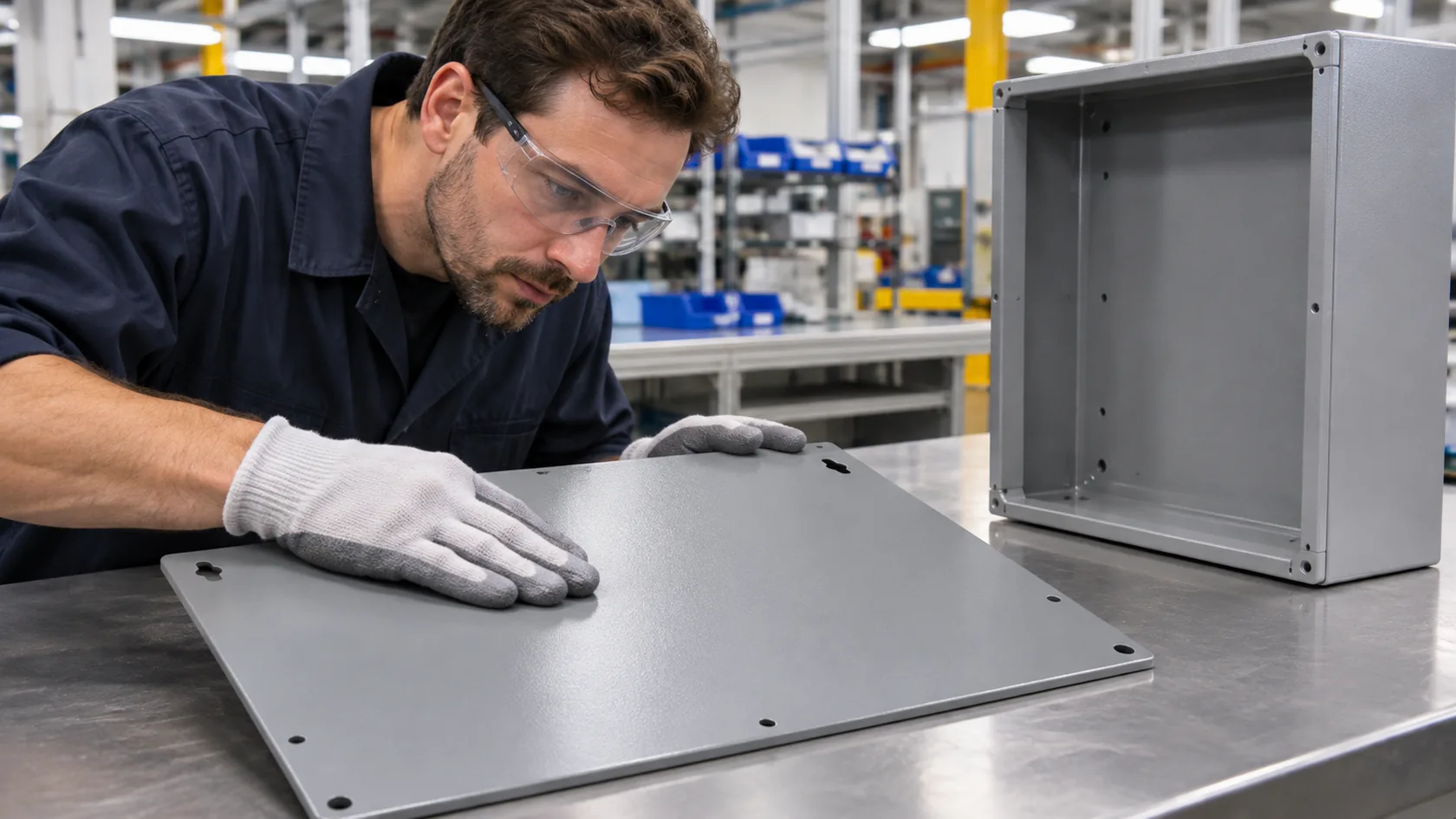
Epoxy powder can make good engineering sense for internal components, protected indoor cabinets, or equipment that remains out of direct sunlight and has a justified need for the product’s functional properties. It may be part of a broader coating design rather than the visible final finish. The right application still depends on the specific coating supplier’s data, cure window, substrate preparation, and the contacts the enclosure will experience.
Do not let a hybrid become an accidental outdoor choice
Epoxy-polyester hybrids can be attractive in production because they may be familiar, available, and cost-effective for interior work. That convenience should not turn into an outdoor specification by habit. The Powder Coating Institute specifically groups epoxy-containing hybrids with epoxies in its outdoor-chalking warning. A cabinet installed under a roof can still receive enough reflected or intermittent UV to make a casual “mostly indoors” assumption risky.
| Situation | Sensible question before selecting epoxy | Reason to pause |
|---|---|---|
| Internal back plate in an outdoor cabinet | Is it genuinely shielded after every service opening? | It may be protected, but surrounding components still need compatible corrosion control. |
| Indoor industrial machine enclosure | Is there window or door UV exposure, chemical cleaning, or heat? | “Indoor” does not automatically describe every exposure. |
| Visible outdoor cabinet door | Is epoxy being proposed as the final exposed film? | It is generally the wrong default where durable appearance in sunlight matters. |
I have seen coating choices made from the powder stock already in the booth. That can be efficient for an internal bracket; it is not a defensible reason to put a visible outdoor cabinet at risk.
Once chemistry has been chosen, it must be supported by the steel surface and the application process.
Pretreatment and Cure Make the Selected Powder Real
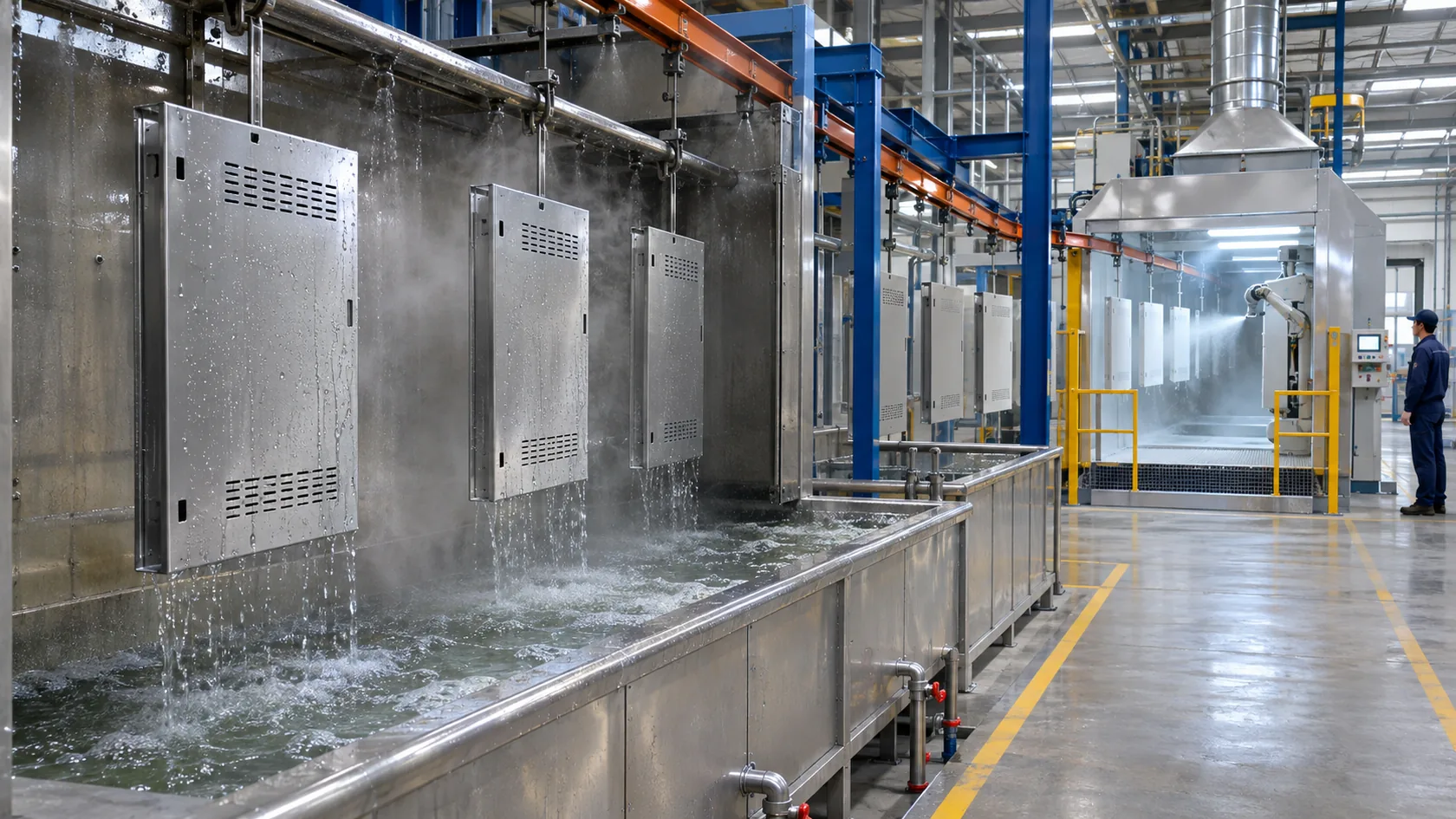
The coating system begins before spraying
Oil, oxide, weld residue, grinding dust, salts, fingerprints, and flash rust can undermine adhesion and corrosion resistance. The Powder Coating Institute explains that adhesion depends on substrate cleanliness, appropriate pretreatment, and proper melt and cure. Ask for the actual cleaning and conversion-coating route appropriate to the steel, not only a promise that the part will be “pretreated.”
Welds need special attention. Spatter, porosity, sharp transitions, and trapped residue make it harder to clean, coat, inspect, and keep dry. A small practical edge break and clean weld finish often do more for a durable result than a larger quoted film thickness applied over a poor feature.
Cure is a part-temperature question
Powder technical data sheets state a cure schedule for a particular product. In production, the critical question is whether the entire enclosure reaches the required metal temperature and holds it for the required time. A thin cover, heavy welded base, and densely loaded rack can heat differently. Oven setpoint alone is not proof that the part received the intended cure.
I ask to see process controls on a representative enclosure or a justified representative load, especially after a new color, powder series, part mass, or rack arrangement is introduced. A perfect-looking sample is not enough if the production schedule cannot repeat it.
That factory discipline protects the coating film; enclosure geometry and assembly must protect it in service.
Enclosure Design Can Defeat Either Chemistry
Avoid water traps and post-coat damage
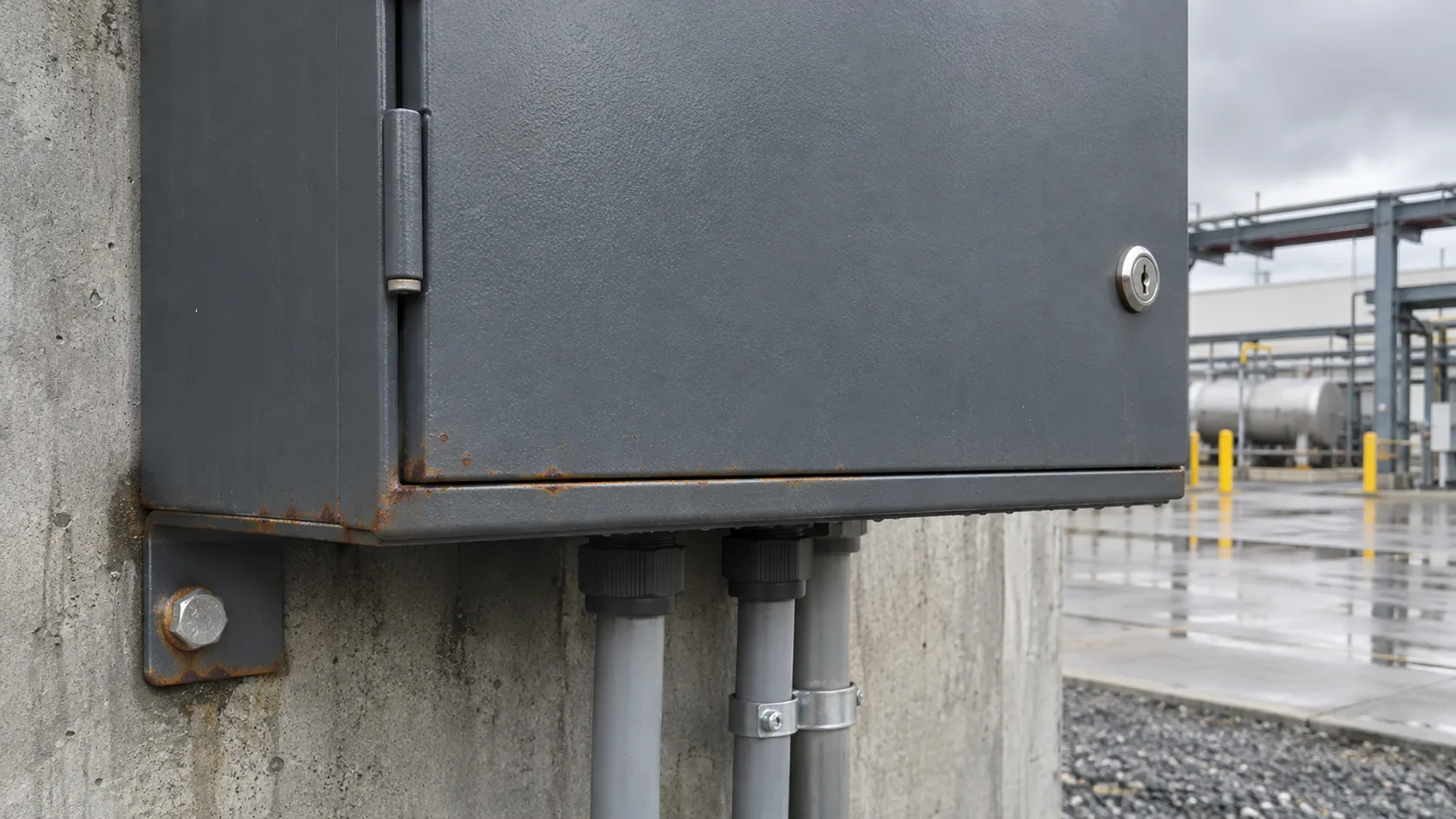
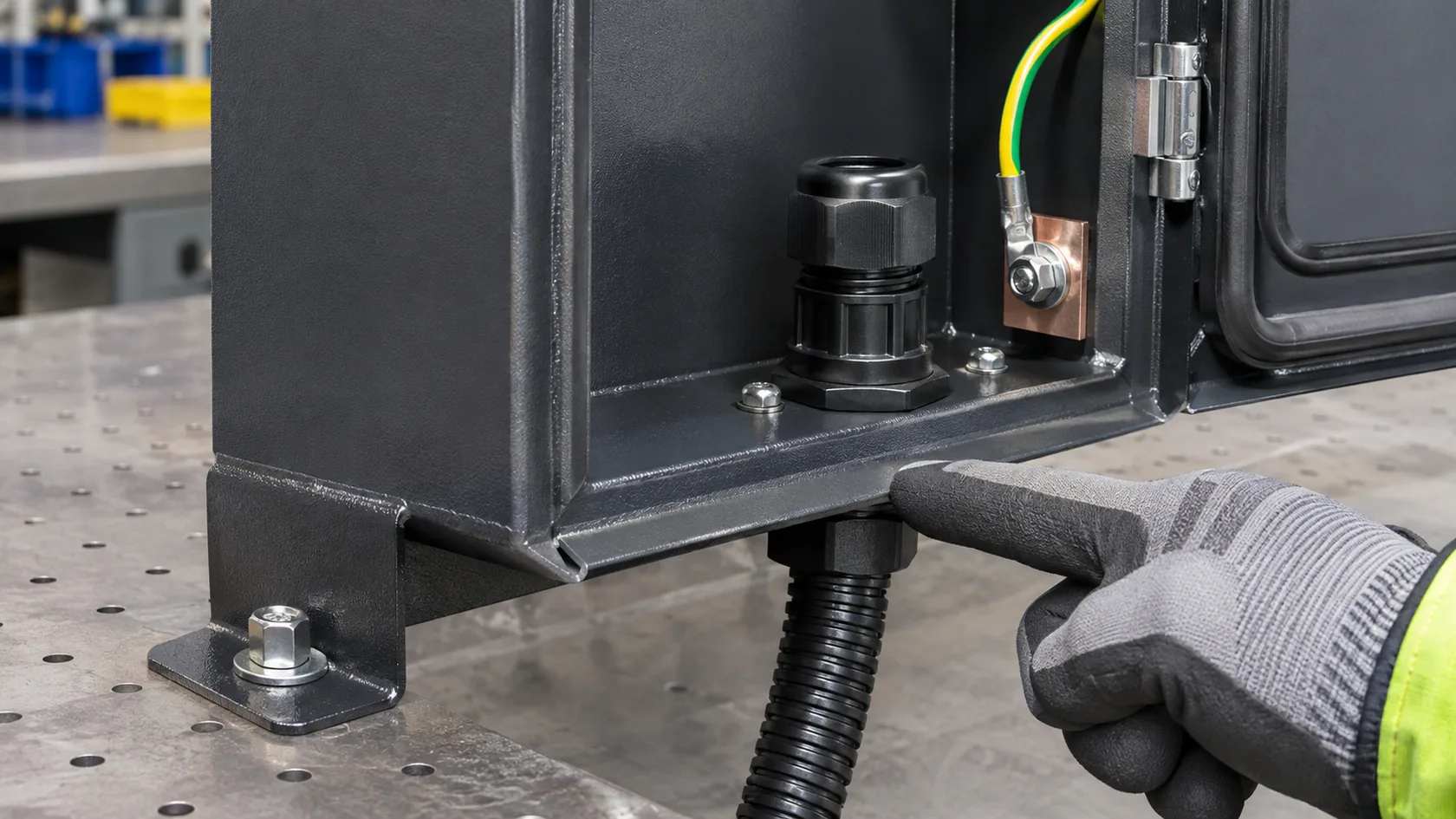
No powder chemistry likes a permanently wet seam. Check lower door edges, roof lips, folded hems, mounting rails, bracket interfaces, blind pockets, and horizontal surfaces. Good drainage, suitable mounting orientation, controlled seam design, and access for cleaning matter. If drilling, grinding, or aggressive fasteners will be used after coating, design a controlled repair or protection method instead of leaving bare steel as an assembly surprise.
Keep electrical and sealing functions intentional
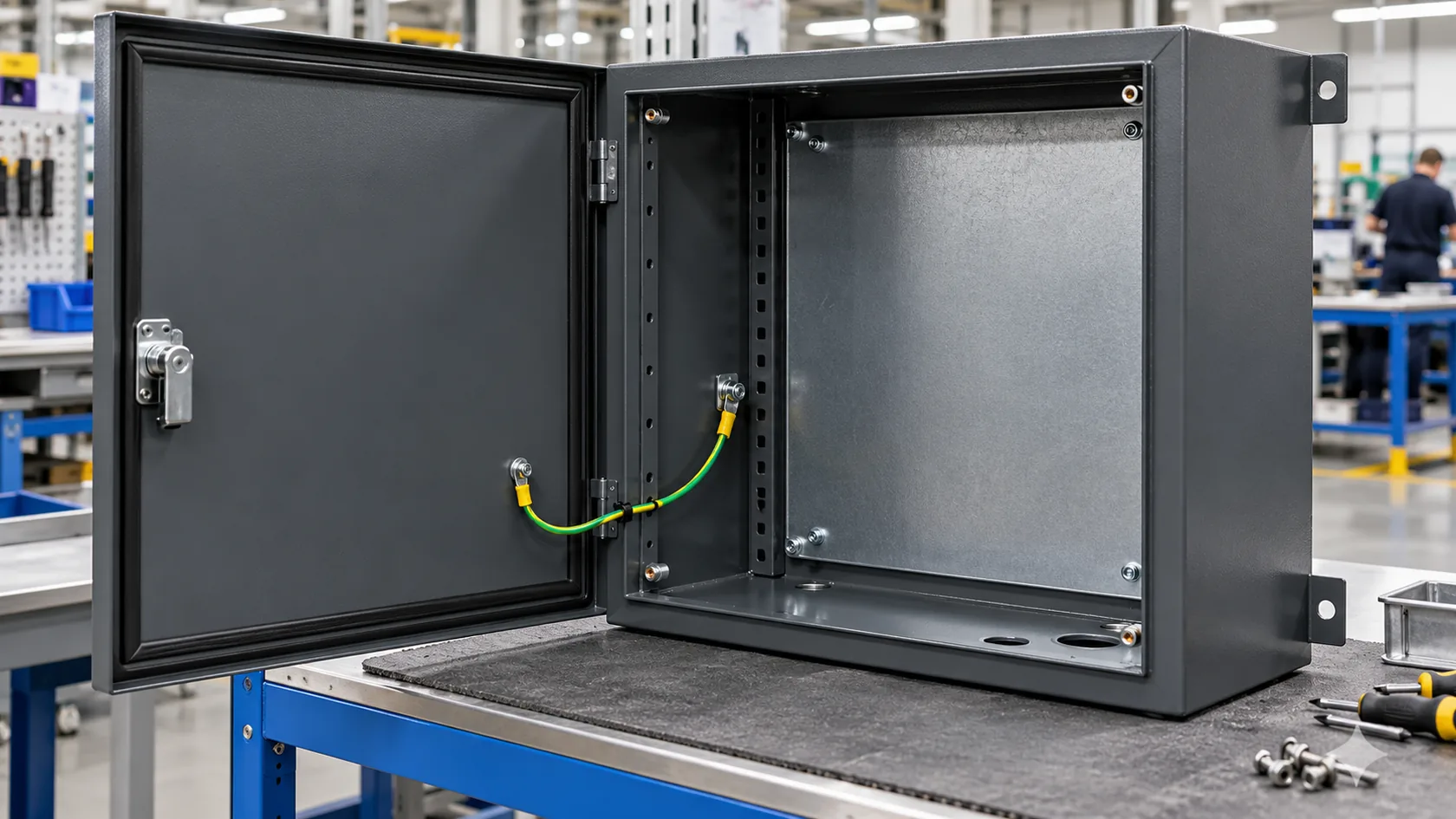
Powder coating is normally electrically insulating. If the enclosure needs a protective-earth connection, bonding path, or an EMC interface, specify a designed conductive contact: for example, a masked contact land or a controlled hardware interface with the appropriate corrosion treatment. Randomly scraping paint away after assembly may produce conductivity for a moment and corrosion later.
An ingress target also belongs to the complete installed system. Gasket compression, joint design, fasteners, cable glands, connectors, vents, mounting direction, drainage, and installation workmanship all affect the result. A polyester powder coat is not evidence that the completed enclosure will meet an IP or NEMA requirement.
When I review an outdoor drawing, I look for the places water travels after the installer has gone home. A premium powder cannot compensate for a lower seam that keeps holding water, or a cable entry pointed toward the weather.
These design checks turn a material choice into a system capable of being verified.
Write a Coating Specification That Can Be Quoted and Checked

Give the factory an unambiguous release basis
The most useful purchase specification connects environment, part condition, process, and acceptance. It should name the steel condition and fabrication expectations, powder manufacturer/product or an approved equivalent, color and appearance range, pretreatment, special masked or conductive areas, and the checks that matter for the actual enclosure.
If salt-fog or another corrosion test is requested, define the test method, coupon or complete assembly, preparation, duration, scribe condition when relevant, evaluation criteria, and approval owner. ASTM D1654, for instance, addresses evaluation of corrosion, blistering, and loss of adhesion around a scribe after exposure. It is not a universal promise that a bare “number of hours” equals years in every outdoor location.
| Specification item | What to state | Why it prevents surprises |
|---|---|---|
| Service environment | Sun, rain, local contaminants, salt, chemical contact, temperature cycling, and maintenance | Separates an ordinary exterior box from a harsh-site enclosure. |
| Coating system | Exact polyester or epoxy product family, color, texture, pretreatment, cure basis, and approved alternatives | Prevents an indoor hybrid from becoming an unreviewed substitution. |
| Fabrication and assembly | Edge condition, weld cleanup, drainage, protected cutouts, hardware, gasket, and cable-entry requirements | Addresses the locations where corrosion starts despite a good visible face. |
| Acceptance evidence | First article, appearance, film checks, adhesion or corrosion method when justified, and record ownership | Makes quality review repeatable rather than a shipment-time debate. |
My best supplier conversations are not about whether polyester or epoxy is “the best.” They are about whether every person—from fabricator to coater to installer—can see the same service condition and acceptance target.
That clarity is what makes validation meaningful instead of ceremonial.
Conclusion
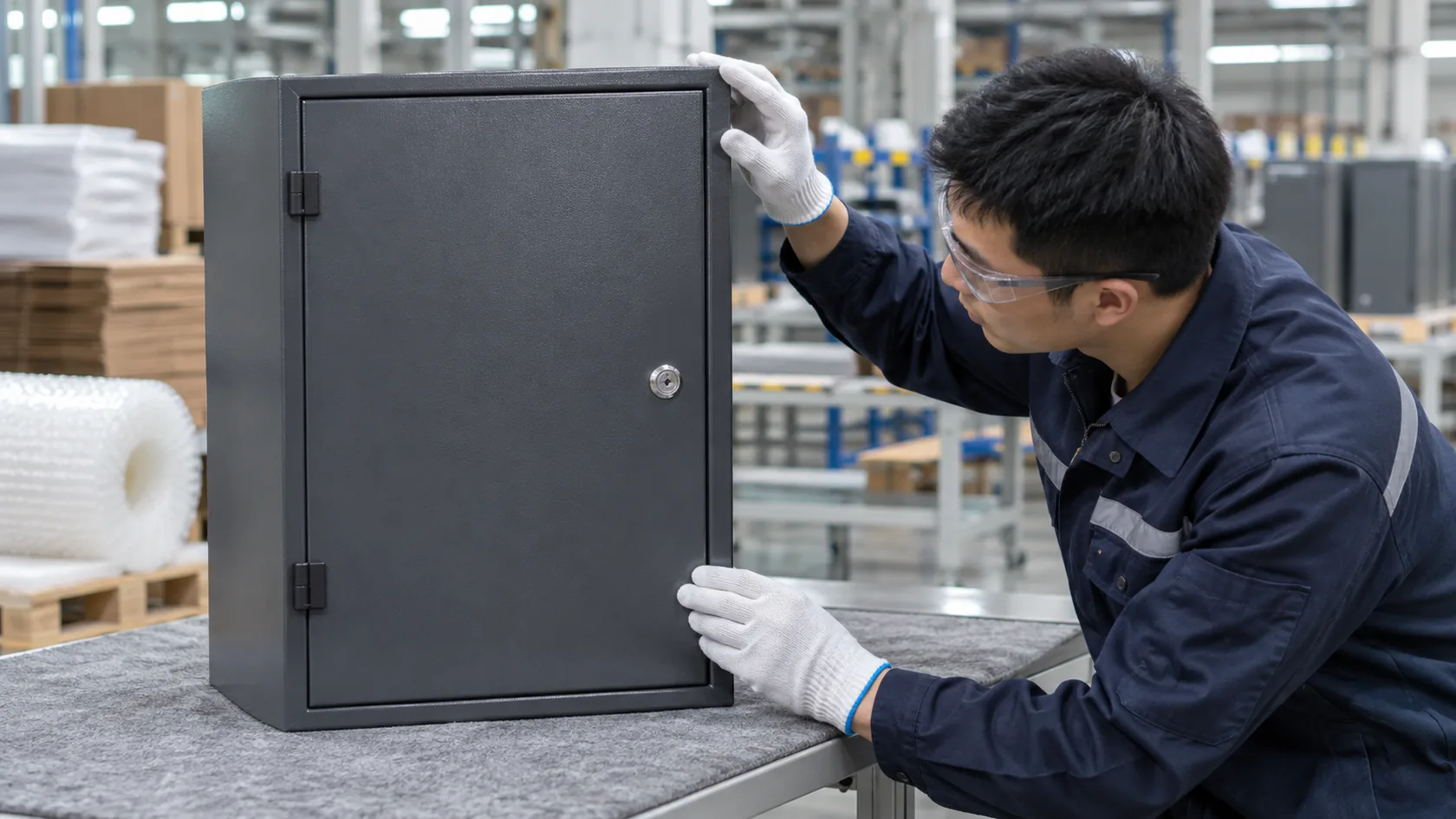
For most visible outdoor steel enclosures, an appropriate exterior-grade polyester is the logical starting point because weatherability and UV stability matter. Epoxy remains useful where its service conditions are protected and specifically justified, but it should not be chosen for a sun-exposed cabinet simply because it is available or described as tough. Epoxy-polyester hybrids deserve the same caution when outdoor appearance matters.
After years of resolving enclosure details before production, I have learned that chemistry is only the first gate. The steel surface, pretreatment, cure, edges, welds, water paths, cable entries, hardware, grounding contacts, and installed sealing all decide whether the finish keeps doing its job. If you are comparing polyester and epoxy for a new enclosure, send the drawing, mounting orientation, exposure notes, color target, and any electrical or ingress requirements. We can review the coating system and the failure-prone details together before the parts reach the line.