Skip to content
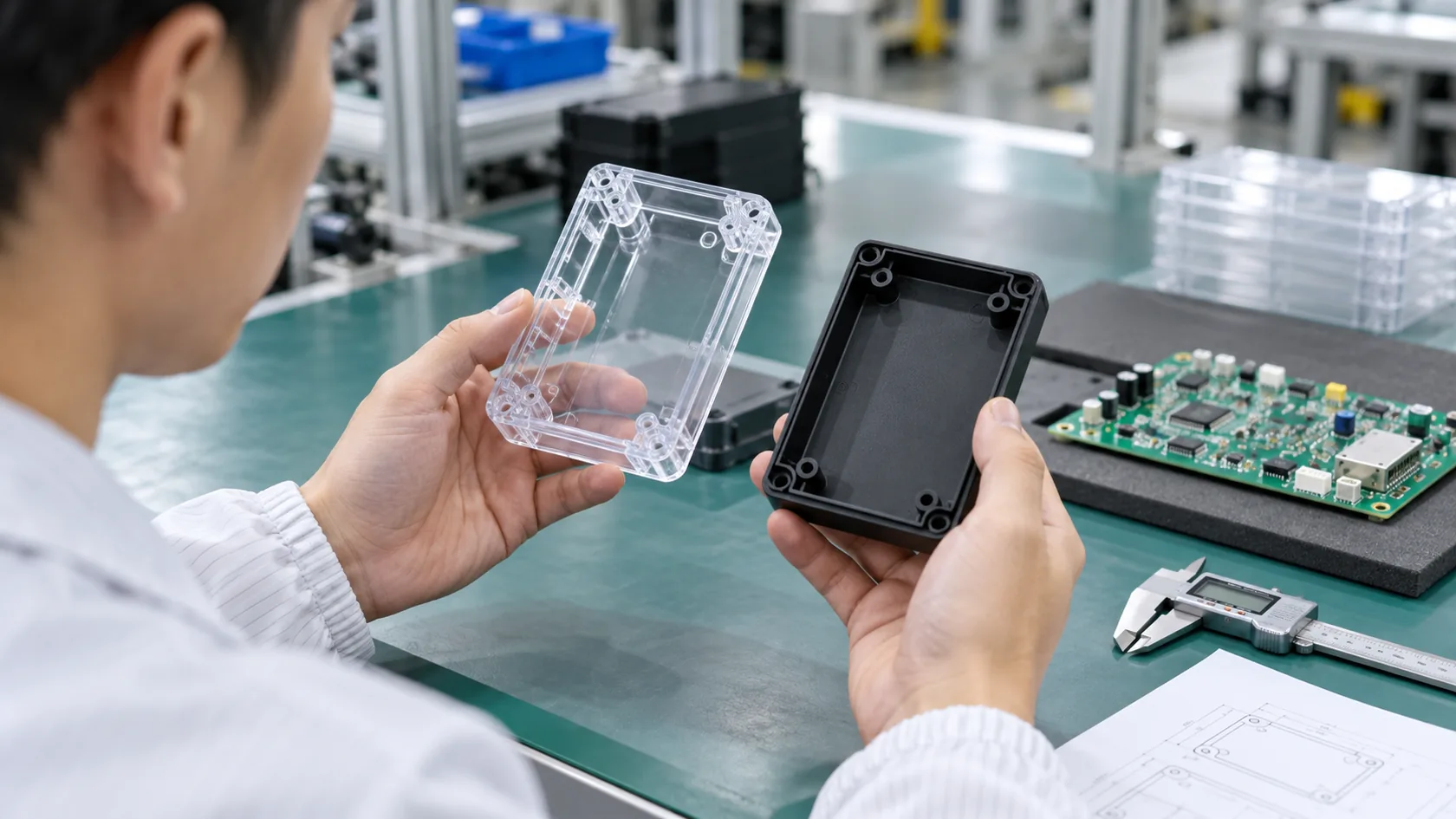
“Plastic enclosure” sounds like one line on a purchase order. In a real project, it can decide whether a handheld unit survives a drop, whether a clear window stays useful, whether a molded lid keeps its shape near a warm board, and whether a cosmetic surface still looks acceptable when the shipment arrives.
Polycarbonate (PC) and acrylonitrile butadiene styrene (ABS) are both familiar choices for electronic housings, but neither name is a complete specification. The resin grade, wall design, color, texture, flame-retardant package, exposure, mold design, and assembly details decide the final result. I treat the material selection as a conversation between the use case and the production method, not a shortcut based on which plastic sounds stronger.
This comparison explains where each material usually makes sense, what I would verify before a tool is released, and when a PC/ABS blend may be the better commercial answer.
Start With the Job the Enclosure Must Do
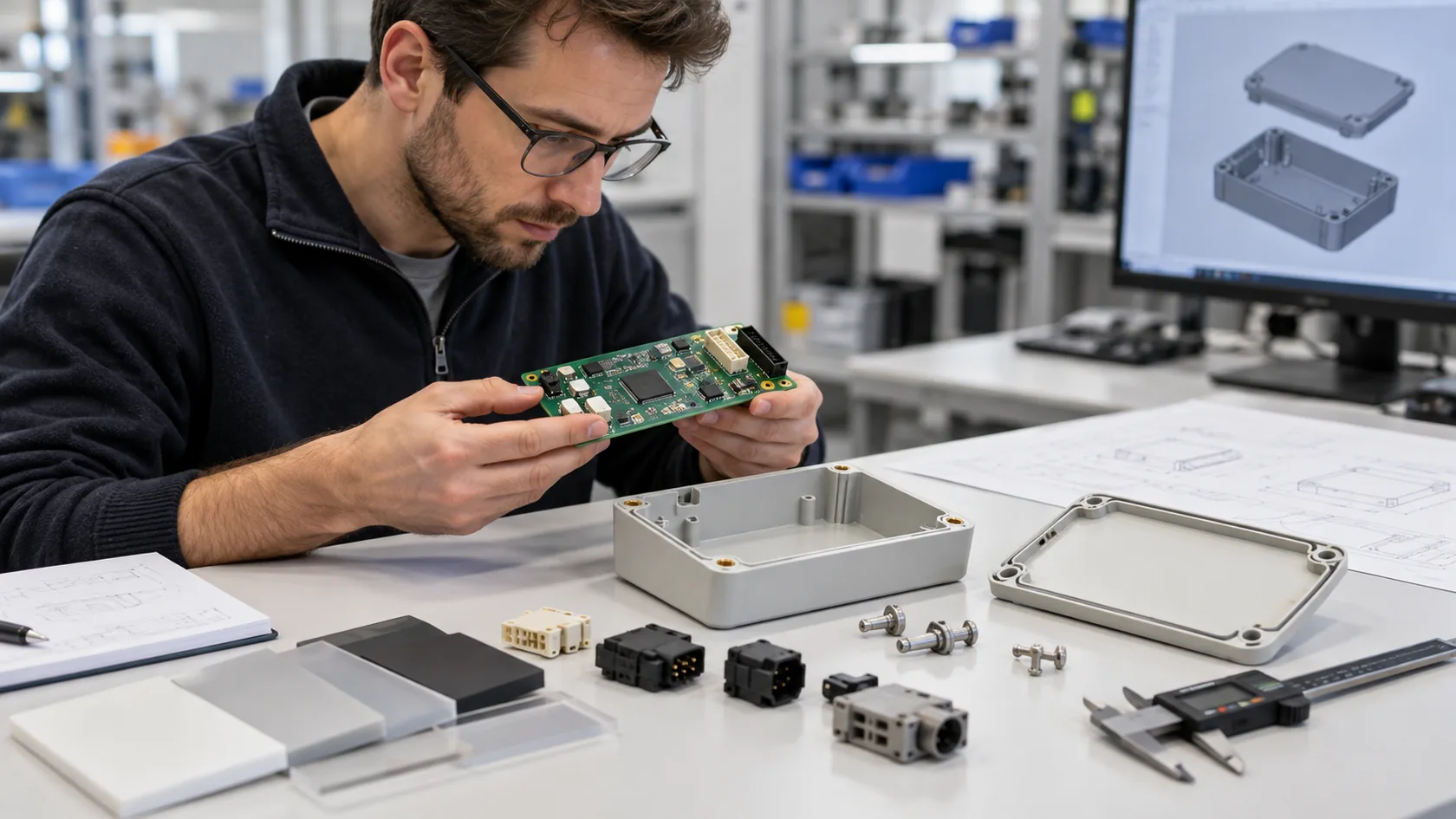
Before comparing data sheets, define what the housing must protect and what it must tolerate. An indoor desktop controller, a clear sensor cover, a wall-mounted power unit, and a portable service instrument can all be called “electronic enclosures,” but their real risks are different.
Turn the application into a material brief
| Requirement | Questions for the buyer and factory | Why it changes the choice |
|---|---|---|
| Impact | Drop height, corner strikes, cold handling, transport abuse | Toughness needs can favor a suitable PC grade or blend |
| Heat | Component temperature, trapped heat, sunlight, duty cycle | The finished housing must retain function at its real service temperature |
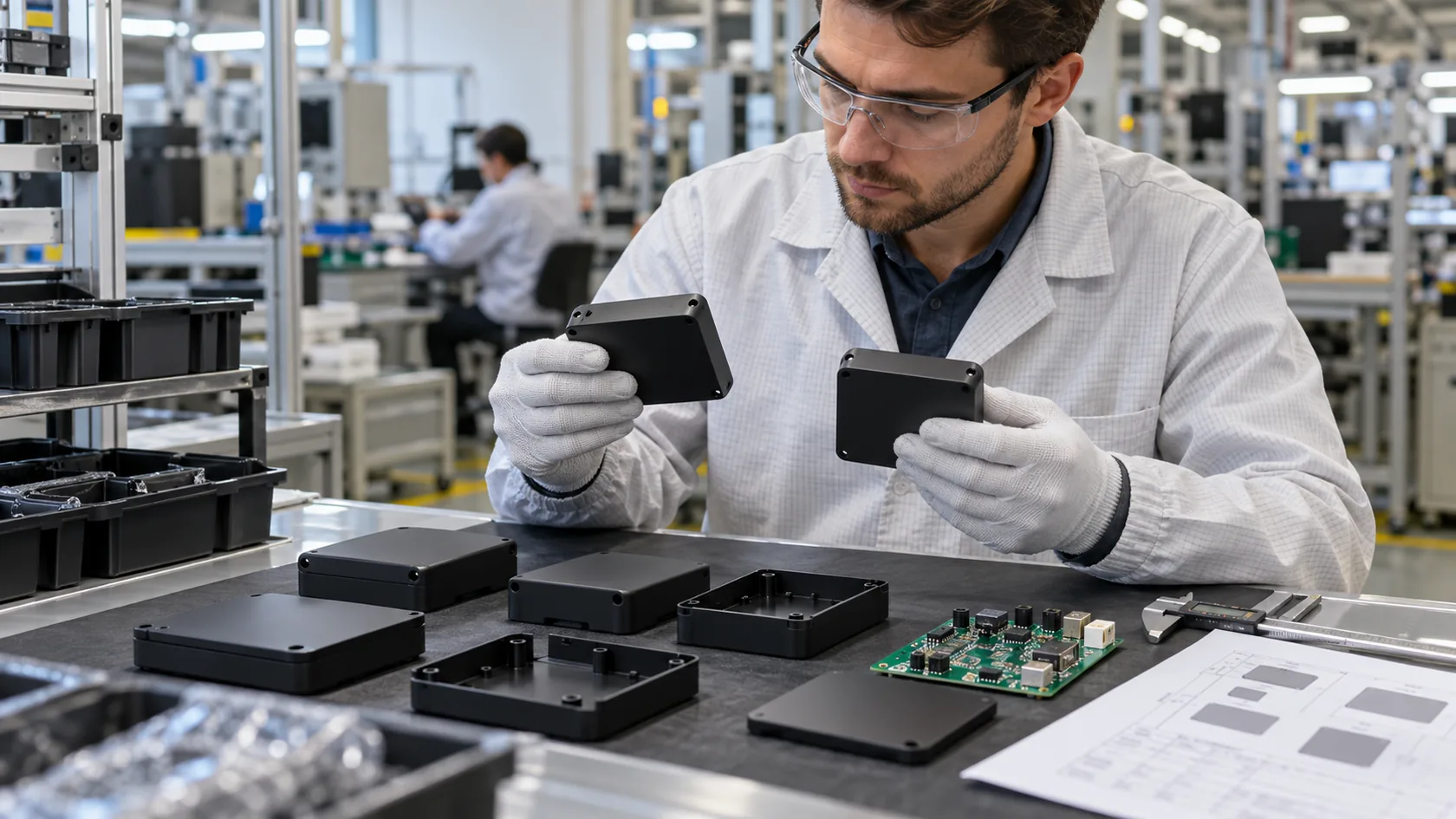
| Appearance | Color, texture, gloss, branding, scratch visibility | Surface and color approval should use molded samples, not resin chips |
| Environment | UV, cleaners, oils, humidity, outdoor mounting | A standard indoor resin may be the wrong configuration outdoors |
| Electrical and fire | Required standard, wall thickness, creepage, end-product test | A resin claim is not a certificate for the finished device |
| Production | Annual volume, expected changes, mold budget, assembly method | Tooling and process stability shape the practical material choice |
From the factory side, I ask for the actual use case before I recommend a resin. A desktop box may need tidy cosmetics and easy molding more than extreme impact resistance; a field device may have the opposite priority. Once those conditions are written down, the material comparison becomes much clearer.
Where Polycarbonate Usually Earns Its Cost
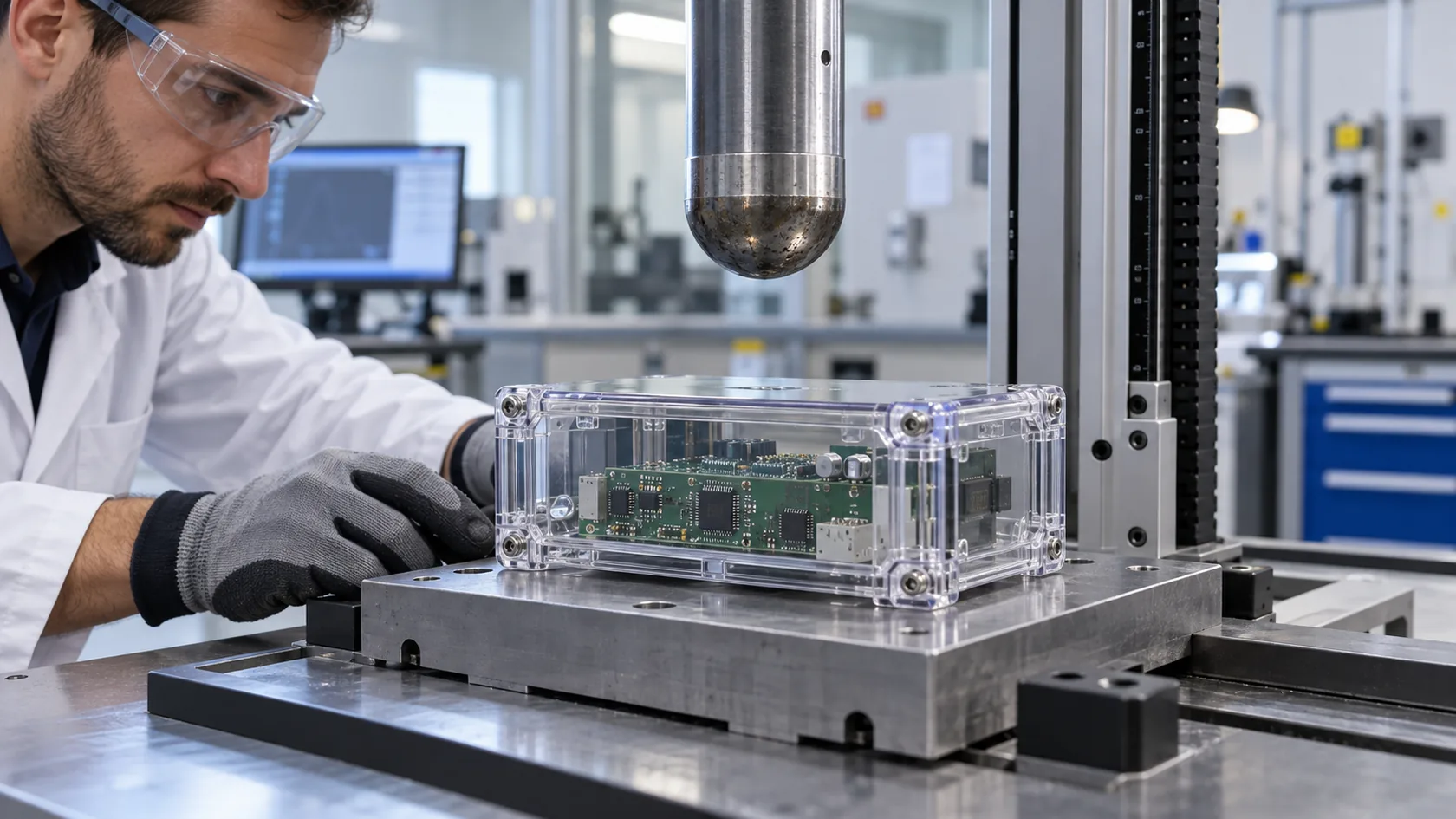
PC is often chosen when the enclosure needs a strong balance of impact resistance, dimensional stability, and temperature capability. It can also be transparent or translucent, which is useful when indicators, displays, optics, or inspection visibility are part of the product. Covestro describes polycarbonate and its blends as common materials for electrical and electronic housings, while emphasizing that dedicated grades serve different applications.
PC benefits need their conditions stated
For a portable instrument, a guarded display area, or a transparent cover, PC can provide a useful margin against everyday knocks. But that does not mean every PC housing is automatically durable. A thin sharp-cornered cover, a stressed snap fit, an aggressive cleaner, or an unsuitable UV package can still cause cracking, discoloration, or service complaints.
I am especially careful around chemical exposure. The cleaner, oil, adhesive, thread locker, and gasket lubricant must be checked against the selected grade and its supplier guidance. A clear PC window that looks excellent in a first sample can become the weak point if the field maintenance routine was never part of the material review.
For that reason, I would specify the exact grade, color, and thickness range early, then confirm the intended cleaners and exposure with sample testing rather than assuming “polycarbonate” covers every condition. That disciplined check naturally leads to the areas where ABS can be the simpler choice.
Why ABS Remains a Practical Enclosure Material
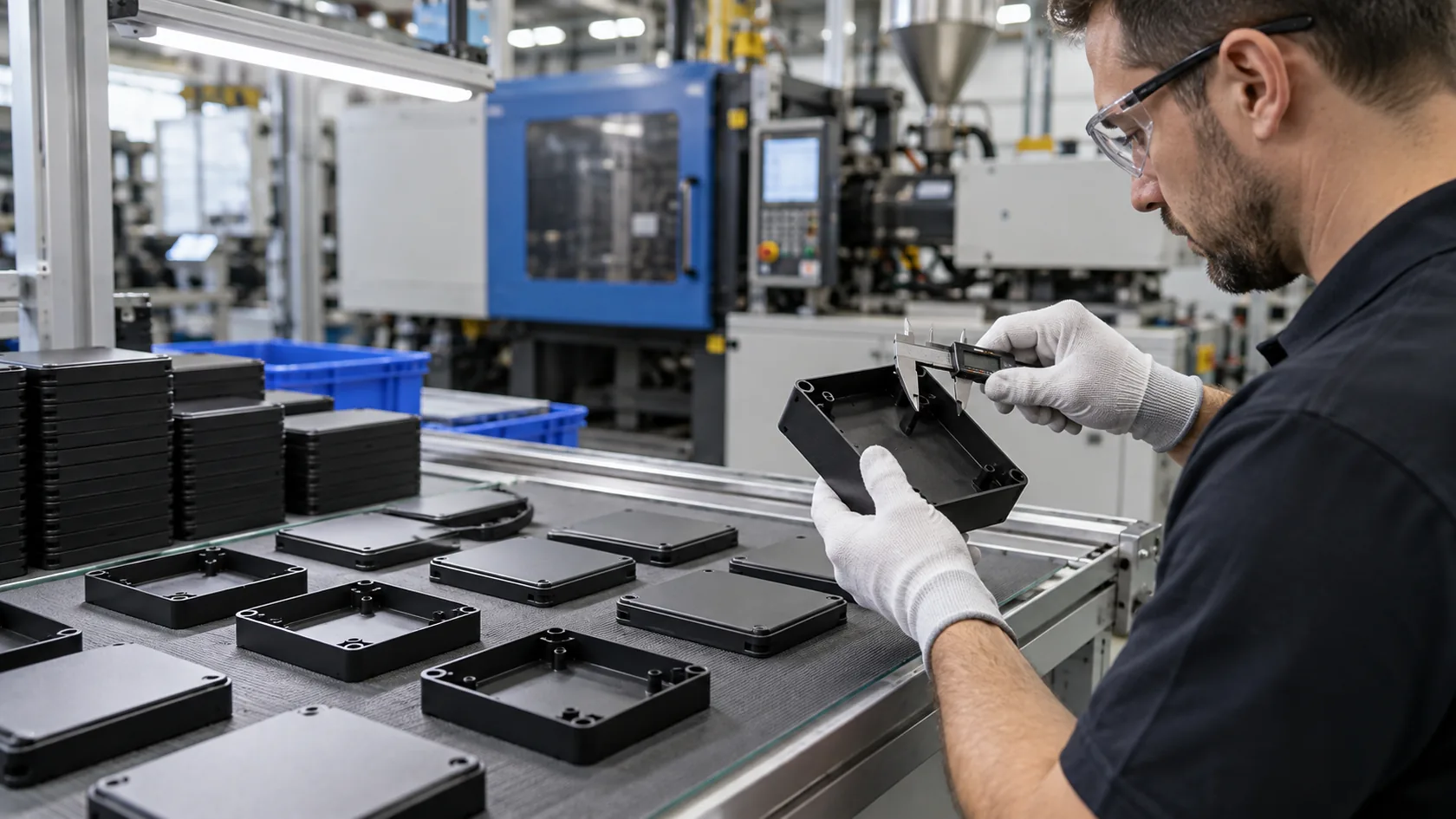
ABS is widely used for indoor electronic housings because it can offer a sensible balance of appearance, moldability, toughness, and cost. For many controls, adapters, instrument covers, and consumer-facing equipment, its processing behavior and surface finish make it commercially attractive.
ABS still needs a realistic boundary
ABS is not the “cheap plastic” version of PC. A well-designed ABS enclosure can be exactly the right solution when the service environment is controlled and the production goal is repeatable molding with a good cosmetic result. It is also not a substitute for a heat, flame, outdoor, or chemical requirement that the chosen grade cannot support.
I would avoid deciding from a generic comparison chart alone. Flame retardancy, impact behavior, color stability, electrical properties, and heat performance can differ materially among grades and at different wall thicknesses. The UL plastics guide is useful for identifying recognized materials, but the material recognition and its conditions must still be matched to the finished enclosure design and applicable product requirements.
When the unit lives indoors, avoids harsh chemicals, and needs a clean textured surface at a controlled cost, ABS often deserves a serious place in the first quotation. The next issue is how those material differences show up in the molded geometry.
Mold Design Can Matter More Than the Resin Name
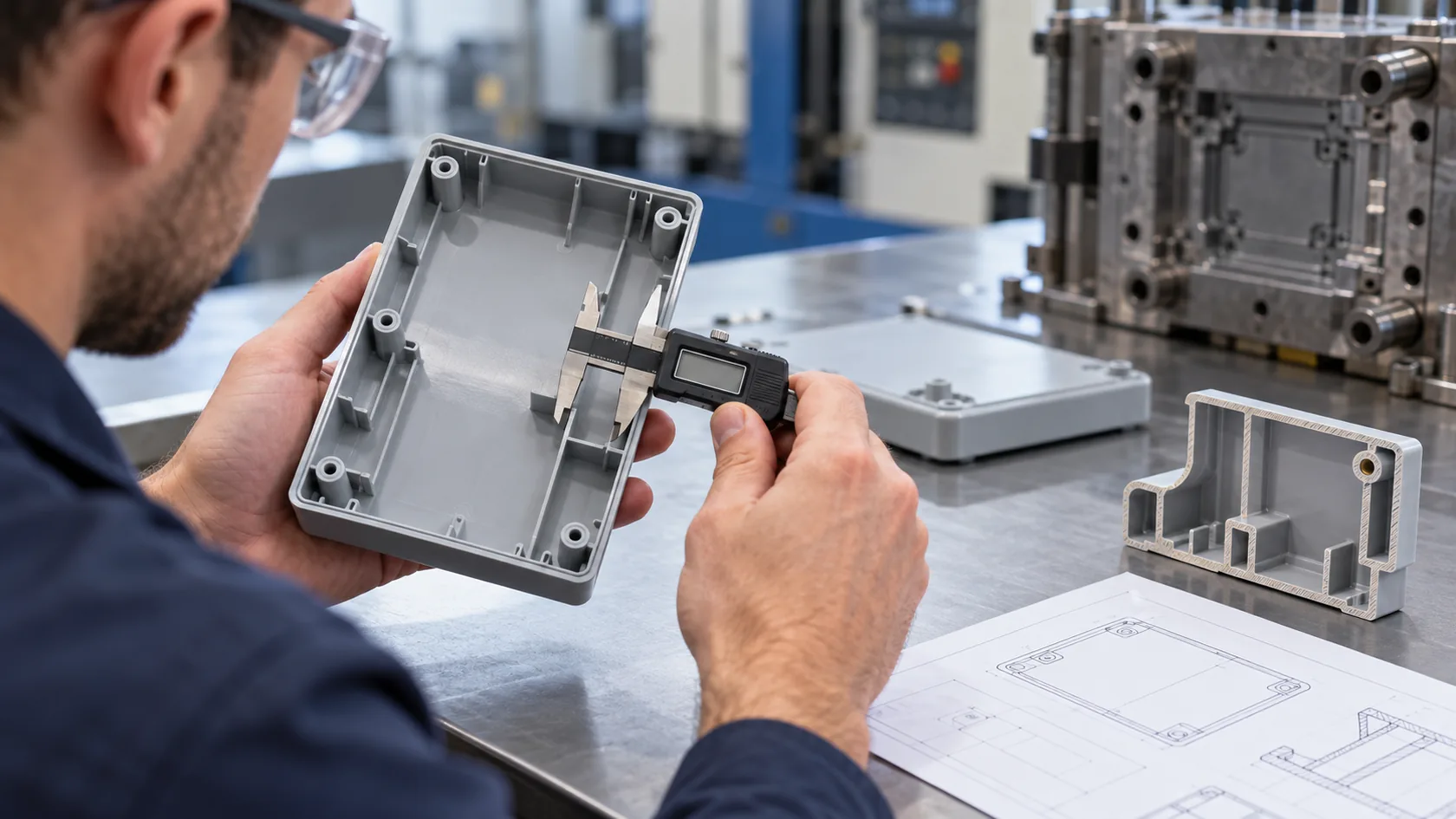
Both PC and ABS are injection-molded materials, so the enclosure must respect the fundamentals of molding: suitable draft, reasonably uniform walls, controlled transitions, rib and boss design, gate placement, ejection, and shrinkage allowance. Those choices affect warpage, sink, stress, cosmetic appearance, and how reliably the lid mates with the base.
Do not solve stiffness with a thick corner
Protolabs’ molding guidance makes the central point well: consistent wall thickness helps reduce distortion, while unnecessarily thick sections can create cooling and dimensional problems. The exact target wall depends on the grade, part size, flow path, tooling, and geometry; it should come from the material supplier and molder rather than a copied rule of thumb.
For a custom enclosure, I review screw bosses, snap hooks, battery doors, display openings, and corner radii together. A boss that is easy to model can leave a visible sink mark on the outer face. A rigid snap fit may survive assembly once but stress-whiten after repeated service. These are design-and-material interactions, not purely PC-versus-ABS questions.
My preference is to make the first tool review a DFM review: the molder should flag flow length, wall transitions, draft, texture, and ejection before the tool steel is committed. With the base geometry under control, the next question is whether the enclosure can tolerate the actual thermal and environmental life.
Heat, Flame, and Electrical Requirements Are Grade-Specific
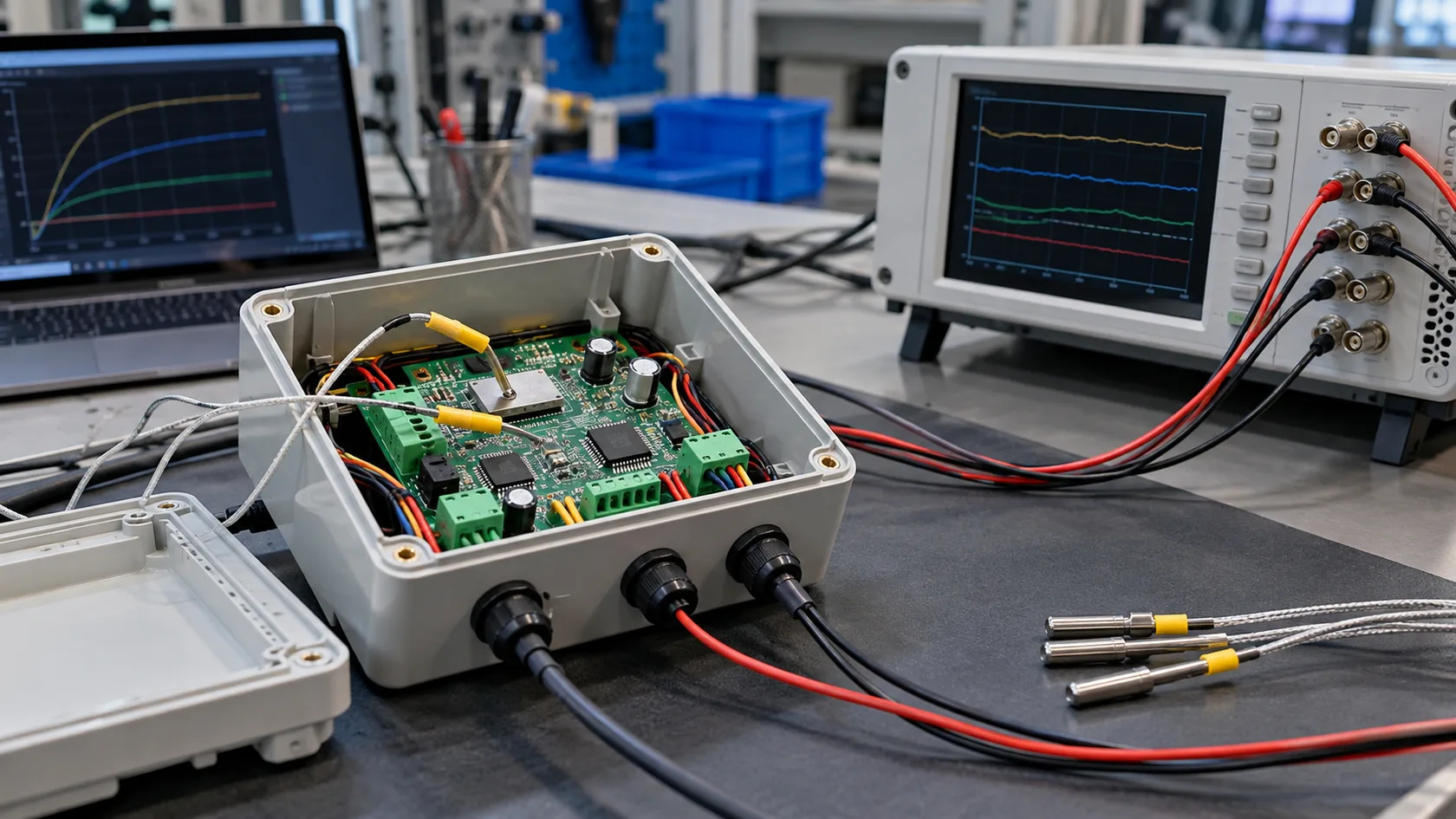
PC is frequently selected where higher temperature capability or impact performance is important, while ABS may suit less demanding indoor housings. That is a useful starting pattern, not a compliance decision. A flame-retardant PC, FR ABS, or PC/ABS grade can have very different properties from an unfilled general-purpose version.
Ask for the test basis, not a broad claim
If a project needs a flame classification, electrical insulation property, comparative tracking behavior, glow-wire result, or temperature index, request the exact grade designation, minimum thickness, color conditions, test method, and recognition file where applicable. The UL 94 information page explains that the test class applies to a material test specimen; it does not certify every completed enclosure or device.
The finished product still depends on wall thickness, vents, live-part spacing, internal heat sources, cable entries, fasteners, contamination, and the relevant end-product standard. I have seen a material called “V-0” become a false comfort when the drawing never fixed the thickness and grade that the claim depended on.
Build those details into the requirement sheet and first-article checks. Then the heat and safety discussion stops being marketing language and becomes a verifiable design input.
Outdoor and Chemical Exposure Need a Separate Review

For outdoor or washdown-adjacent applications, choosing PC or ABS is only one part of the decision. UV package, color, wall thickness, drainage, gasket compression, cable glands, mounting orientation, thermal cycling, condensation, and cleaning chemicals all affect service life.
A sealed plastic box is an installed system
PC can be selected for tough outdoor-related applications when the right grade and weathering package are used. Standard ABS may be better kept to protected indoor service unless a suitable weatherable formulation and validation plan are defined. Neither statement replaces an exposure test for the product’s actual climate and maintenance practice.
The enclosure’s ingress protection also cannot be assigned to a bare shell. A gasket groove, fastener pattern, lid flatness, cable-gland range, connector sealing, vent, and installation torque affect the result. If an IP claim is needed, I ask for the intended rating, test method, cable list, mounting direction, and sample configuration before calling the housing waterproof.
This is where a low resin price can be misleading. Replacing a yellowed cover, a cracked cable-entry area, or a leaking lid after field installation costs more than identifying the exposure during design review.
When PC/ABS Is the Better Compromise
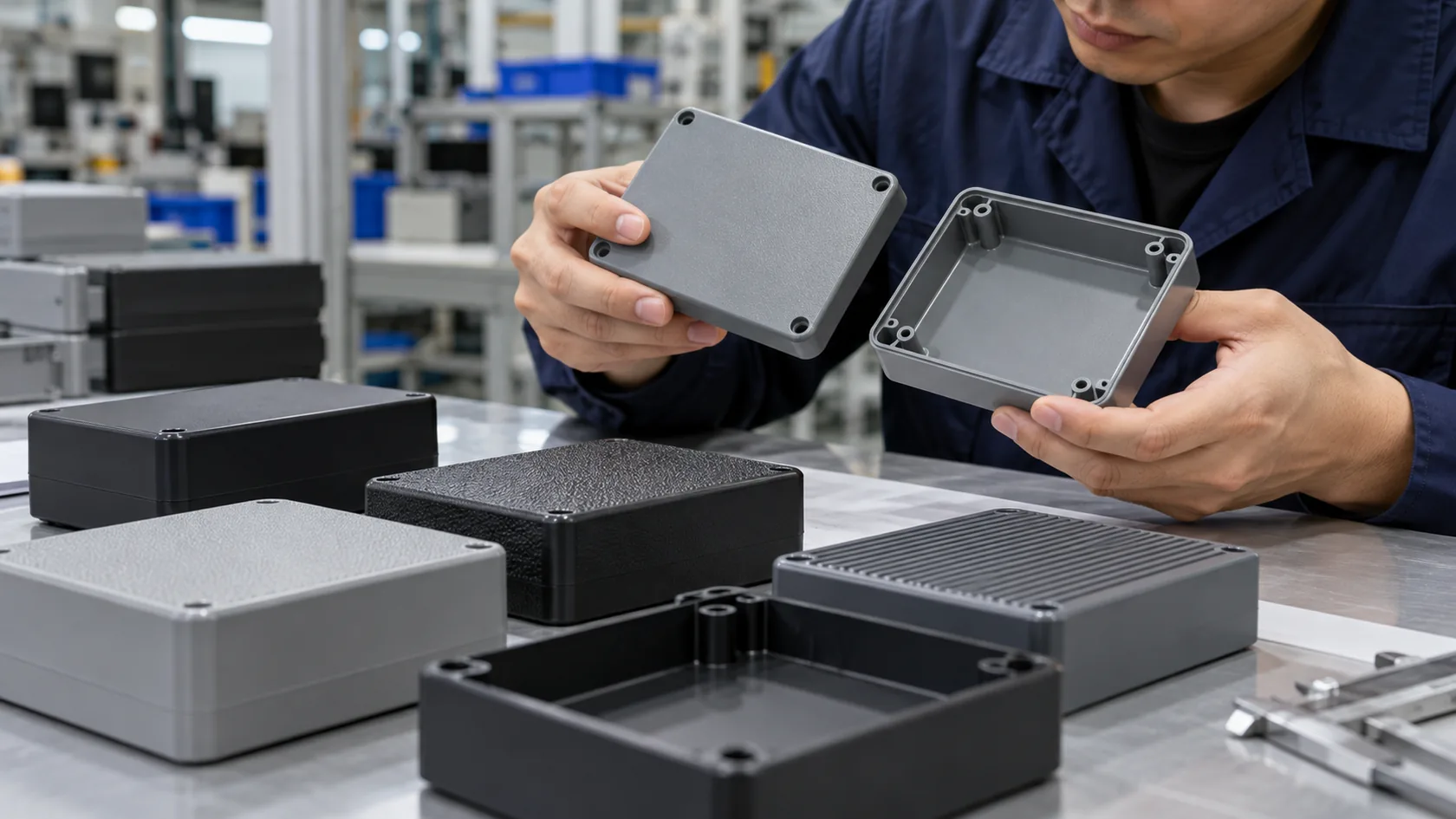
A PC/ABS blend can be worth considering when the project needs a balanced combination of toughness, heat resistance, processing behavior, and surface appearance. It is not simply “half PC plus half ABS,” and its performance still depends on the specific formulation, additives, color, thickness, and mold process.
Compare candidates on the same drawing
The fairest way to compare PC, ABS, and PC/ABS is to mold or prototype the same approved geometry, with the same texture and assembly method, then inspect the points that matter. In practical terms, that may include:
- lid-to-base fit and gasket compression;
- screw-boss appearance and pull-out behavior;
- snap-fit assembly and repeated opening;
- color and texture consistency;
- clearance around hot components and connectors;
- cleaning-fluid compatibility; and
- relevant environmental or regulatory tests.
I often find the blend is a good commercial candidate where buyers want a more robust feel than a basic ABS housing while still caring about molding and cosmetics. But I would not substitute it late in the project without confirming shrinkage, tool behavior, and all required approvals for that precise grade.
A Factory-Ready Selection Checklist
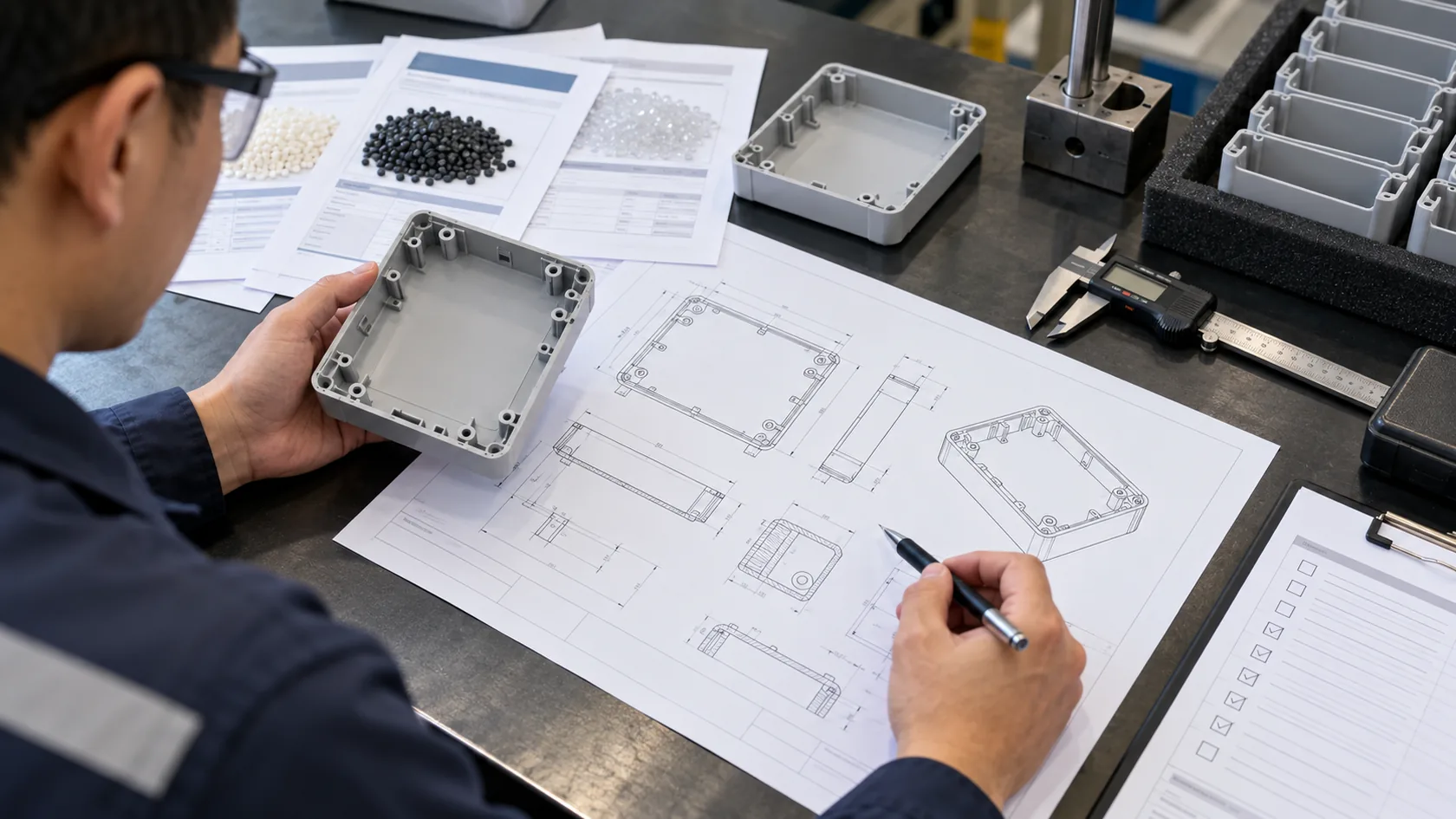
The material decision becomes safer when it is documented before production. A good request for quotation gives the factory enough context to quote the right resin and raise useful DFM questions instead of guessing around a vague “PC plastic” note.
Send these items with the enclosure drawing
- Intended indoor, outdoor, portable, wall-mounted, or machine-mounted use.
- Required material grade or candidate grades, color, texture, and transparency needs.
- Temperature sources, duty cycle, cleaners, oils, UV, humidity, and mechanical-abuse expectations.
- Any applicable flame, electrical, ingress, or end-product requirements, including the test basis.
- PCB, connector, cable, gasket, fastener, and assembly constraints.
- Target volume, expected redesign risk, and sample/approval plan.
I also recommend agreeing on the inspection standard for cosmetics and fit before the first articles are molded. It is much easier to decide what “acceptable” means beside approved samples than after several hundred housings are packed.
Conclusion
Polycarbonate is often the stronger candidate where impact resistance, temperature capability, or clear features are important. ABS is often a practical and attractive choice for controlled indoor products where moldability, appearance, and cost carry more weight. PC/ABS can offer a useful middle path. None of those are universal answers, because the exact grade and complete enclosure design decide the result.
After years of reviewing custom housings, I trust a clear requirement sheet more than a resin name on its own. Send the drawing, service conditions, material candidates, and critical interfaces before tooling. We can then review wall design, bosses, sealing, finish, and manufacturing risks together—while the project is still easy to improve.