Skip to content

The expensive enclosure mistake is often made before anyone compares prices. A buyer sees NEMA 13 and NEMA 4 on a specification sheet, assumes the higher-looking number means stronger protection, and asks for the “better” one. The project then receives an enclosure that is unsuitable for the actual location—or pays for outdoor capability that the machine never uses.
NEMA Type 13 and Type 4 protect against different operating problems. Type 13 is primarily an indoor industrial choice for dust plus sprayed water, oil, and non-corrosive coolant. Type 4 is an indoor/outdoor choice for hose-directed water, rain, windblown dust, and external ice formation. The practical question is not which number is better. It is what reaches the enclosure, how it is installed, and what failure the design must prevent.
In my factory work, I ask for the machine location, washdown method, coolant exposure, cable-entry plan, maintenance routine, and mounting direction before I recommend a housing. That small review can prevent a late redesign of the gasket, cable glands, finish, or thermal path.
The Two Ratings Solve Different Problems
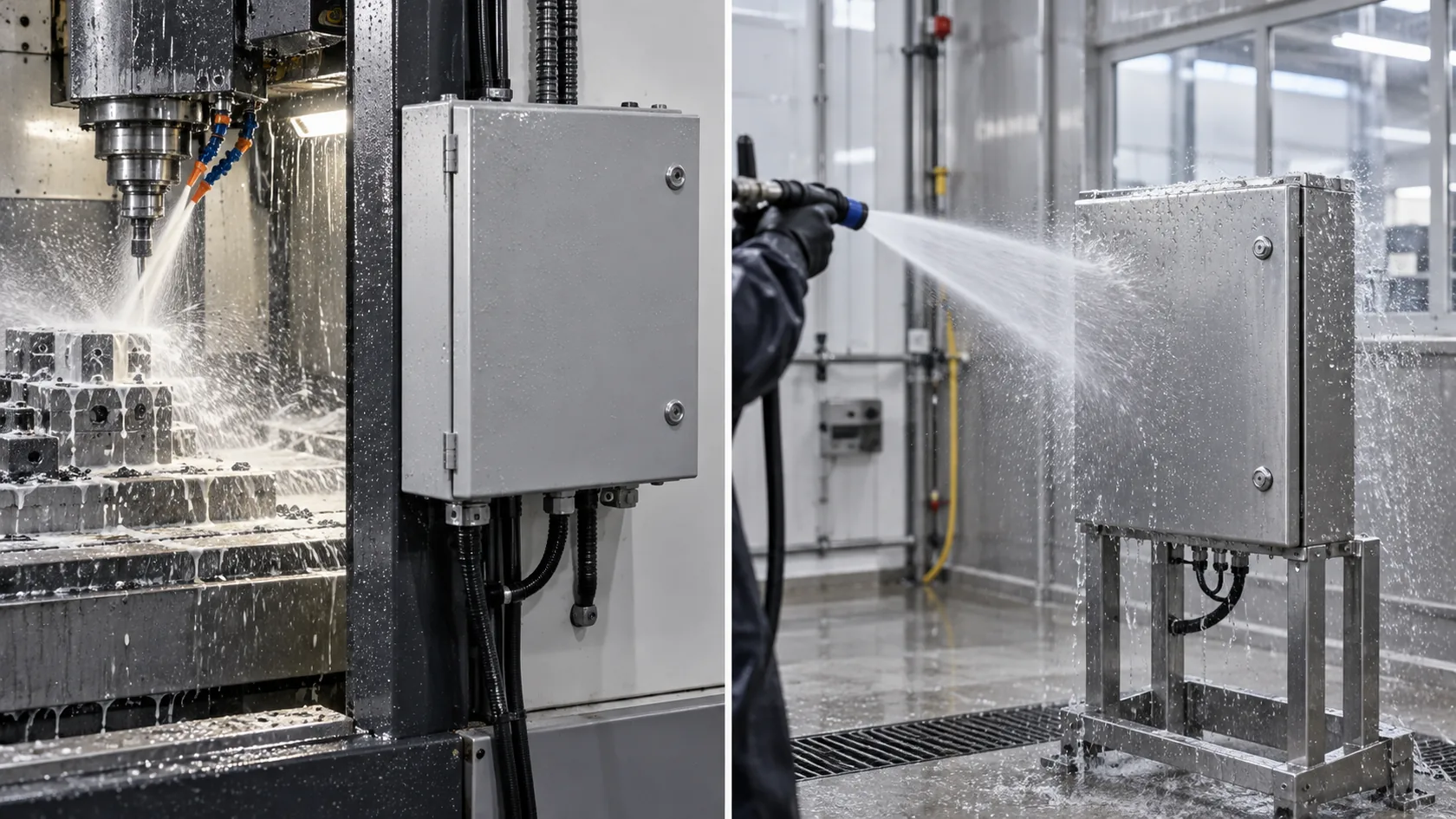
NEMA 250 defines environmental enclosure types, not a simple ladder. The NEMA enclosure-type comparison shows the difference clearly: Type 4 includes hose-down and outdoor exposure, while Type 13 includes sprayed oil and non-corrosive coolant.
| Question | NEMA Type 13 | NEMA Type 4 |
|---|---|---|
| Typical location | Indoor industrial area | Indoor or outdoor location |
| Main exposure | Dust, light water spray, oil and non-corrosive coolant spray | Hose-directed water, rain, windblown dust, external ice |
| Coolant spray protection | Yes | Not the stated Type 4 purpose |
| Outdoor weather use | No | Yes |
| Corrosion protection | Not implied | Not implied; consider Type 4X where corrosion protection is required |
I would not call one rating an upgrade from the other. A machining center with mist and coolant spray may point toward Type 13, while a food-processing washdown perimeter or an exterior skid may need Type 4 or another configuration-specific option. The next step is to describe the exposure instead of naming a rating from memory.
Why “Better Protection” Creates the Wrong Purchase Order

The phrase “better protection” hides the direction and type of liquid exposure. A panel near a CNC machine can face sprayed coolant from the front or side, while a wall-mounted outdoor control box can face rain and a wash hose from different angles. Those are not interchangeable design conditions.
A number is not a risk assessment
A Type 4 enclosure may be excessive for a clean indoor electrical room, but it can still miss a requirement if the real issue is repeated oil/coolant spray at a door seam, viewing window, or operator device. Conversely, a Type 13 enclosure installed outdoors can fail because rain, windblown dust, UV, thermal cycling, and water directed at cable entries were never part of its intended use.
I prefer a short exposure map in the request for quotation: indoor or outdoor, water source, spray direction, cleaning pressure, coolant chemistry, dust type, temperature range, sun, corrosive agents, and maintenance access. That is more useful than a lone NEMA number and naturally leads into the hardware that must make the enclosure work.
The Enclosure Shell Is Not the Installed System
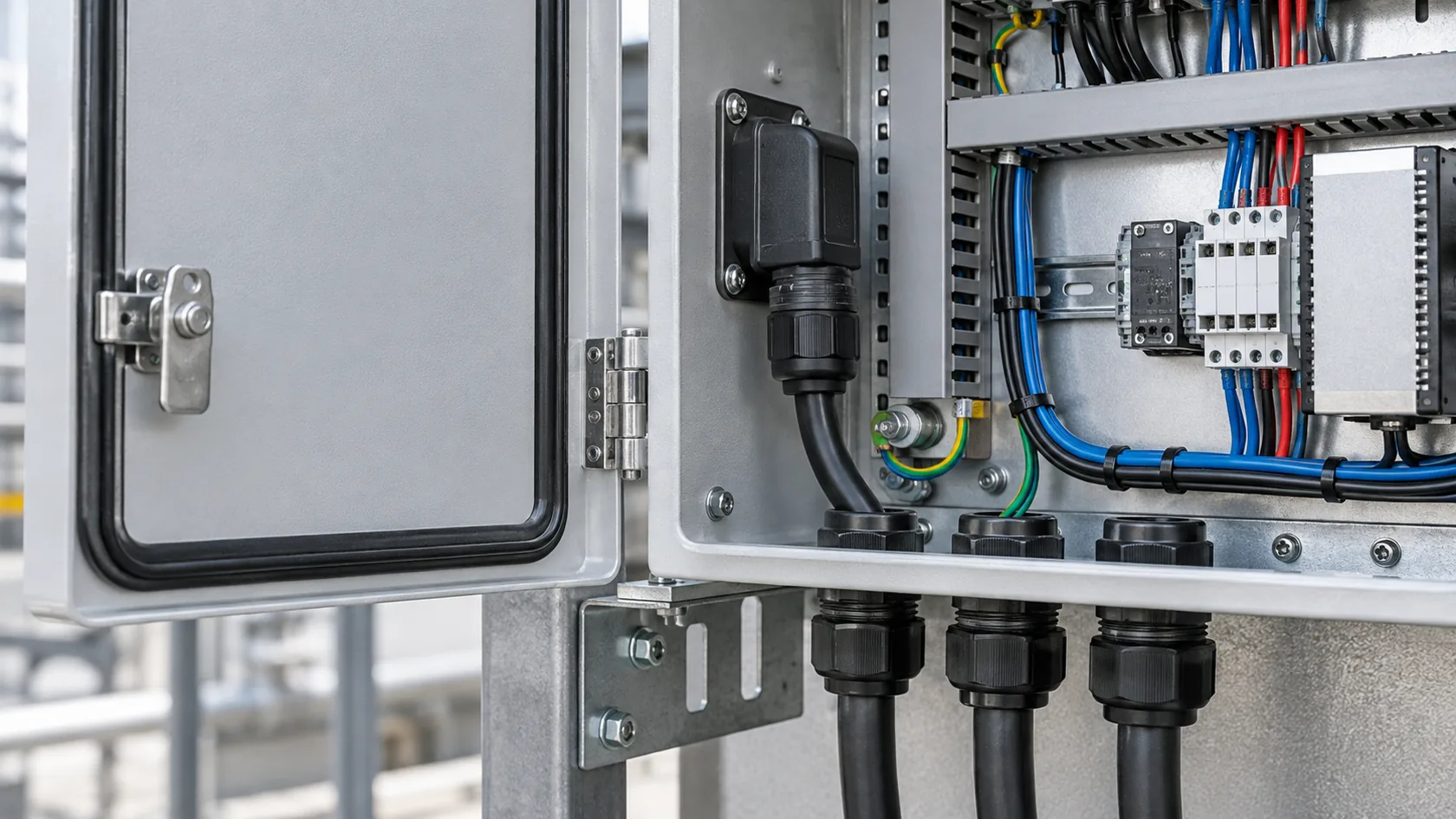
An empty housing cannot deliver the same protection as a fully installed machine assembly. Every opening—the door, cover, conduit hub, gland, connector, display, vent, and mounting interface—can become the limiting point. NEMA 250 itself notes that some internal conditions can arrive through conduit or unsealed openings, so the marked enclosure is not a substitute for installation design.
Check every penetration in its real orientation
For a custom enclosure, I review these details together:
| Interface | What to confirm | Frequent failure |
|---|---|---|
| Cover seam | Gasket profile, compression path, corner behavior, fastener spacing | Leakage at a distorted or under-compressed seam |
| Cable entry | Gland range, cable OD, torque access, drip path | A good shell with an incorrectly sized gland |
| Connector | Environmental rating with the mating half installed | Water enters through an unmated or exposed connector |
| Door hardware | Latch load, hinges, window seal | Door deflection unloads the gasket |
| Mounting | Orientation, wall gap, drainage, cable routing | Water collects at an entry or behind the enclosure |
The lowest-performing interface normally decides the field result. A thoughtful opening layout often saves more than specifying a thicker wall or a more expensive label.
Gaskets, Latches, and Cable Glands Carry the Real Risk

The gasket is not decoration around the door. Its material needs to suit the expected fluid, its groove needs to control compression, and the cover must remain stiff enough that latches and fasteners load it consistently. Oil or coolant compatibility, compression set, corner geometry, and service reassembly can all change the outcome.
For cable glands, the selected cable diameter must sit inside the gland’s specified sealing range. The installer also needs access to tighten the component correctly without twisting the cable or leaving a direct water path. A spare knockout or a later field-drilled hole can undo an otherwise good enclosure.
I have seen a clean sample look convincing with a hand-closed lid, then lose compression after a heavier cable harness pulls on one side. That is why I want the actual cable plan, door-mounted components, and service sequence before declaring the sealing arrangement settled. Once these components are defined, material and finish choices can be assessed honestly.
Material and Finish Do Not Automatically Add a Rating

Material selection supports durability, but it does not automatically turn Type 13 into Type 4 or Type 4 into Type 4X. Powder-coated steel, aluminum with a suitable finish, stainless steel, and engineered plastics each have different strengths, costs, fabrication limits, and corrosion risks. Cut edges, exposed fasteners, coating damage, dissimilar-metal contact, standing water, and cleaning chemicals matter as much as the base material.
Type 4X is the separate direction to investigate when the application requires the Type 4 environmental purpose plus corrosion protection. It still needs a defined material system and validation plan; a stainless-looking sample alone is not evidence of performance in a particular chemical, coastal, or washdown environment.
My practical rule is to choose the metal or plastic around the actual exposure and fabrication route, then design the seam, hardware, entries, and finish as a complete system. That approach avoids paying for a premium material while leaving the easiest corrosion point at a cutout or cable fitting.
More Sealing Can Create a Thermal and Condensation Problem
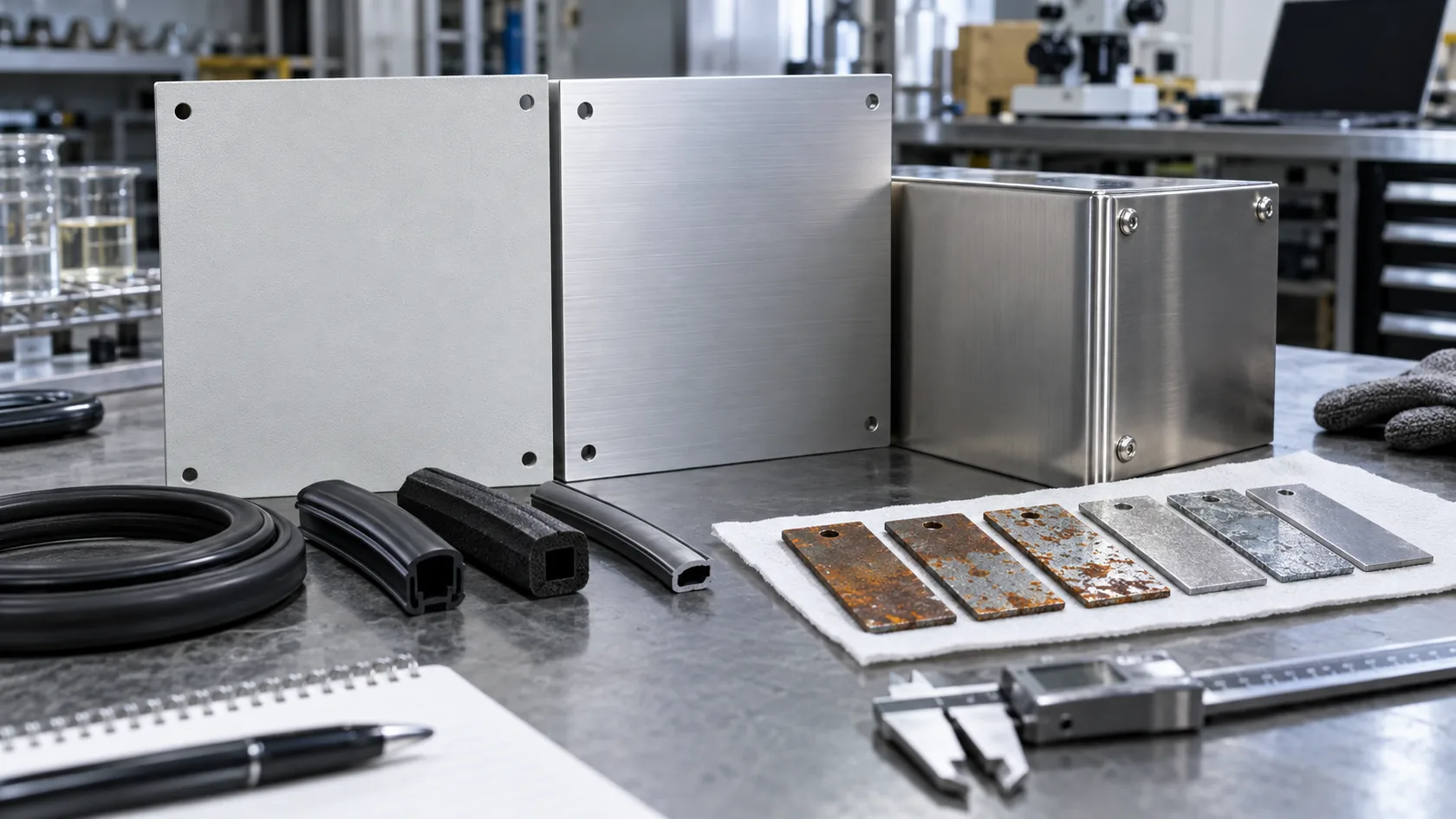
A tighter enclosure can reduce contamination ingress, but it also reduces accidental airflow. Electronics that were comfortable in a vented indoor box can run hotter after the design is sealed. Outdoor installations may add solar gain, cold starts, and daily temperature swings; those swings can create internal condensation even when liquid water never crosses the gasket.
Design the heat path before closing every opening
Start with the real heat load, allowable component temperature, mounting surface, expected ambient range, and whether the enclosure is exposed to sun. A conductive path to the housing, external fins, a properly selected heat exchanger, or a controlled venting strategy may be more appropriate than simply adding a fan. Any vent, drain, or thermal accessory must be evaluated against the required environmental protection.
I do not promise that a more sealed box will run safely without a thermal review. The protection requirement and the heat-removal plan must agree before tooling or final machining begins. This is especially important when the specification combines outdoor use, washdown, and high-power electronics.
Type 13 Is Not an Outdoor Substitute—and Type 4 Is Not a Coolant Plan
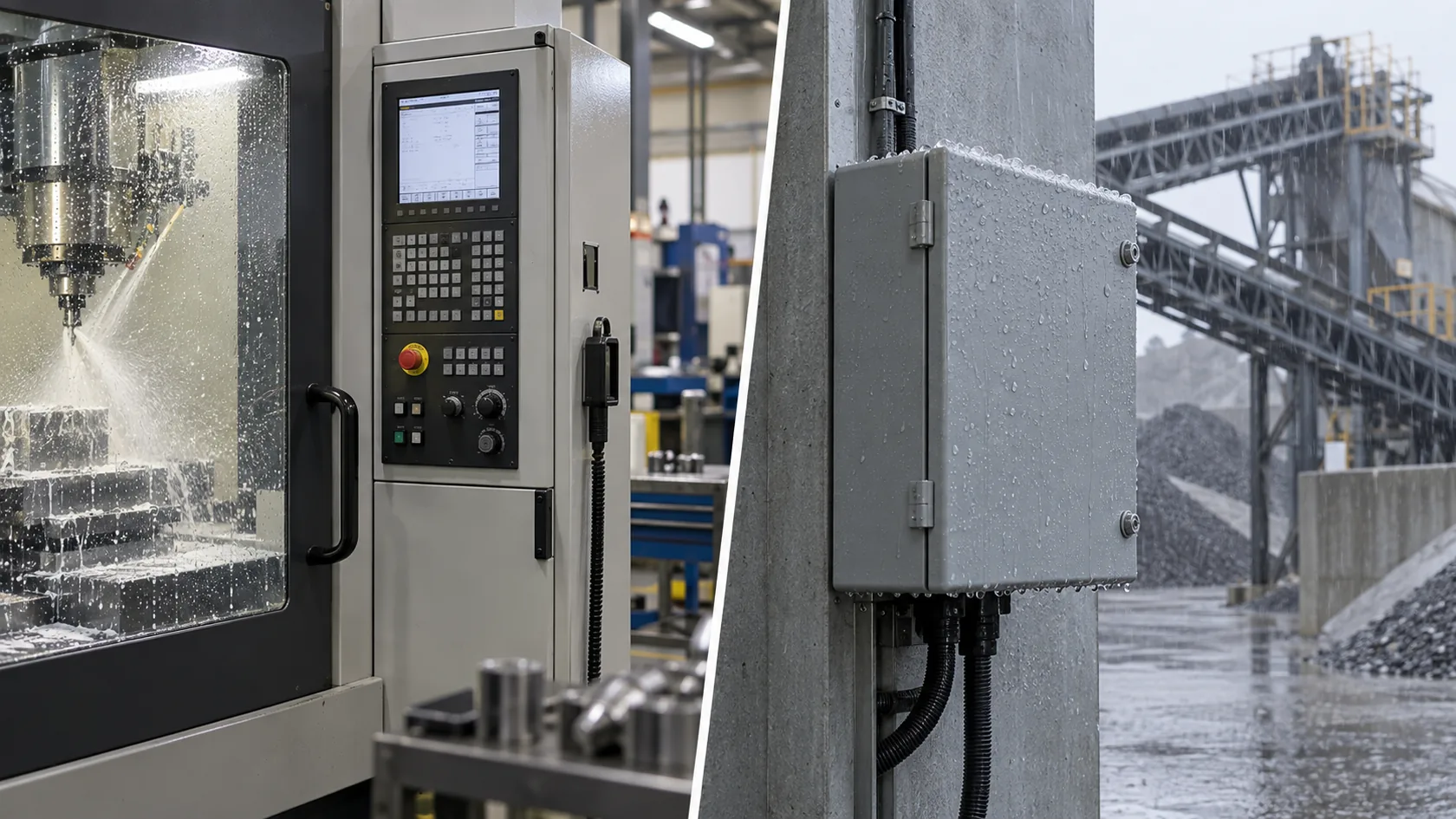
The UL enclosure-type guide describes Type 13 as an indoor type for dust and spraying of water, oil, and non-corrosive coolants. It describes Type 4 as an indoor/outdoor type for hose-directed water, windblown dust, rain, and external ice formation. That distinction should remain visible in the drawing and purchase specification.
| Application situation | Starting direction | What still needs confirmation |
|---|---|---|
| Indoor machine tool with oil/coolant mist or spray | Type 13 may fit | Fluid chemistry, spray path, door devices, cable entries, cleaning method |
| Indoor area periodically hosed down | Type 4 may fit | Hose pressure/direction, mounting orientation, service access, components |
| Outdoor control box | Type 4 or other outdoor configuration may fit | Sun, corrosion, drainage, ice, cable routing, thermal load |
| Corrosive washdown or coastal exposure | Investigate Type 4X and material system | Chemical concentration, cleaning frequency, finish, hardware, test basis |
This table is a selection starting point, not a certification claim. The enclosure type must match the complete equipment and its intended installation. With that boundary clear, the cost discussion becomes more productive.
The Costly Mistakes Usually Appear After the Quote
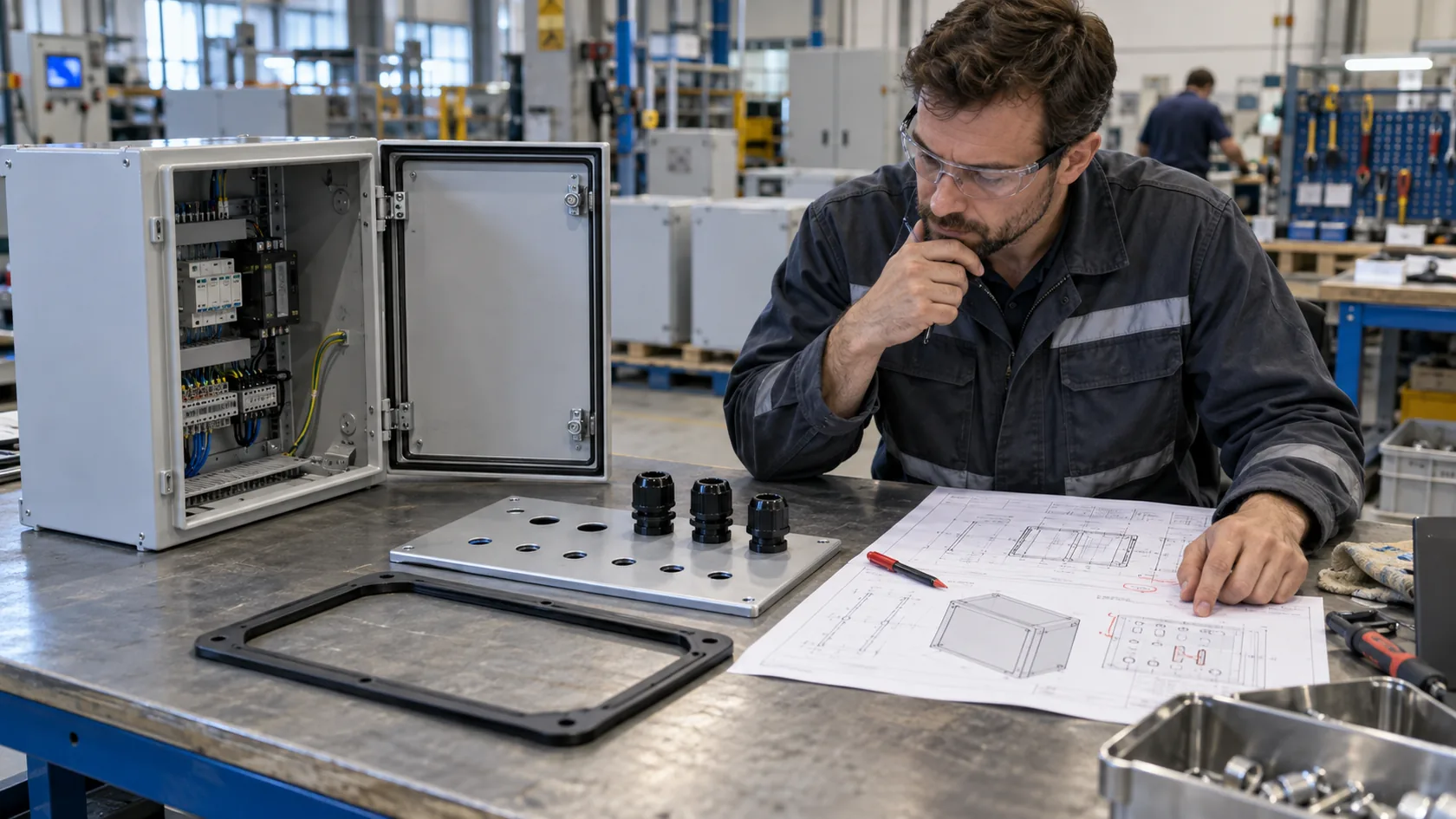
An over-specified housing can add material, gasket, latch, machining, testing, and assembly cost without reducing the actual project risk. An under-specified housing can cost far more later: water-damaged electronics, contamination, field-service visits, downtime, rejected installations, and a redesigned panel after the first build.
The most common late changes I see are moving a cable entry away from a seam, adding a gland plate, stiffening a door so the gasket stays loaded, changing fastener access, separating hot electronics from a sealed compartment, or switching material/finish after the location changes. These are manageable early in a drawing review and expensive after components have been purchased or production fixtures are made.
I advise buyers to compare quotations at the same installation level. Ask each supplier whether the quoted price includes the intended gasket, hardware, openings, entries, finish, and assembly assumptions. A lower enclosure price is not meaningful if the critical protection details are left for someone else to solve.
A Better RFQ Checklist for NEMA 13 or NEMA 4

Give a supplier enough context to design for the real hazard. The following checklist helps make Type 13 versus Type 4 a technical decision rather than a label comparison:
- State the installation location: indoor, outdoor, sheltered, wall-mounted, floor-mounted, or machine-mounted.
- Describe water exposure: drip, light spray, coolant spray, washdown, rain, hose direction, and cleaning routine.
- Identify contaminants: dust, lint, chips, oil, coolant, salts, chemicals, and likely concentration where relevant.
- Provide cable, conduit, connector, display, and door-device information, including mating-space needs.
- Define mounting orientation, drainage expectation, direct sun, ambient range, and internal heat load.
- Identify the intended enclosure type and any product-specific certification or test requirement.
- Ask for the gasket, latch, gland, finish, and material assumptions to be documented in the quote and drawing.
For global projects, do not convert an IP code into a NEMA Type by guesswork. IEC 60529 defines the IP Code, while NEMA Types cover a different scope. NEMA notes that the systems do not have complete equivalency; conversion should follow the applicable standard and product context, not a marketing table.
Conclusion
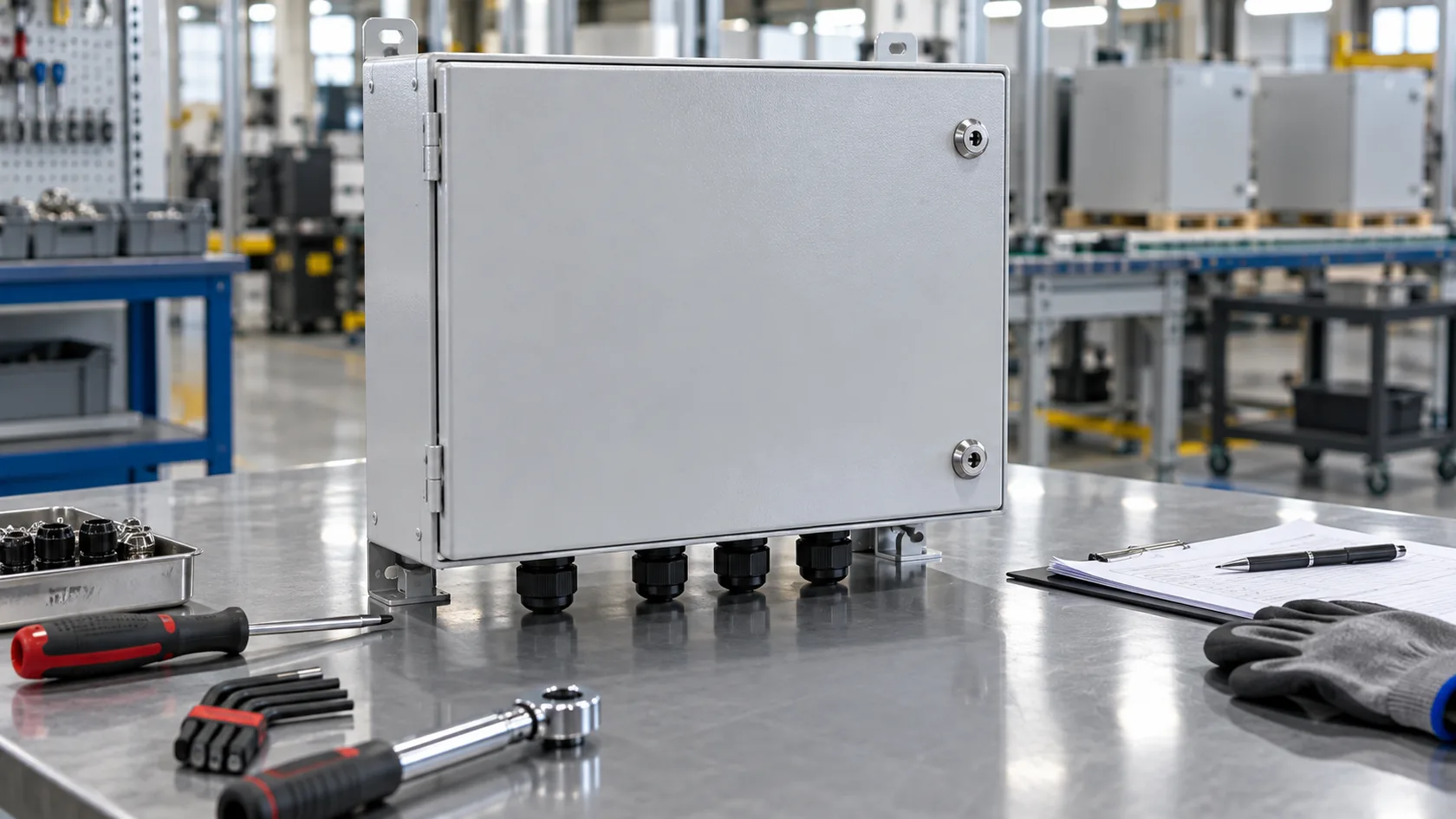
NEMA 13 is not a lesser version of NEMA 4, and NEMA 4 is not automatically the “better” enclosure. Type 13 addresses an indoor industrial combination of dust and sprayed oil/coolant; Type 4 addresses hose-down and outdoor exposure. The costly mistake is choosing by number instead of by the exact hazard and installation.
From a factory point of view, the enclosure rating is the beginning of the conversation. The result depends on the seam, gasket, latches, cable entries, connectors, material, finish, orientation, heat path, and assembly controls. Send us the real exposure conditions and interface drawing, and we can review whether the proposed housing is buildable for the protection you actually need.