Skip to content
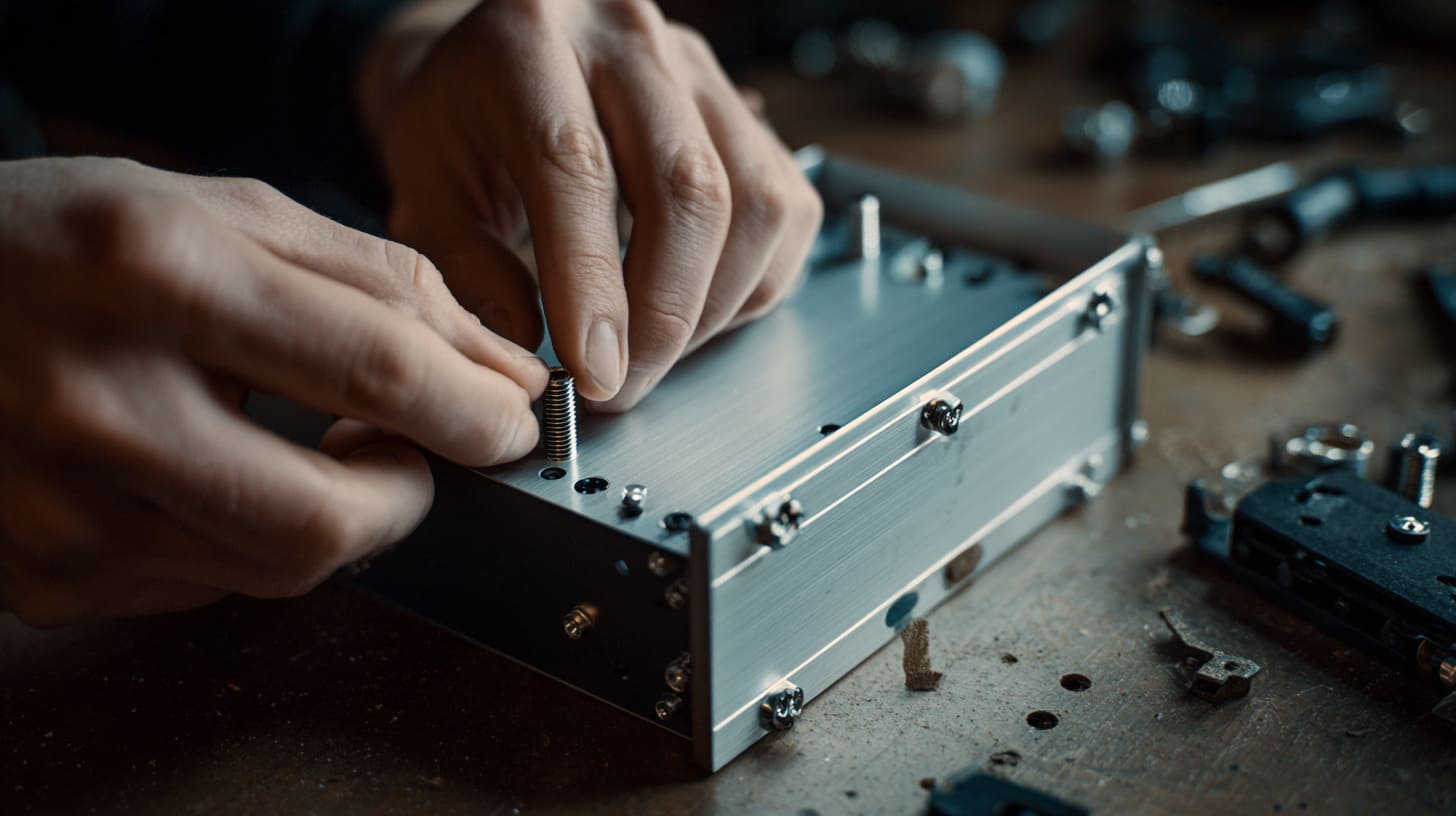
A screw can make an enclosure feel finished very fast.
I have seen that feeling many times in real work. A lid sits flat. The corners line up. The screws go in clean. The shell feels solid in the hand. At that moment, many people relax. They look at the sample and think, good, the bonding is done too.
That is where the trouble starts.
I once discussed a metal enclosure with a buyer who cared a lot about appearance and fit. The sample looked neat. The assembly was firm. Nothing seemed loose. But when the product moved into testing, the problem showed up in a place many people do not look at first. The structure was fine. The dimensions were fine. The problem was the electrical path between metal parts. The screws were holding the enclosure together, but they were not creating the kind of bonding the product really needed.
That moment matters because it teaches a simple lesson. Mechanical strength and electrical bonding are not the same thing.
A screw can clamp two parts. That is true. A screw can also create contact between them. That is also true. But those two truths can fool people. A part can feel mechanically secure and still have weak, unstable, or inconsistent electrical continuity.
That is why I do not trust the phrase tight screws mean good bonding. It sounds practical. It sounds efficient. It even sounds logical. But in many real products, it is only half true, and half true is exactly how expensive mistakes begin.
The first thing I care about is not whether the enclosure feels solid in my hand. I care about whether the electrical contact will still behave well after coating, shipping, vibration, heat, moisture, and time.
Before I talk about screws, I need to slow down and define what bonding really means, because many design problems begin with a wrong definition.
What Is Bonding in Metal Enclosures?

When I say bonding, I do not mean that two metal parts merely touch each other.
I mean that the metal parts are electrically connected in a stable and low-resistance way. That connection lets current, interference, and fault energy move through the enclosure in a controlled path. In simple words, bonding is about making metal parts behave like they belong to one electrical body, not just one mechanical box.
What does “bonding” actually mean?
Bonding is electrical continuity between conductive parts.
That sounds simple. But in real products, it is not just about some continuity. It is about reliable continuity. A random contact point may work once on the bench. That does not mean it will work after the product is painted, assembled by different workers, shipped overseas, and used in a noisy electrical environment.
I usually think about bonding in this way:
| Item | What I look for |
|---|---|
| Electrical continuity | Can current move between parts easily? |
| Resistance stability | Does the resistance stay low over time? |
| Contact repeatability | Will every unit behave in a similar way? |
| Real environment performance | Will heat, vibration, and corrosion hurt the contact? |
A lot of people stop at the first line in that table. I do not. I care just as much about the last three.
Why bonding matters in real products
Bonding matters because enclosures do more than hold parts in place.
A metal enclosure often helps with EMC performance. It helps with shielding. It may also be part of the grounding system. In some products, it supports safety by helping fault current move where it should go. In other products, it helps prevent strange noise problems that are hard to trace.
Here are the main reasons I care about bonding:
- EMC control: weak bonding can hurt shielding and increase noise problems
- Safety: poor bonding can weaken the path for fault current
- Signal stability: sensitive electronics can behave badly when enclosure continuity is poor
- Consistency: one unit may pass, while another unit from the same batch may fail
That last point is the one that often hurts the most. A design that works only sometimes is much harder to manage than a design that fails in an obvious way.
Bonding vs grounding vs shielding
These three words often get mixed together. I see that a lot.
They are related, but they are not identical.
| Term | Simple meaning | Main purpose |
|---|---|---|
| Bonding | Connecting conductive parts together | Make electrical continuity between metal parts |
| Grounding | Connecting to a reference or earth path | Safety, reference potential, fault path |
| Shielding | Blocking or reducing EMI | Control interference in and out of the enclosure |
A bonded enclosure may help shielding. A grounded enclosure may also be bonded. But these are not automatic. One does not always guarantee the other.
What often trips people up is this: if they use the wrong word, they often solve the wrong problem. They say “grounding” when the real problem is panel-to-panel continuity. They say “shielding” when the real problem is a poor contact seam. They say “bonding” when they only mean a screw is touching bare metal somewhere.
That kind of language mistake sounds small. It is not small. It leads to design mistakes, test failures, and confusing conversations between engineering, sourcing, and assembly teams.
The more projects I see, the more I believe one basic thing: if the team cannot clearly separate bonding, grounding, and shielding, the enclosure will almost always surprise them later.
Now we can ask a more practical question. If bonding matters this much, what are screws actually good at?
What Do Screws Actually Do Well?

I do not want to sound unfair to screws. Screws are useful. I use them all the time. I respect them for what they do well.
The problem begins when people expect them to do a second job they were never carefully designed to do.
Mechanical strengths of screws
Screws are excellent mechanical fasteners.
They clamp parts together. They make assembly easy. They make service and disassembly possible. They are low cost, easy to source, and familiar to almost every factory.
That is a strong list already.
| What screws do well | Why it matters |
|---|---|
| Clamping force | Keeps enclosure parts tight |
| Easy assembly | Speeds production and service |
| Low cost | Helps control BOM and labor |
| Standard parts | Easy to source and replace |
| Flexible design use | Works across many enclosure styles |
If my goal is to close a lid, fix a bracket, or hold two panels in position, screws are a natural choice. I do not need to overcomplicate that.
When screws seem to provide bonding
This is where people get confident.
When a screw goes through conductive metal and clamps two bare surfaces together, I can often measure continuity. On day one, during sample assembly, the resistance may look low. That result makes the design feel safe.
And to be fair, sometimes the contact is good enough for a simple product.
That is why this assumption survives. It is not completely false. It works just often enough to mislead people.
Why engineers rely on them by default
There are good reasons why people rely on screws:
- The design is simpler
- No extra bonding parts are needed
- Assembly looks clean
- Cost stays low
- The first sample may already show continuity
This is also a mindset problem. When a designer sees metal touching metal, the brain wants to call it done. That reaction is understandable. I have had to stop myself from thinking that way too fast.
The key thing I remind myself is simple: a screw is designed to create mechanical force first. Any bonding it provides is often a useful side effect, not a guaranteed electrical function.
And that difference changes how I judge risk.
When I review a design, I never treat “the screw touches metal” as the end of the discussion. I treat it as the start of a checklist, because a side effect is not the same thing as a controlled design feature.
That is why I can appreciate screws and still say this clearly: they are excellent for structure, but bonding through screws alone is often more fragile than it looks.
Once I accept that, the next question becomes uncomfortable but necessary. Why are screws alone so unreliable in many enclosures?
Why Screws Alone Are Not Reliable for Bonding

A lot of bonding failures are quiet failures.
The screw is there. The panel is tight. The enclosure looks finished. Nothing seems broken. But the electrical path is weak, patchy, or unstable. That kind of failure is dangerous because it hides behind a good-looking assembly.
Surface oxidation and coatings
Metal surfaces are rarely as simple as people imagine.
Aluminum may be anodized. Steel may be painted or powder coated. Parts may have oxide layers. Even bare-looking metal can have surface conditions that reduce conductivity.
This matters because coatings and oxide layers block or weaken electrical contact.
| Surface condition | Effect on bonding |
|---|---|
| Anodizing | Strong barrier to conductivity |
| Powder coating | Insulates the contact area |
| Paint | Blocks metal-to-metal contact |
| Oxide layer | Raises resistance |
| Dirty surface | Makes contact inconsistent |
I have seen designs where the drawing looked clean, the assembly method looked normal, and the real problem was only this: nobody planned exposed metal at the contact point.
That is such a small detail on paper. But on the finished part, it changes everything.
Contact inconsistency
Even when the surfaces are conductive, the contact itself may still be poor.
A screw does not create one large, perfect contact zone. It creates pressure in a limited area. Thread contact is small. Surface flatness varies. Torque varies. Workers vary. Small burrs or uneven finishes also matter.
So yes, two parts may be connected. But are they connected in a stable and repeatable way? That is the harder question.
Here is how I think about it:
- A tiny contact point can pass a quick continuity check
- The same point can behave badly under noise or vibration
- One sample can look fine while production units vary
That last point is why I do not judge bonding by one lucky prototype.
Loosening over time
Real products do not live on a quiet table forever.
They move. They heat up. They cool down. They vibrate. They get shipped. They get opened for service. All of that can reduce contact pressure or shift the contact condition.
A screw that felt tight during assembly can become a weaker electrical path later.
| Stress factor | What it can do |
|---|---|
| Vibration | Loosen or shift contact |
| Thermal cycling | Change pressure as materials expand and contract |
| Repeated service | Wear contact surfaces |
| Shipping shock | Disturb mating surfaces |
This is where things often go wrong in projects that looked “safe enough” at first. The design passes the first mood test. It does not pass the life test.
Corrosion effects
Corrosion is another quiet enemy.
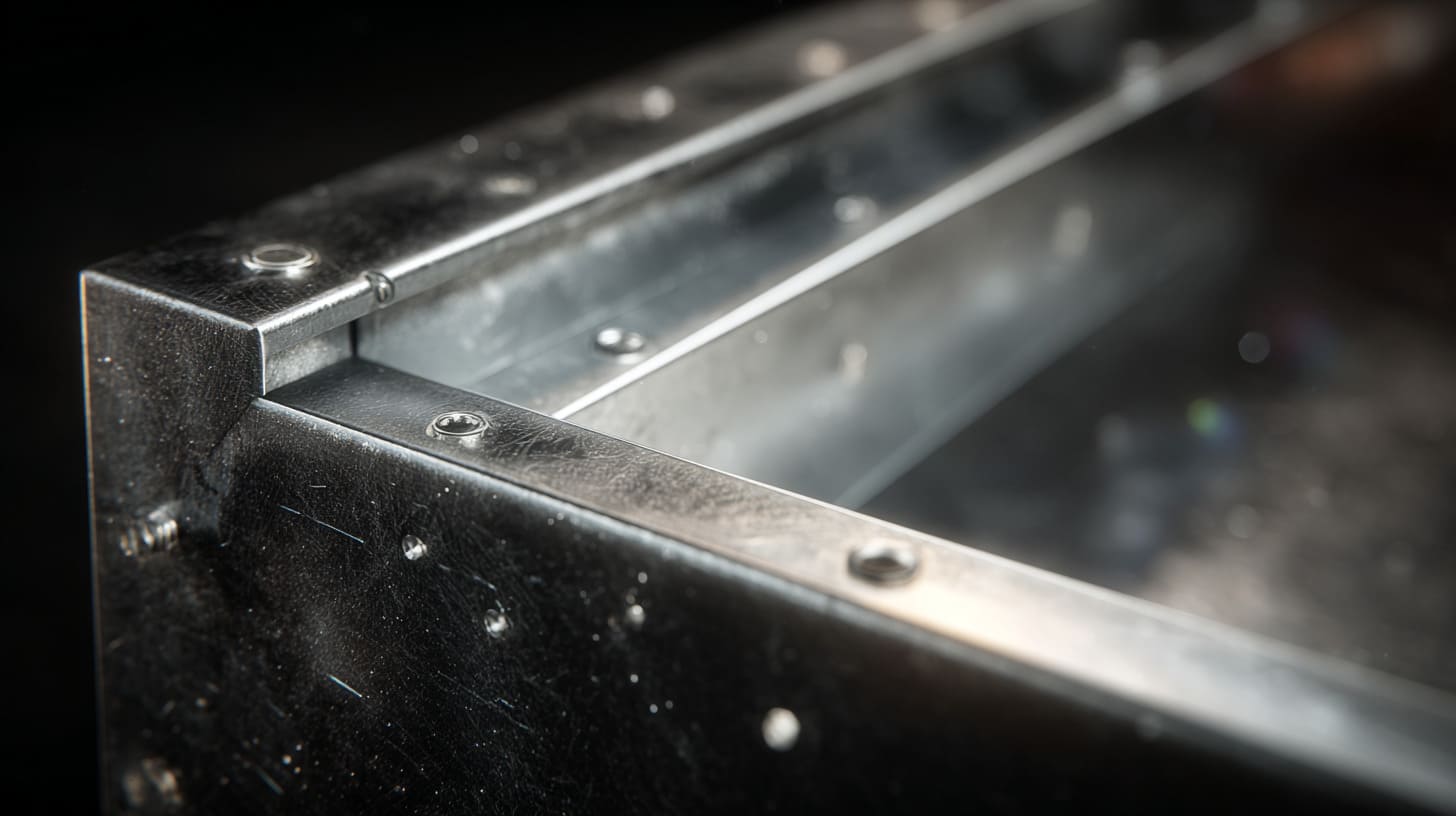
Moisture, salt, dust, and air exposure can damage contact points over time. Even a small amount of corrosion at a screw location can increase resistance and weaken the bonding path.
Outdoor products face this more often. But indoor products are not immune. Warehouses, factories, coastal areas, and humid spaces can all change contact quality.
When I see a design that depends on one or two screw points for bonding in a damp or variable environment, I get cautious very fast. Not because the design is impossible. Because the margin is thin.
That is the heart of my judgment here: screws alone usually give me accidental bonding, not controlled bonding. And accidental bonding is not something I want to trust in a product that carries real EMC, safety, or reliability responsibility.
This also means I do not reject screw bonding in every case. The real question is when the risk is low enough to accept it.
When Screws Might Be Acceptable (And When Not)

I do not like absolute rules in enclosure work.
If someone says screws are always enough, I get suspicious. If someone says screws are never enough, I also get suspicious. The better answer depends on the product, the environment, and the cost of failure.
Situations where screws may work
There are cases where screw bonding may be acceptable.
For example, I may accept it more easily when:
- The contact surfaces are bare metal
- The product has low EMC pressure
- The environment is dry and stable
- The enclosure is simple
- The application is not safety critical
- The product is low risk if contact quality changes a little
Here is a simple judgment table I use in my head:
| Situation | My comfort level with screw-only bonding |
|---|---|
| Bare metal indoor enclosure, simple electronics | Medium to high |
| Consumer product with low interference sensitivity | Medium |
| Quick prototype with low compliance pressure | Medium |
| Painted or anodized enclosure | Low |
| Industrial control unit | Low |
| Outdoor or humid environment | Very low |
| Vibration-heavy application | Very low |
Situations where screws are not enough
There are also cases where I stop trusting screws very quickly.
That includes products like:
- Industrial enclosures with EMC requirements
- Communication devices
- Medical-related electronics
- Outdoor metal housings
- Anodized or coated enclosures
- Products with vibration or repeated service access
- Designs where shielding performance depends on seam continuity
I do not need every one of those factors to say no. Sometimes one factor is enough.
For example, if an aluminum enclosure is anodized and the design assumes the screws will automatically solve bonding, I already know the discussion is not finished. The coating changes the whole logic.
Risk-based decision thinking
This is the part many people skip.
They ask, “Can screws work?” I think the better question is, “What happens if they do not work well enough?”
That question changes the whole conversation.
| Question I ask | Why it matters |
|---|---|
| What fails if bonding is weak? | Defines the real consequence |
| Will the issue show up in testing or in the field? | Impacts timing and reputation |
| How expensive is the fix later? | Helps compare early vs late cost |
| Can production variation make the problem worse? | Affects scalability |
I have no issue with low-cost design. I care about it a lot. But I do not confuse low cost with smart risk. A cheap design that creates unstable results is often the more expensive design in the end.
My own rule is simple: if bonding failure can hurt EMC, safety, field reliability, or customer trust, I do not want screw-only bonding to carry that burden by itself.
Once I reach that point, I stop asking what screws might do and start asking what design features will make the bonding intentional.
Better Alternatives to Ensure Proper Bonding

Good bonding usually comes from design choices that admit one honest truth: contact must be controlled.
I do not want to “hope” the enclosure makes good electrical contact. I want to see how it makes contact, where it makes contact, and how that contact survives real use.
Star washers and serrated hardware
Star washers and serrated hardware are simple but useful.
They help bite through thin coatings or surface films. They also improve local contact by increasing pressure at sharp points.
That does not solve every problem. Still, it is often a better choice than using a plain screw and assuming everything will be fine.
| Hardware option | What it helps with | Limits |
|---|---|---|
| Star washer | Breaks through light surface barriers | Not enough for every seam |
| Serrated flange hardware | Improves bite and local contact | Depends on coating thickness |
| Locking hardware | Helps maintain pressure | Does not replace bonding design |
I like these parts because they are practical. They do not feel fancy. They just reduce a common weakness.
Dedicated grounding points
This is one of the cleanest solutions in many projects.
A dedicated grounding or bonding point gives me a planned location with exposed metal, known hardware, and a clear function. It is easier to inspect. It is easier to test. It is easier to explain in a drawing.
This also helps communication between design, sourcing, and production teams. Instead of saying “the screws should probably do it,” I can point to a specific bonding point and define exactly how it should be built.
That reduces confusion. And confusion is expensive.
Conductive gaskets and EMI shielding materials
When seam continuity matters, conductive gaskets can do a lot of work.
They help create electrical contact along enclosure edges and openings. That is valuable when shielding performance depends on more than one tiny screw point.
I have seen seam problems hurt otherwise good enclosures. A box can be strong, pretty, and dimensionally correct, but if the seam contact is patchy, shielding can still suffer.
That is why I see conductive gaskets as more than an accessory. In the right product, they are part of the real electrical design.
Ground straps and bonding wires
Ground straps and bonding wires are direct and honest.
They do not pretend the screw itself is enough. They create a separate electrical path that I can inspect and trust more easily. In high-reliability systems, this matters a lot.
This is not always the cheapest-looking answer. But it is often the more dependable one.
The way I judge these options is very practical: if a product will be painful to debug after shipment, I would rather spend a little more on a clear bonding method than save pennies on a weak assumption.
That brings me to the part I care about most in factory work. How should bonding be designed from the start, not repaired later?
Design Tips for Reliable Bonding in Custom Enclosures

Most bonding problems I see do not come from one huge mistake.
They come from small design decisions that nobody slowed down to challenge. A coated surface here. A single screw there. No defined bonding point. No test method. The design looks normal. Then later, people wonder why the performance is unstable.
I prefer to prevent that mood entirely.
Remove coating at contact points
If a coating blocks conductivity, I need to create exposed metal where bonding matters.
That may mean masking areas before anodizing or painting. It may mean defining a specific conductive zone in the drawing. It may mean adding notes so production does not accidentally cover the exact place that needs contact.
| Design action | Why I use it |
|---|---|
| Mask bonding area before coating | Keeps metal exposed |
| Add drawing note for conductive zone | Prevents assembly confusion |
| Mark critical contact surfaces clearly | Helps inspection and repeatability |
I never like leaving this to guesswork. If the factory has to “figure out” where conductivity matters, the design is already weaker than it should be.
Control contact pressure and area
A single screw is often too small a plan for an important bonding job.
I usually feel safer when the design uses multiple bonding points, larger contact areas, or seam features that support more stable continuity. This does not always mean the design becomes complex. It means the design becomes intentional.
That one change in mindset is huge.
Plan bonding early in the design stage
This point sounds basic, but it saves real money.
If bonding is discussed during CAD, drawing review, and enclosure structure planning, the fixes are usually easy. If bonding is only discussed after a failed test, the fixes become awkward.
Late fixes often mean:
- extra machining
- coating changes
- added hardware
- rework
- slower delivery
- more emails and blame
I have seen buyers lose patience not because the problem was impossible, but because the problem should have been noticed earlier. That is a very different kind of frustration.
Test, don’t assume
I like drawings. I respect experience. I also trust measurement.
If bonding matters, I want resistance checks between panels. I want real inspection of contact zones. In EMC-sensitive products, I want pre-compliance thinking before the official test stage.
This is not overkill. It is basic caution.
| Check method | What it tells me |
|---|---|
| Resistance measurement between panels | Confirms continuity quality |
| Visual check of exposed contact area | Confirms process control |
| Torque control in assembly | Reduces variation |
| EMC pre-check | Finds seam and contact weaknesses early |
The more projects I handle, the more I think bonding should be treated like any other critical feature. Nobody would say, “Let’s just hope the cutout size is fine.” So I do not think we should say, “Let’s just hope the screw contact is enough.”
Once I put bonding into that same category, the next question becomes easier to answer. Is the extra effort worth the money?
Cost vs Risk: Is Proper Bonding Worth It?
This is where people become very practical, and I understand that completely.
Every buyer has a budget. Every project has pressure. Every added part feels like another cost line. I work in that world too, so I do not pretend cost is a small issue.
Still, I think the wrong comparison gets made all the time.
Small cost increase vs large failure risk
A star washer, a grounding point, a conductive gasket, or a bonding strap usually costs far less than a late redesign.
That is the comparison I care about.
| Early cost item | Typical impact | Late failure cost |
|---|---|---|
| Better bonding hardware | Small | Test failure, delay, rework |
| Defined exposed metal area | Small | Coating redo, assembly changes |
| Conductive gasket | Medium | EMC troubleshooting and retest |
| Bonding strap | Medium | Field reliability complaints |
The raw cost of better bonding parts is often not the real problem. The real problem is that these parts look optional on paper. Then later they become urgent.
Impact on project timeline
Timeline damage hurts more than many people expect.
A bonding issue that appears late can delay testing, delay shipment, delay market launch, and create long discussions between supplier and buyer. That hurts trust on both sides.
I have watched projects lose momentum because a small bonding detail was ignored early. The enclosure was already sampled. The logo was already approved. The finish was already chosen. Then one hidden electrical weakness slowed the whole project down.
That kind of delay feels especially frustrating because it looks preventable. And usually, it was.
Customer perception and product reliability
Most end users will never say, “This product has poor panel bonding.”
They will say the device feels unreliable. They will say the performance is strange. They will say there are random issues. They will blame the brand, not the seam.
That is why invisible design weaknesses matter so much. The customer does not care which contact point failed. The customer remembers that the product did not behave well.
When I weigh cost against risk, I do not only look at the BOM. I look at the price of delay, the chance of repeated debugging, and the damage caused by a product that feels less stable than it should.
For me, the answer is clear: spending a little more on bonding early is usually cheaper than paying for uncertainty later.
That brings me to the final point, and this is where I want to be direct.
Conclusion

I do not say screws are useless for bonding. That would be too simple, and it would not be honest.
I say something more practical: screws are necessary in many enclosures, but they are often not enough to carry the full bonding job by themselves.
I believe that because I have seen how easy it is to confuse mechanical confidence with electrical reliability. A screw can make a product feel strong. It can make assembly look complete. It can even give a passing continuity reading in the early stage. But that still does not mean the bonding is controlled, repeatable, and stable enough for real work.
My view comes from how I judge risk in actual projects. I do not only ask whether the contact exists on one sample. I ask whether it will still be there after coating, handling, vibration, heat, moisture, production variation, and time. That is why I reach this conclusion. I have learned that enclosure details that look minor on a drawing can become major when the product enters testing or reaches the field.
I also think this topic matters because the mistake is so easy to make. People do not ignore bonding because they are careless. They ignore it because the enclosure looks finished too early. The screws go in, the lid closes, the box feels solid, and the brain wants to move on. I understand that feeling. I just do not trust it anymore.
So this is the way I work now: if bonding matters to the product, I want it designed on purpose. I want exposed metal where it should be. I want the contact path thought through. I want the hardware chosen for more than convenience. I want the design checked, not assumed.
If you are reviewing a metal enclosure now and the bonding plan is still “the screws should handle it,” I think that is the exact moment to slow down and look again.
And if you want help checking your enclosure design, coating plan, bonding points, or EMC-related structure before sampling, you can reach out to me at info@maidatech.com or visit maidatechenclosure.com. I would rather help solve that detail early than watch it become an expensive problem later.