Skip to content
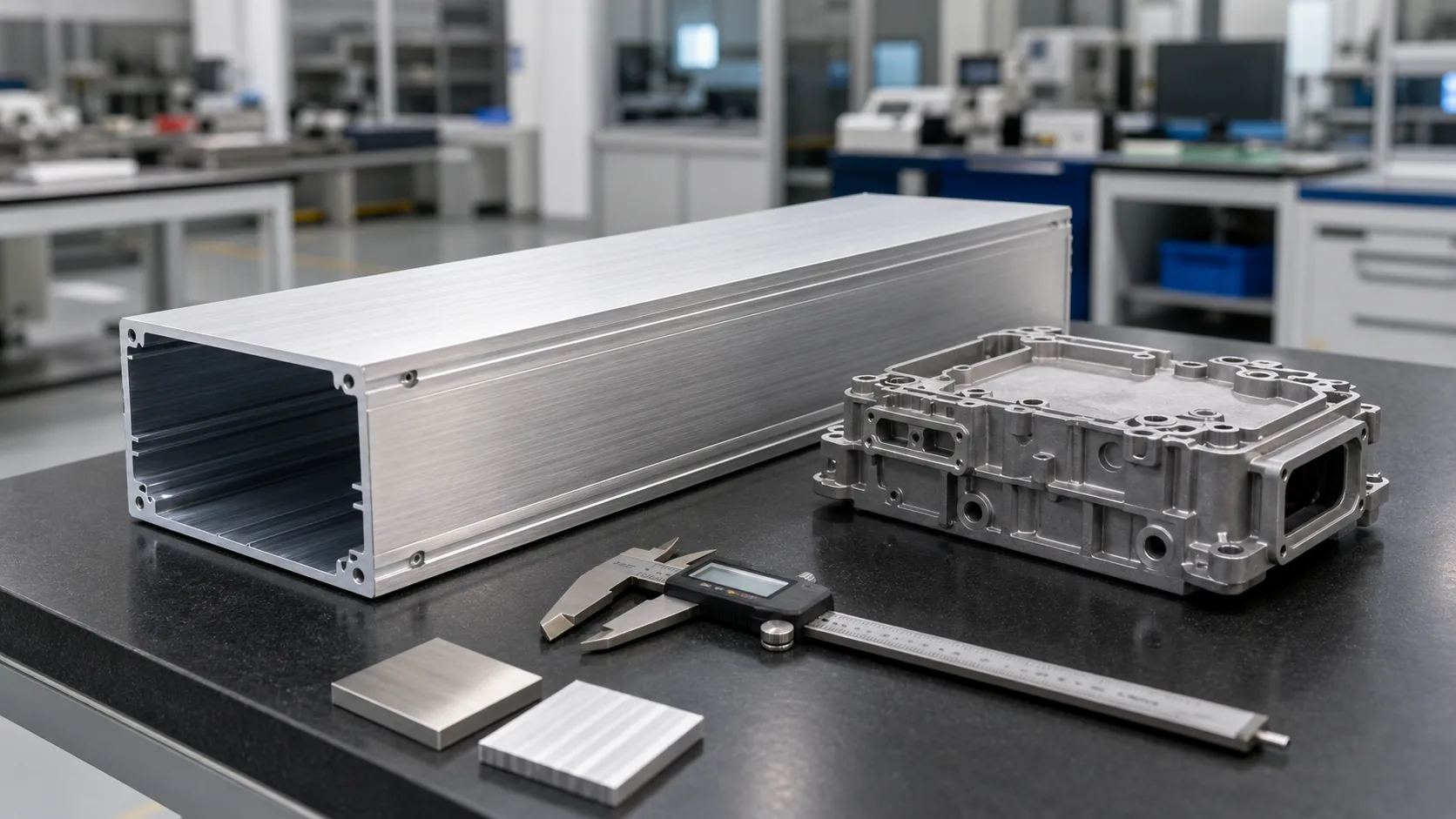
EMC enclosure sourcing often begins with a simple request: an aluminum or sheet-metal box that “shields interference.” The costly questions tend to arrive after the first sample is painted, the connector cutouts are complete, and a test lab shows a problem near a seam or cable entry.
An enclosure can support an EMC design, but it cannot make an undefined product compliant by itself. The right supplier needs enough information to build the housing around the product’s emission and immunity plan, not merely produce a metal shell. The European Commission describes EMC as controlling disturbance while helping equipment operate correctly in its electromagnetic environment under the EMC Directive.
In factory discussions, I start with the product, its cables, its operating environment, and the relevant test plan. That early discipline tells us whether the enclosure details are practical before money is committed to tooling or finishing.
Start With the Product Requirement, Not the Word “EMC”

“EMC enclosure” can mean a low-frequency grounding concern, radiated-emission control, immunity against an industrial environment, or several of these at once. A supplier cannot select a credible material, seam, coating treatment, or gasket from that phrase alone.
Give the supplier a requirement pack
| Information to provide | Why it changes the enclosure work |
|---|---|
| Target markets and product category | The applicable pathway may differ by market and product |
| Intended environment | Industrial locations, residential use, and installation conditions create different risks |
| Known standards or test plan | A product-specific standard can matter more than a generic assumption |
| PCB, power, cable, and antenna layout | These features determine where the enclosure can help or create a weak point |
| Planned interfaces and user access | Displays, doors, connectors, and service openings interrupt continuity |
For industrial equipment without a relevant product-family standard, IEC 61000-6-4 describes generic emission requirements for industrial environments. That is useful context, but it is not a substitute for defining the actual product and market path. I treat the applicable requirement as an input from the product owner or qualified test partner, then translate it into manufacturable enclosure questions.
Ask How the Current Will Return
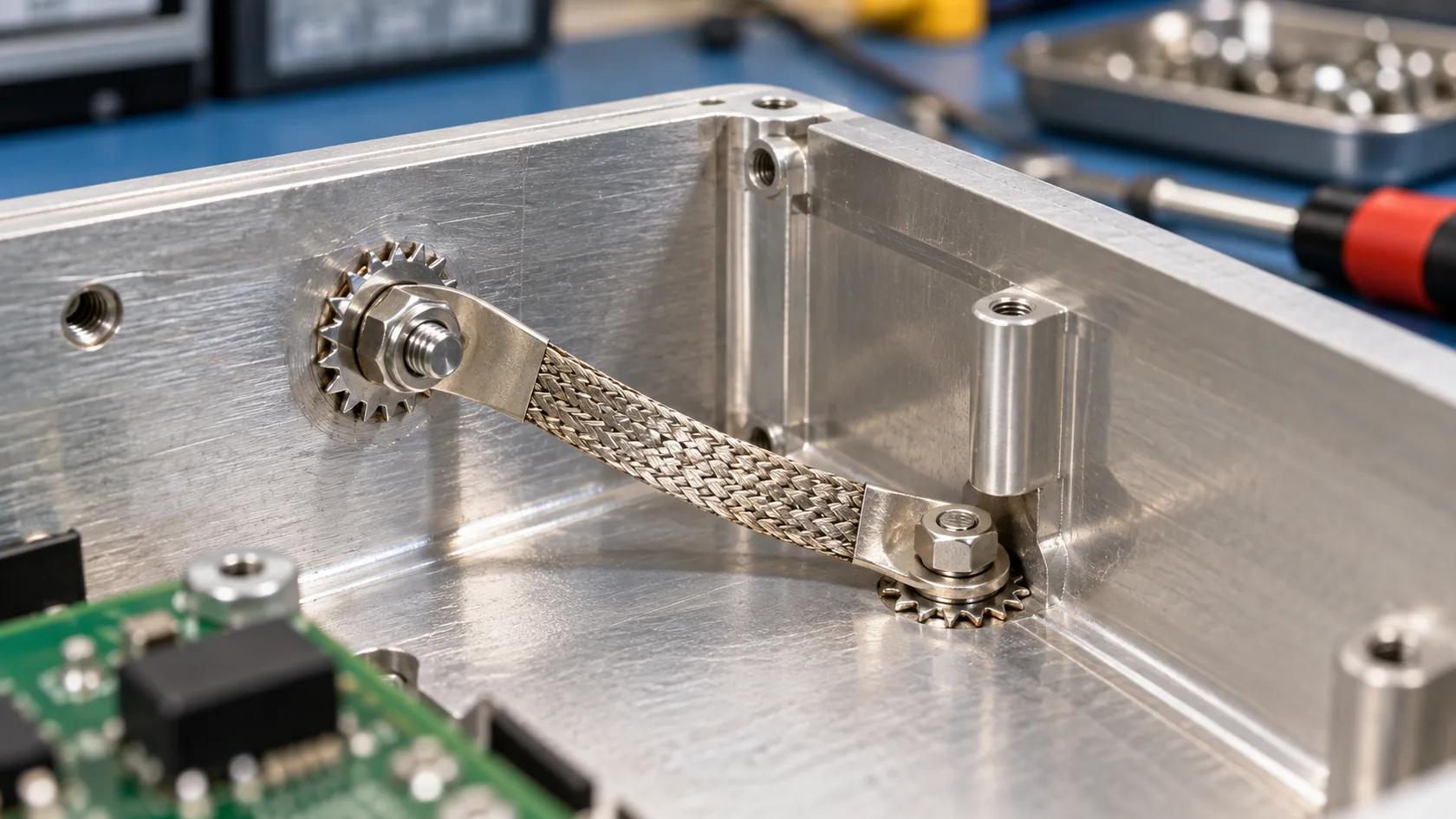
An enclosure that looks conductive can still behave poorly if its panels, cover, and cable shields do not have a deliberate electrical relationship. Paint, anodizing, oxide layers, loose fasteners, and long narrow contact paths can all increase uncertainty at the places that matter.
Mechanical closure is not electrical bonding
Buyers should ask how the supplier will preserve conductive contact where the design requires it. Possible solutions depend on the assembly: masked contact lands, conductive finishes, bonding hardware, spring fingers, or a dedicated ground strap. Each needs to be matched to the base material, corrosion exposure, assembly method, and service cycle.
I pay particular attention to a removable cover. A cover can feel tight and still have an unreliable electrical path after coating, repeated opening, or small flatness changes. A drawing should show the intended contact areas and any finish exclusions, rather than leaving those details to a last-minute workshop decision.
The Seam and Apertures Usually Decide More Than Wall Thickness
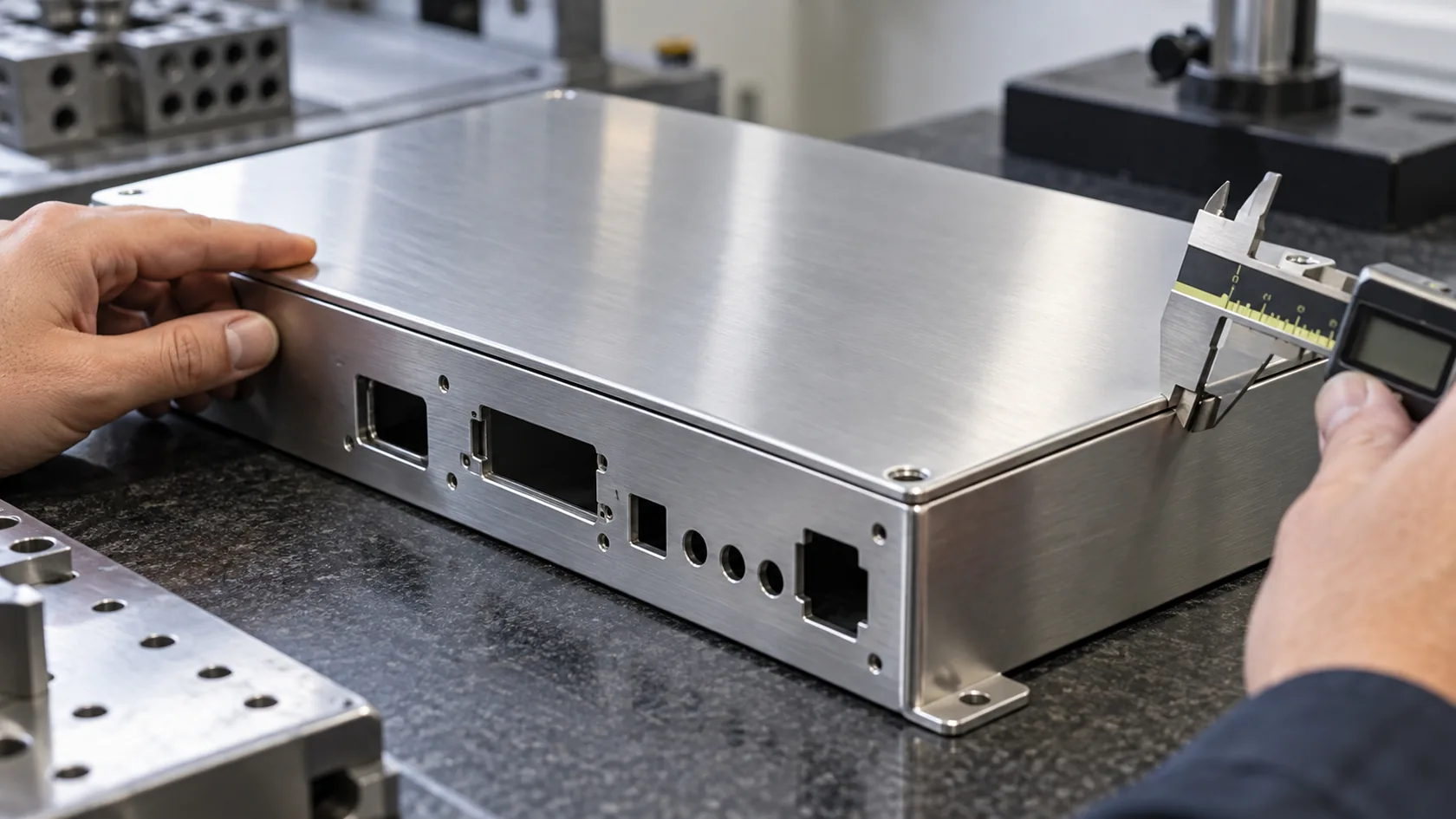
The enclosure is a system of joints and openings, not a solid block of metal. Doors, removable lids, ventilation patterns, display windows, connector cutouts, and poorly controlled gaps can dominate the result. Increasing wall thickness may improve stiffness, but it does not automatically correct a leakage path at a seam.
| Feature | Buyer question | Late-stage risk |
|---|---|---|
| Lid or door seam | What makes and maintains the conductive contact? | A visible gap or coated interface breaks continuity |
| Ventilation opening | How does the opening meet the thermal and EMC intent? | Airflow is added without a shielding strategy |
| Connector cutout | Is the panel interface specified with the mating connector? | The opening is larger than the component’s intended interface |
| Display or window | What material and edge treatment are needed? | A non-conductive window changes the enclosure boundary |
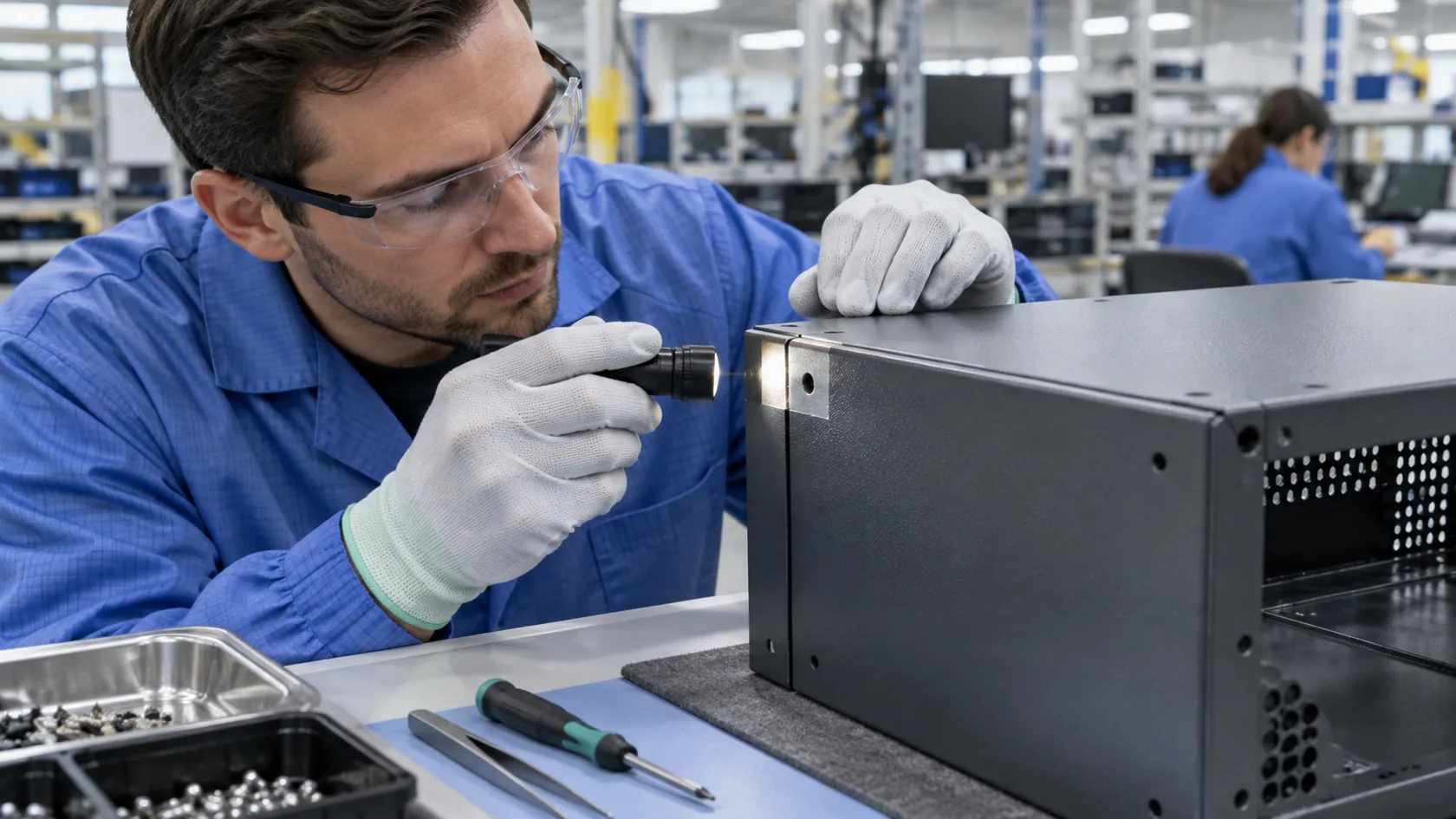
From a fabrication point of view, I want the seam geometry, bend radii, flatness expectation, fastener spacing, and opening tolerances early. Those choices affect whether sheet metal, CNC machining, extrusion, or a mixed assembly is the sensible route. They also give the supplier a real basis for prototype inspection.
Coating, Corrosion Protection, and Conductivity Must Be Designed Together
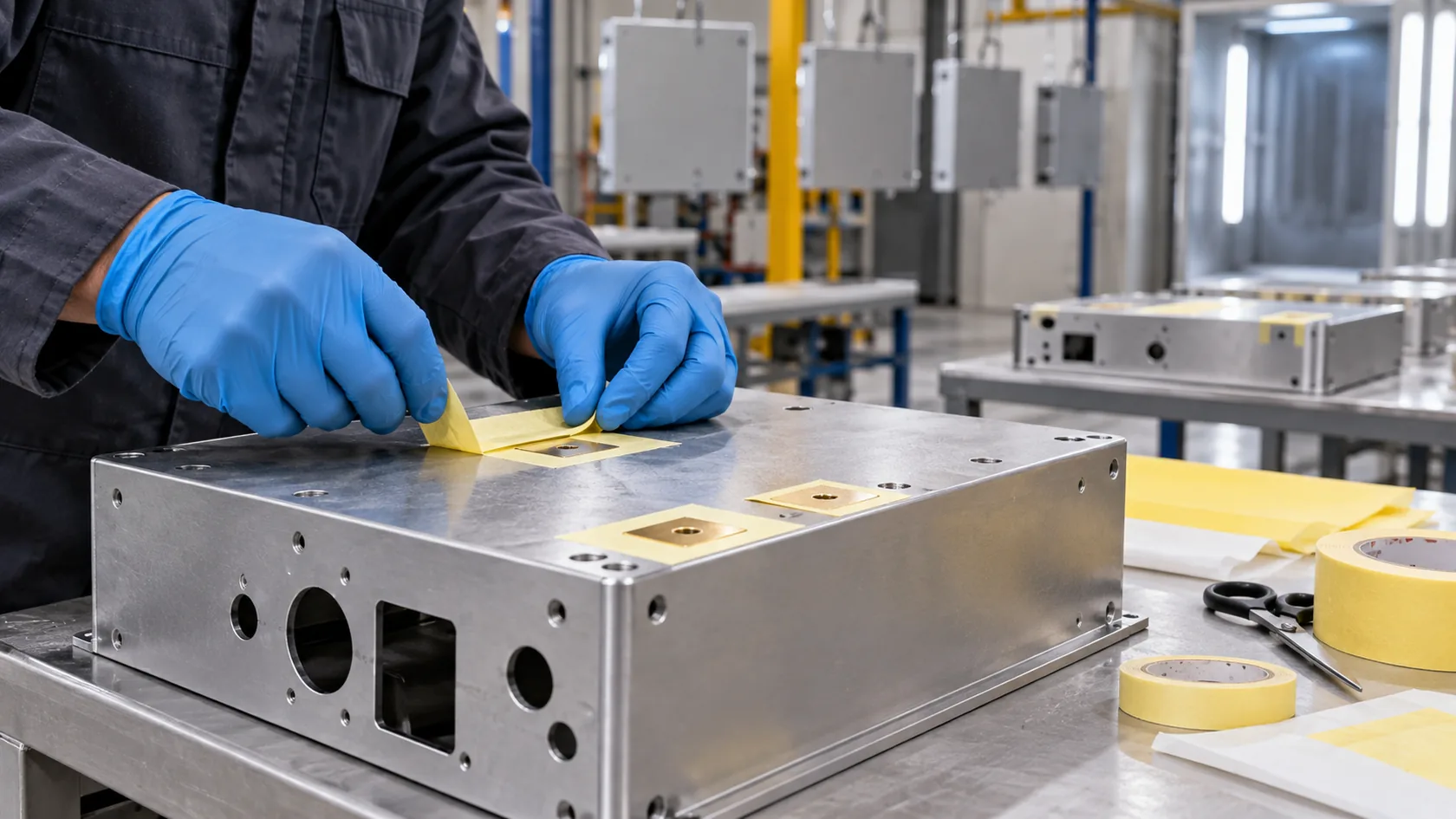
Powder coating, anodizing, and other finish systems can be excellent choices for appearance and environmental durability. They can also interrupt a conductive interface. The answer is not to reject finishing; it is to decide where the enclosure needs a reliable electrical path and protect that requirement through the finishing and assembly sequence.
Ask for the finish stack-up at each interface
A useful review separates exterior corrosion protection from internal bonding locations. Buyers should ask what material is used, which faces are coated, which contacts are masked or treated, how hardware touches the substrate, and how damaged edges will be controlled. If the product will see moisture, salt, cleaning agents, or temperature cycling, those conditions must enter the same conversation.
I have seen otherwise good designs delayed because a beautiful exterior finish was approved before anyone identified the bonding lands. It is far cheaper to show those lands on the drawing and sample inspection sheet than to strip or rework finished parts later.
Cable and Connector Interfaces Need Their Own EMC Plan
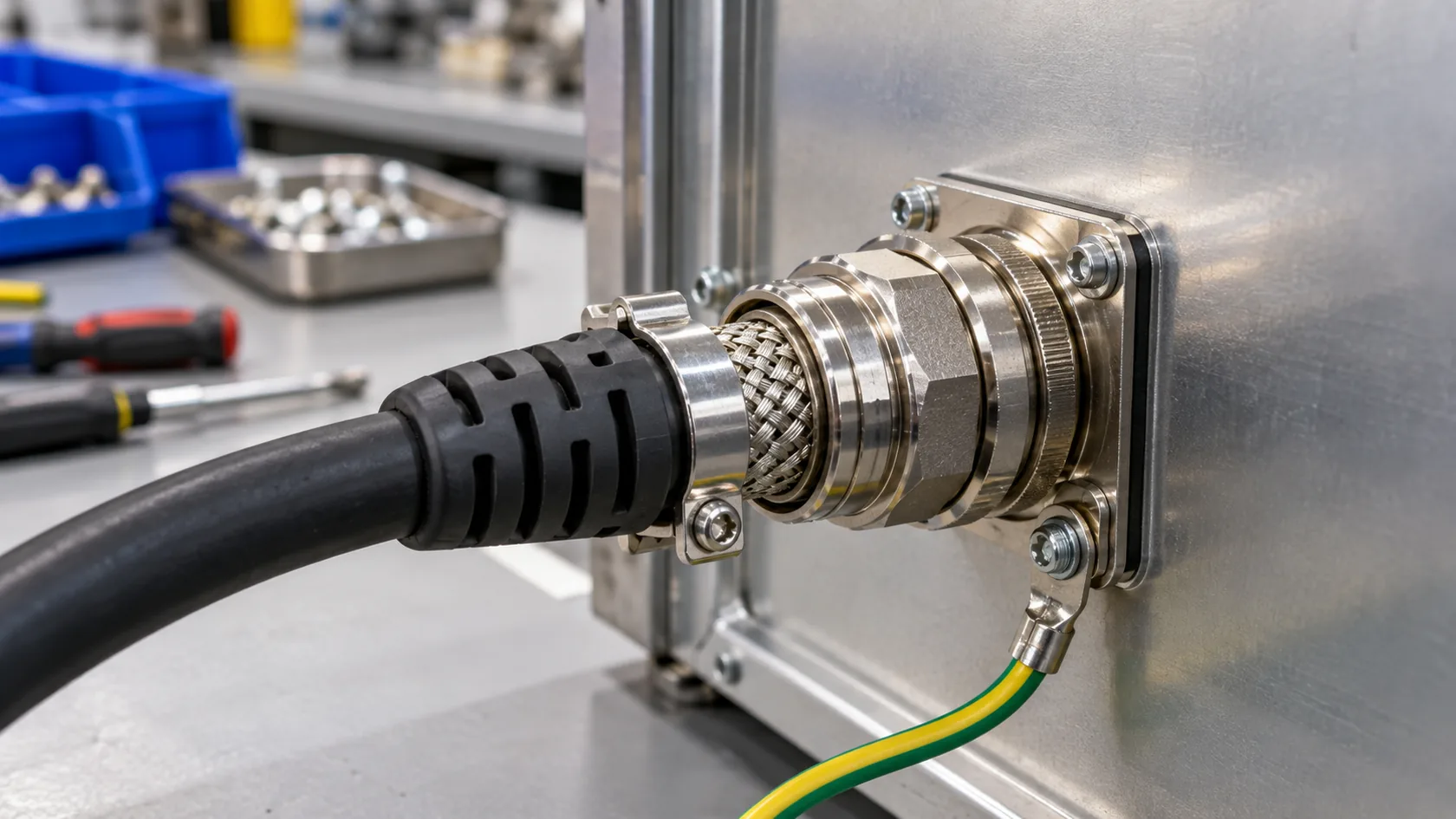
Cables can carry both the signal and the problem past an enclosure wall. A shielded cable only helps as intended when the complete interface—connector, termination, panel opening, mating hardware, strain relief, and routing—fits the design objective. A pigtail, an unbonded connector shell, or an oversized panel opening may change the result.
The FCC’s Part 15 guidance distinguishes measurement procedures for intentional and unintentional radiators; it is a reminder that product compliance is evaluated at the equipment level, not from an enclosure material label. The enclosure supplier should support the mechanical interface, while the product team retains ownership of the electrical design and test configuration.
Before machining begins, I ask for the exact connector series, mating condition, cable shield termination intent, grounding points, and service-access sequence. That avoids the familiar situation where a completed case accepts the connector but not the connector’s intended panel interface.
Demand a Prototype That Represents Production Reality

A hand-built sample can prove that the overall concept fits, but it may not represent the repeatability of the production process. Tooling, bending, machining, coatings, fastener torque, gasket placement, and hardware substitutions all affect the final assembly.
Turn the drawing into inspection points
For an EMC-sensitive enclosure, I recommend agreeing on a small first-article checklist:
- Confirm the material and finish against the approved bill of materials.
- Measure critical seam, opening, and flatness dimensions.
- Inspect masked or conductive contact areas before and after assembly.
- Confirm the specified hardware, grounding straps, and connector interfaces.
- Photograph the production-representative assembly before it goes to system test.
This is not a claim that the enclosure alone passes an EMC test. It is how the buyer and supplier reduce the risk that the lab sample differs from the parts eventually shipped. I would rather find a coating-mask disagreement during first article inspection than after a failed compliance run.
Separate Supplier Evidence From a Compliance Claim

A supplier can provide useful evidence: material certificates, finish records, dimensional inspection, photos of bonding features, assembly instructions, and traceable sample identification. Those records make it easier to reproduce the intended enclosure design. They do not automatically make the finished apparatus compliant.
Under the EU EMC framework, the manufacturer performs an EMC assessment for relevant phenomena and maintains technical documentation, including applicable requirements and test reports where relevant, for the product placed on the market. The Directive text also ties conformity to the apparatus and its representative configurations.
My practical advice is simple: ask the enclosure supplier what they can document, ask the compliance owner what evidence is required, and keep those responsibilities separate in the purchase order. Clear boundaries make collaboration faster and claims more credible.
Compare Quotes on Engineering Scope, Not Only Unit Price

Two suppliers can quote the same outside dimensions while offering very different levels of engineering control. One price may assume standard coating everywhere, simple lid hardware, and generic cutouts. Another may include controlled bonding points, specified hardware, first-article inspection, and documentation. Neither is automatically correct; the buyer needs to compare like with like.
| Quote item | What to check |
|---|---|
| Drawings | Controlled revision, critical contact details, cutout and seam specifications |
| Material and finish | Grade, thickness, finish system, masked or conductive areas |
| Hardware | Fasteners, latches, gaskets, grounding parts, approved substitutions |
| Prototype and inspection | First-article scope, photographs, dimensional records, change approval |
| Manufacturing change control | How a material, coating, or hardware change is proposed and approved |
In my experience, the lowest quote becomes expensive when the necessary technical assumptions were never included. A supplier who asks disciplined questions before quoting is often saving the buyer from a poorly defined build, not trying to slow the project down.
Conclusion

Choosing an EMC enclosure supplier is not mainly about finding the heaviest box or the most impressive shielding statement. Buyers should clarify the product requirement, return paths, seam and aperture strategy, finish treatment, cable interfaces, production controls, and documentation before a quote becomes a purchase order.
After years of enclosure projects, I find the best results come when the product team, test partner, and fabricator each own their part of the work. Send the enclosure drawing, connector plan, intended market, environment, and available EMC test information early. We can then review the seams, finishes, openings, and inspection steps before the first production sample makes those decisions expensive.