Skip to content

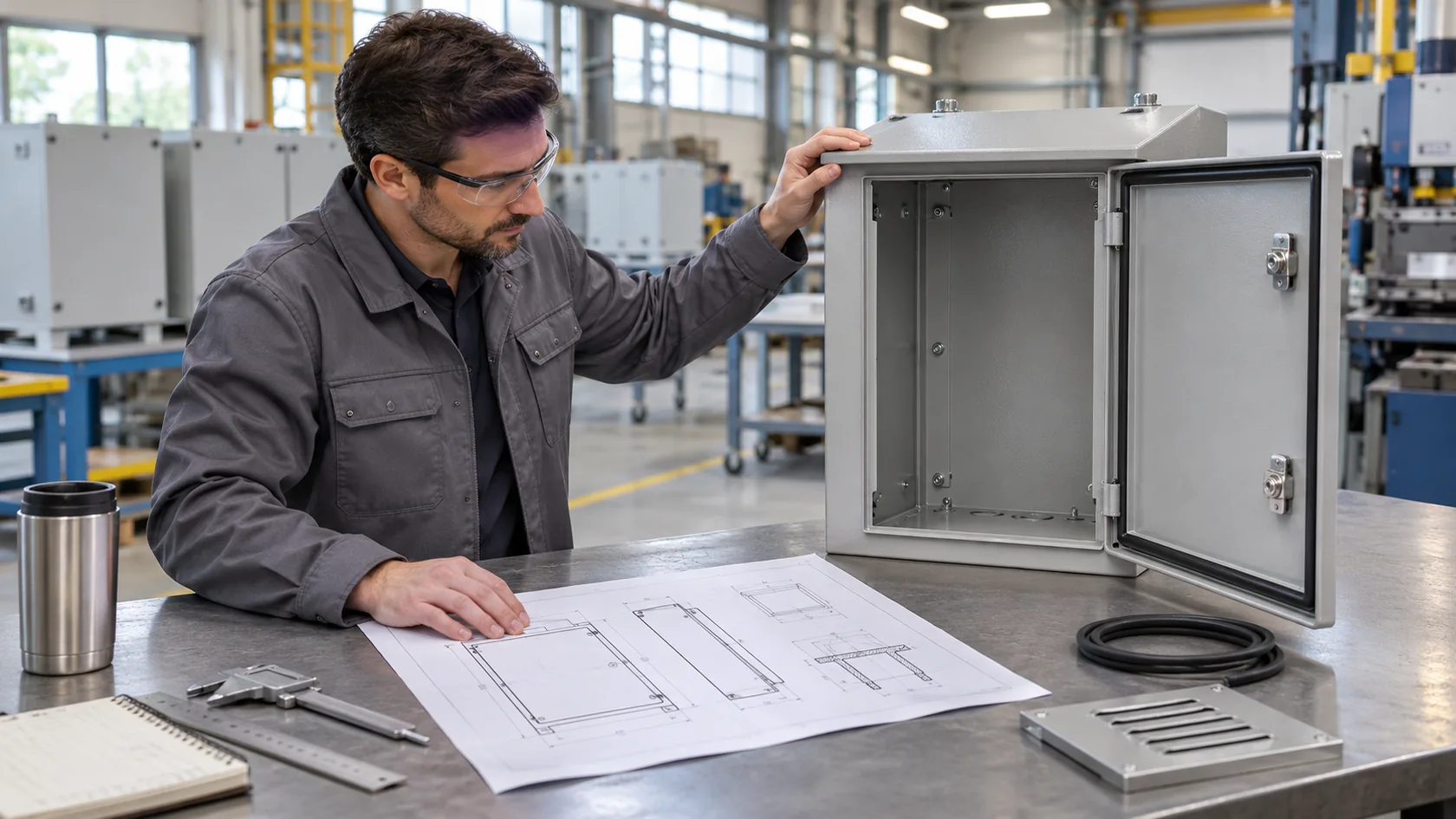
At the quotation stage, “weatherproof” can hide three very different jobs. A control box on a dusty rooftop, a cabinet near repeated chemical washdown, and a level-sensor enclosure that may sit below floodwater are not asking for the same design. Yet I still see NEMA 3, 4X, and 6P treated as a simple price ladder.
That shortcut is costly. NEMA Type 3 addresses outdoor weather and windblown dust. Type 4X adds hose-directed-water and corrosion concerns. Type 6P brings prolonged submersion at a limited depth into the discussion. NEMA 250 covers these as non-hazardous-location enclosure Types, but the successful choice still depends on the complete installed assembly.
In our factory work, I start by asking where water comes from, how long it stays there, what chemicals or salt may reach the enclosure, and where every cable enters. The rating should confirm that answer, not replace it.
Start With Exposure, Not the Rating Number
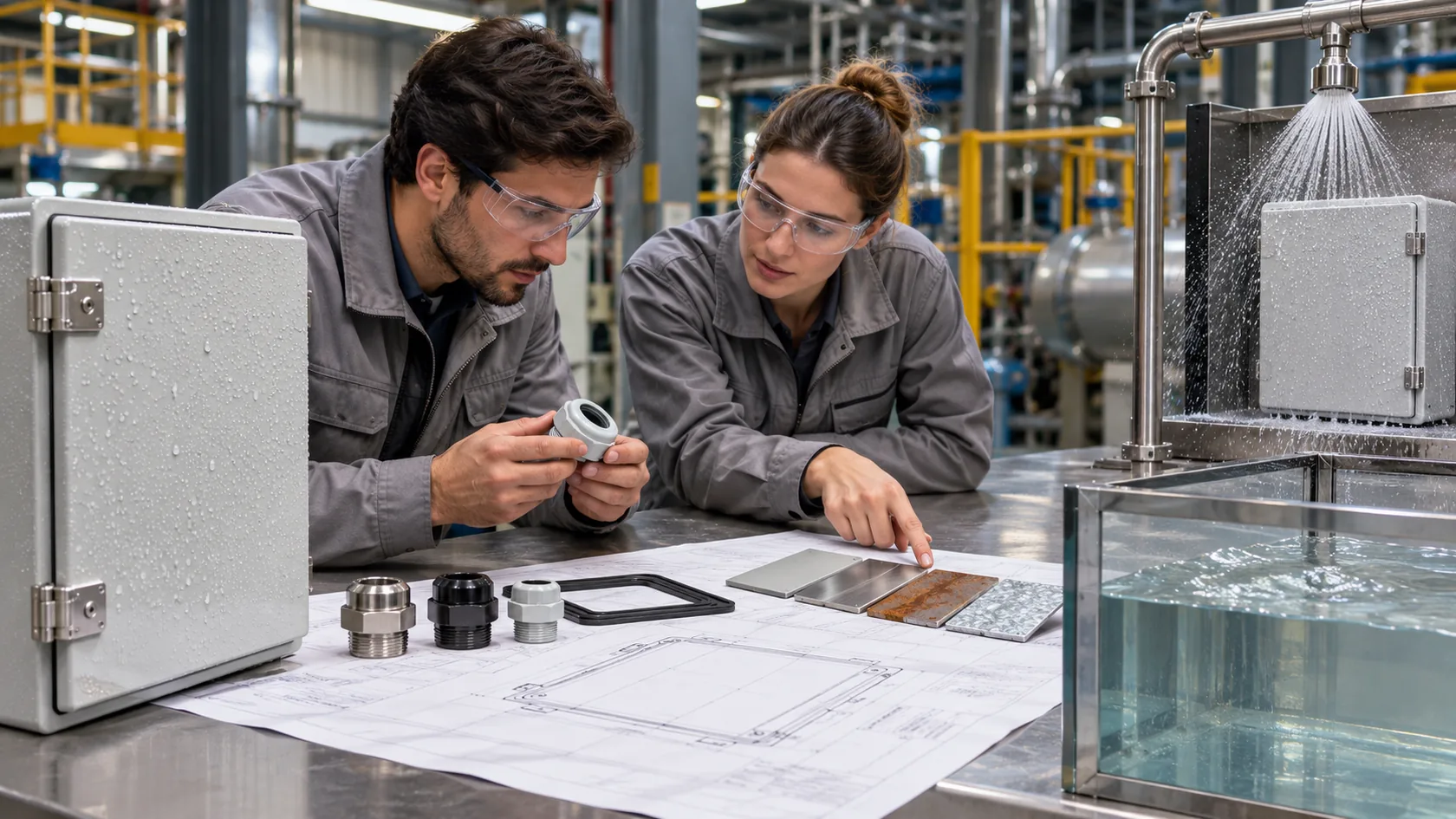
The first decision is not about the label on the nameplate. It is about exposure. Rain running down a wall, hose spray from a cleaning operator, salt-laden air, and a flooded pit create different pressure, direction, duration, and corrosion risks.
Separate the four questions
| Exposure question | What to define before selecting a Type |
|---|---|
| Weather | Rain, windblown dust, sleet, snow, UV, mounting orientation, and drainage |
| Washdown | Liquid, spray direction, pressure, distance, frequency, temperature, and cleaner chemistry |
| Corrosion | Salt, humidity, chemicals, crevices, cut edges, hardware, and maintenance access |
| Submersion | Fluid, depth, duration, temperature, pressure changes, cable path, and recovery procedure |
I have seen a cabinet upgraded to a more expensive rating while the cable entries still pointed upward under an unprotected top surface. That is not a protection strategy. A basic water path review would have found the real weak point before production.
The exposure map also prevents a common misunderstanding: outdoor does not automatically mean washdown, and washdown does not automatically mean submersion.
What NEMA 3 Handles Well Outdoors

NEMA Type 3 is intended for outdoor use and addresses windblown dust, rain, sleet, and external ice formation. UL Solutions' Type table summarizes Type 3 in those terms. It can be a sensible direction for outdoor controls that see normal weather rather than direct hose cleaning or immersion.
Do not confuse Type 3 with a generic watertight claim
Rain falls, blows, and drains differently from a pressurized cleaning stream. The door style, roof shape, seams, mounting plane, cable direction, and drip path all matter. A Type 3 enclosure can be appropriate for a sheltered equipment skid or outdoor instrument location, but the project still needs a clear definition of how it will be mounted and serviced.
Type 3 also has related variants such as 3R and 3S with different application meanings. If a drawing calls for “NEMA 3” but the real need is only falling rain, or operation of an external mechanism while ice laden, it is worth confirming the exact requirement rather than assuming one outdoor Type covers all cases.
For an ordinary outdoor box, I would spend budget first on a controlled cover seam, sensible cable routing, corrosion-aware hardware, and drainage. Those details often give the buyer more value than moving to a higher Type without a new exposure reason.
Once direct spray or corrosive cleaning enters the picture, the design question changes substantially.
When NEMA 4X Is the Better Choice
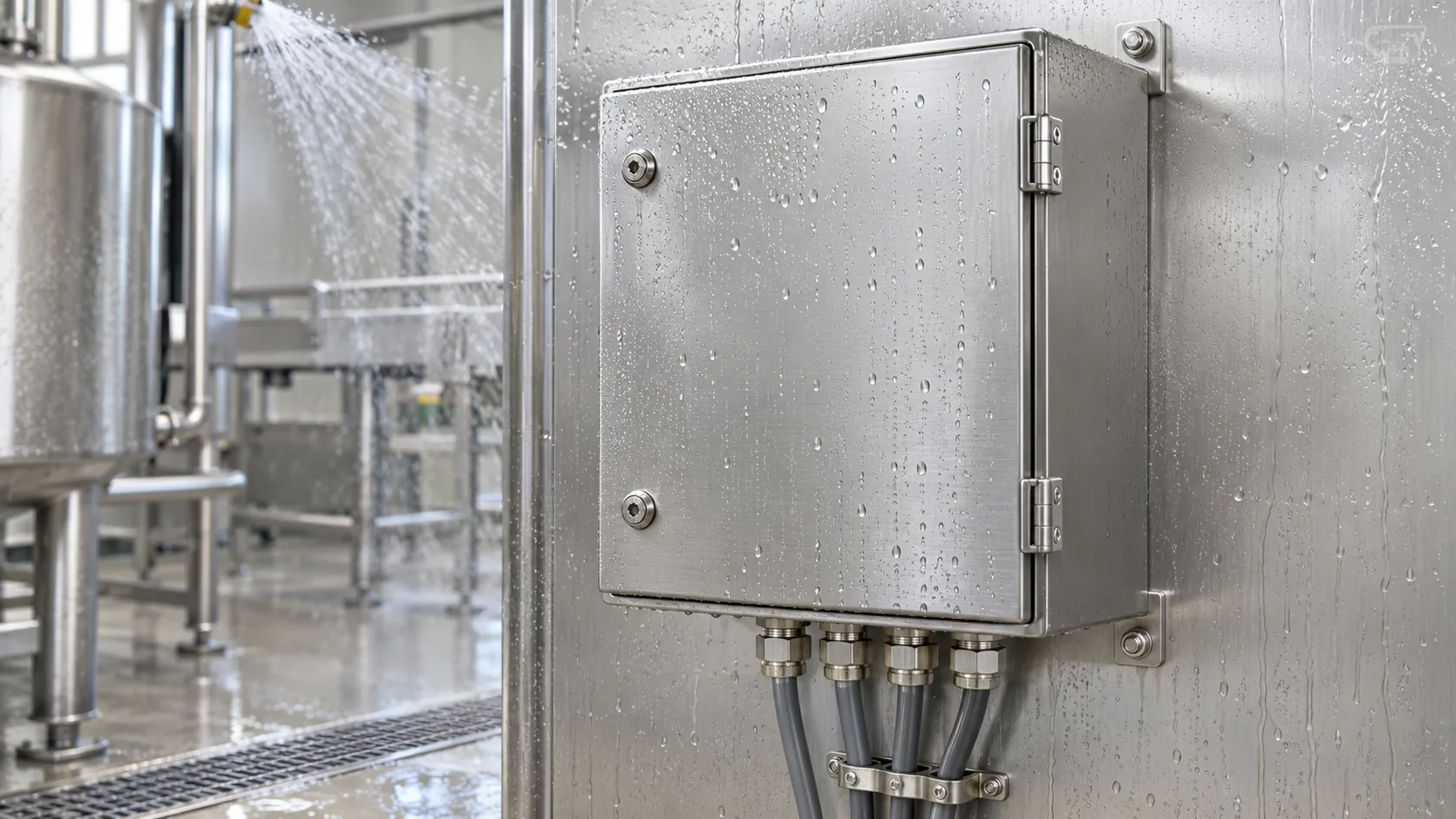
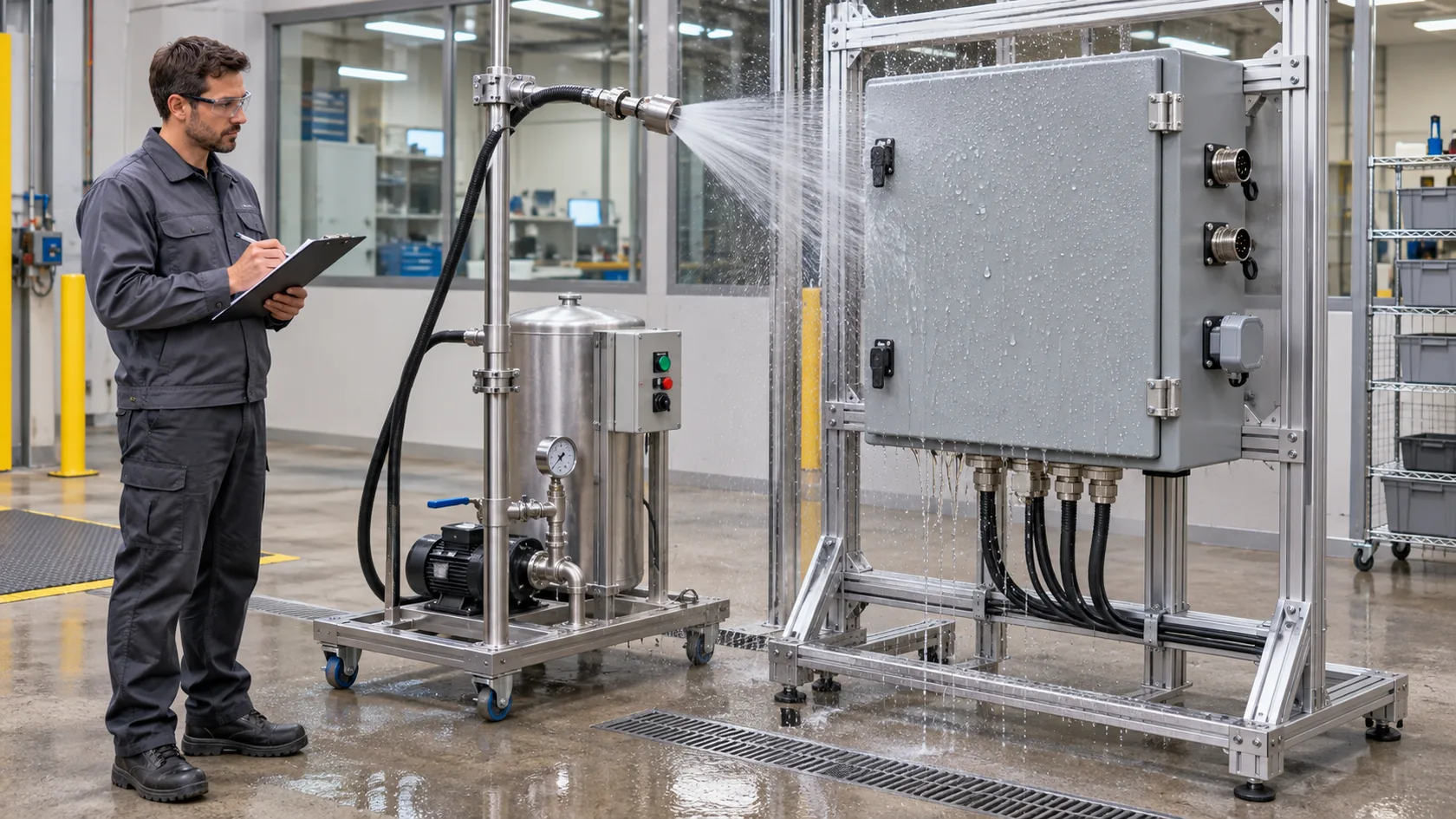
NEMA Type 4X is intended for indoor or outdoor use and addresses windblown dust and rain, splashing water, hose-directed water, external ice formation, and corrosion. The practical descriptions from Schneider Electric are useful here: Type 4 enclosures use gasketed, clamped doors for washdown-type applications, while Type 4X is commonly chosen where corrosive materials or caustic cleaners also matter.
The X is a corrosion requirement, not a material name
“4X” does not automatically mean stainless steel, and “stainless steel” does not automatically make an assembly suitable for every chemical or coastal environment. Aluminum, stainless steel, fiberglass, and certain polymers may all be considered in different designs. The complete material system includes the shell, welds, hardware, latches, hinges, gland plates, finish, cut edges, and dissimilar-metal contacts.
| Design area | Review before releasing a 4X enclosure |
|---|---|
| Door and gasket | Gasket material, compression, corner geometry, sealing-land finish, and door stiffness |
| Cable entries | Cable outside-diameter range, thread, wall thickness, torque access, plugs, and downward routing |
| Corrosion control | Actual chemical or salt exposure, finish system, fasteners, crevices, and repair of field damage |
| Cleaning process | Spray path, frequency, temperature, detergent or disinfectant, and whether operators can target seams directly |
In food, chemical, marine, and outdoor applications, I do not accept a vague “corrosion resistant” note as enough information to choose the material. The fluid and cleaning method should be on the RFQ. A bright-looking sample may hide a poor gasket choice or a galvanic contact that only becomes obvious after installation.
Type 4X remains a washdown-and-corrosion decision. It is not the same as a promise that the enclosure may remain below water.
Why NEMA 6P Is Not a Premium Outdoor Shortcut

NEMA Type 6P is for indoor or outdoor use where the application includes hose-directed water and entry of water during prolonged submersion at a limited depth. That wording is intentionally specific. UL's enclosure-Type guidance distinguishes Type 6P from Type 6, which addresses occasional temporary submersion at a limited depth.
“Limited depth” needs a project definition
Do not write only “6P required.” Define the liquid, depth, duration, temperature range, pressure changes, mounted orientation, and the fitted cable or conduit interfaces. A sump, water-treatment channel, marine installation, and outdoor pit can have very different fluids and service conditions even when each is described casually as “flooded.”
Submersion also changes the failure modes. Hydrostatic pressure acts on cover joints, seals, windows, and interfaces for longer than a hose stream. A cable can become a water path. Pressure changes and temperature cycling can challenge seals. Service personnel may open the unit in a wet location, so the recovery procedure matters as well as the initial test.
My preference is to specify only the immersion condition that the product truly needs, then validate the production-intent enclosure with its actual entries installed. Choosing 6P merely because it sounds like the strongest outdoor label can increase cost and complicate heat management without solving an unstated flood condition.
That is why Type 6P belongs in an application discussion, not in a ranking chart with a trophy at the top.
NEMA 3, 4X, and 6P Side by Side
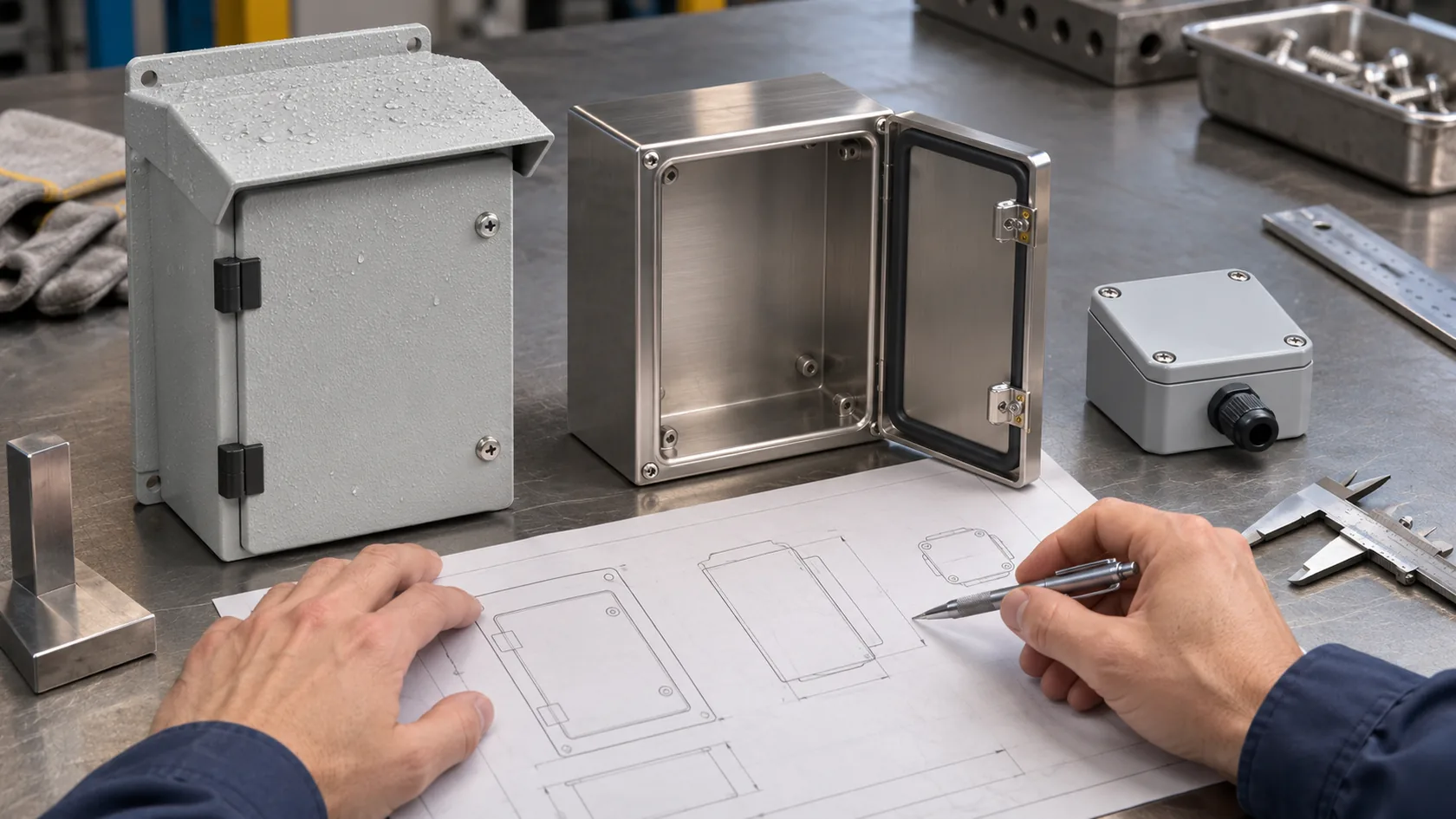
The table below is a buying and engineering starting point. It is not a certification statement for an unconfigured box. The final requirement must match the applicable standard, listed product information where required, and the actual installed configuration.
| Type | Typical environmental focus | It does not automatically settle |
|---|---|---|
| NEMA 3 | Outdoor windblown dust, rain, sleet, and external ice | Hose cleaning, corrosion chemistry, immersion, internal condensation, or every cable-entry arrangement |
| NEMA 4X | Outdoor or indoor dust/rain, splashing and hose-directed water, plus corrosion protection | Compatibility with every chemical, long-term standing water, submersion, heat dissipation, or field modifications |
| NEMA 6P | Hose-directed water and prolonged submersion at a limited depth | The actual depth/duration/fluid, cable-system integrity, thermal behavior, hazardous-location suitability, or maintenance procedure |
The three Types overlap in some outdoor uses, but they solve different primary exposure questions. The comparison becomes more reliable when an engineer separates rain from jetting, corrosion from appearance, and temporary wetting from prolonged immersion.
I also keep NEMA and IP wording separate on international projects. IEC 60529 defines the IP Code for degrees of protection against access, solids, and water, while NEMA Types include other application considerations. Do not use a loose one-to-one conversion as a substitute for checking the standard and finished assembly.
The next step is more important than the number: preserve the environmental boundary through every feature added to the housing.
The Finished Assembly Determines the Result

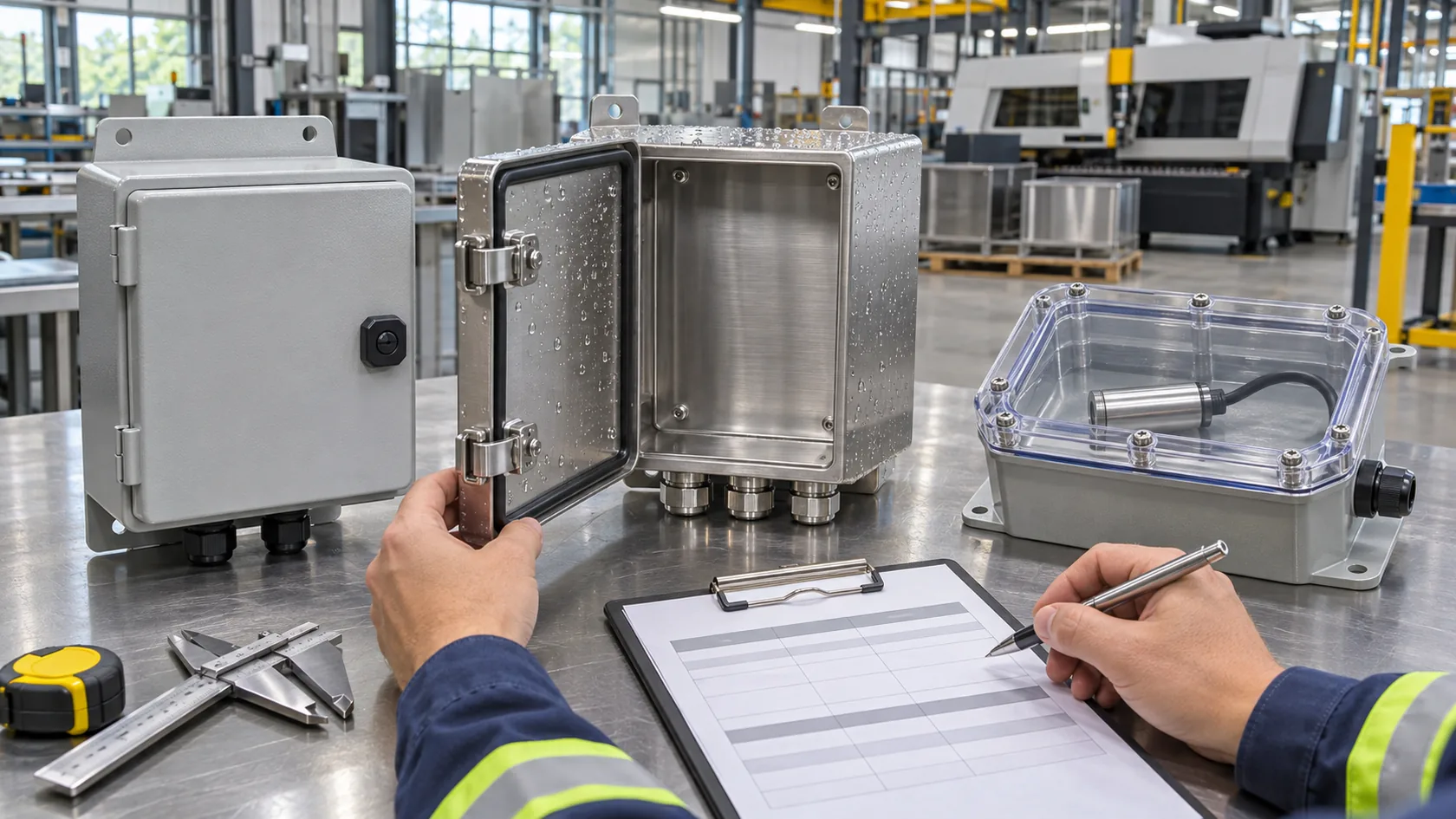
A rating is not transferred automatically from a bare enclosure to a populated product. The cover joint, gasket, fastener pattern, cable glands, connectors, display windows, vents, pushbuttons, mounting interface, and unused openings all become part of the finished boundary.
Control the features that usually leak first
- Specify the gasket material, compression range, corner treatment, groove geometry, and sealing-land condition.
- Select cable glands for the actual cable outside-diameter range, wall thickness, thread engagement, and installation torque.
- Use compatible plugs for every unused opening; do not leave future knockouts as an afterthought.
- Review cover deflection when heavy components, hinges, or latches load the door.
- Define how a vent, drain, or pressure-equalization device is evaluated in its installed position.
A custom door can look stiff in a CAD view yet deflect enough under mounted hardware to unload a gasket at one corner. I would rather add a return flange, support, or revised latch pattern on the drawing than ask a production worker to compensate with more gasket or tighter screws.
This boundary review connects directly to material selection, heat management, and service life.
Materials, Heat, and Condensation Still Need Engineering

The enclosure Type does not select the base material or solve the inside environment. A powder-coated steel design, an aluminum housing, a stainless fabrication, and a non-metallic enclosure each have different cost, geometry, corrosion, grounding, UV, and service boundaries. The right choice depends on the actual exposure and manufacturing method, not on a catalog preference.
Sealing choices affect more than water ingress
More sealing usually reduces accidental airflow. That can raise internal temperatures and increase condensation risk during daily temperature cycles. Sun exposure, internal heat load, component temperature limits, mounting surface, and heat paths should be set before a vent is added late in the design. A vent may assist pressure equalization, but it is also another item that must fit the environmental target.
For a metal enclosure, powder coating or anodizing can help protect the surface but may interrupt a required EMC or grounding path. Plan conductive interfaces, masking, bonding hardware, and corrosion protection together. A bare-metal bonding point should not become an untreated corrosion starter beside a washdown seam.
From a manufacturing perspective, the expensive failure is often not a wrong shell thickness. It is the conflict between a waterproof gasket, a late connector cutout, a hot internal power supply, and an unplanned grounding path. Resolving those four items together is much cheaper than correcting them after tooling or batch assembly.
With the engineering choices visible, the quote can state a testable promise instead of a generic weatherproof claim.
What to Put in a Quote or Validation Plan
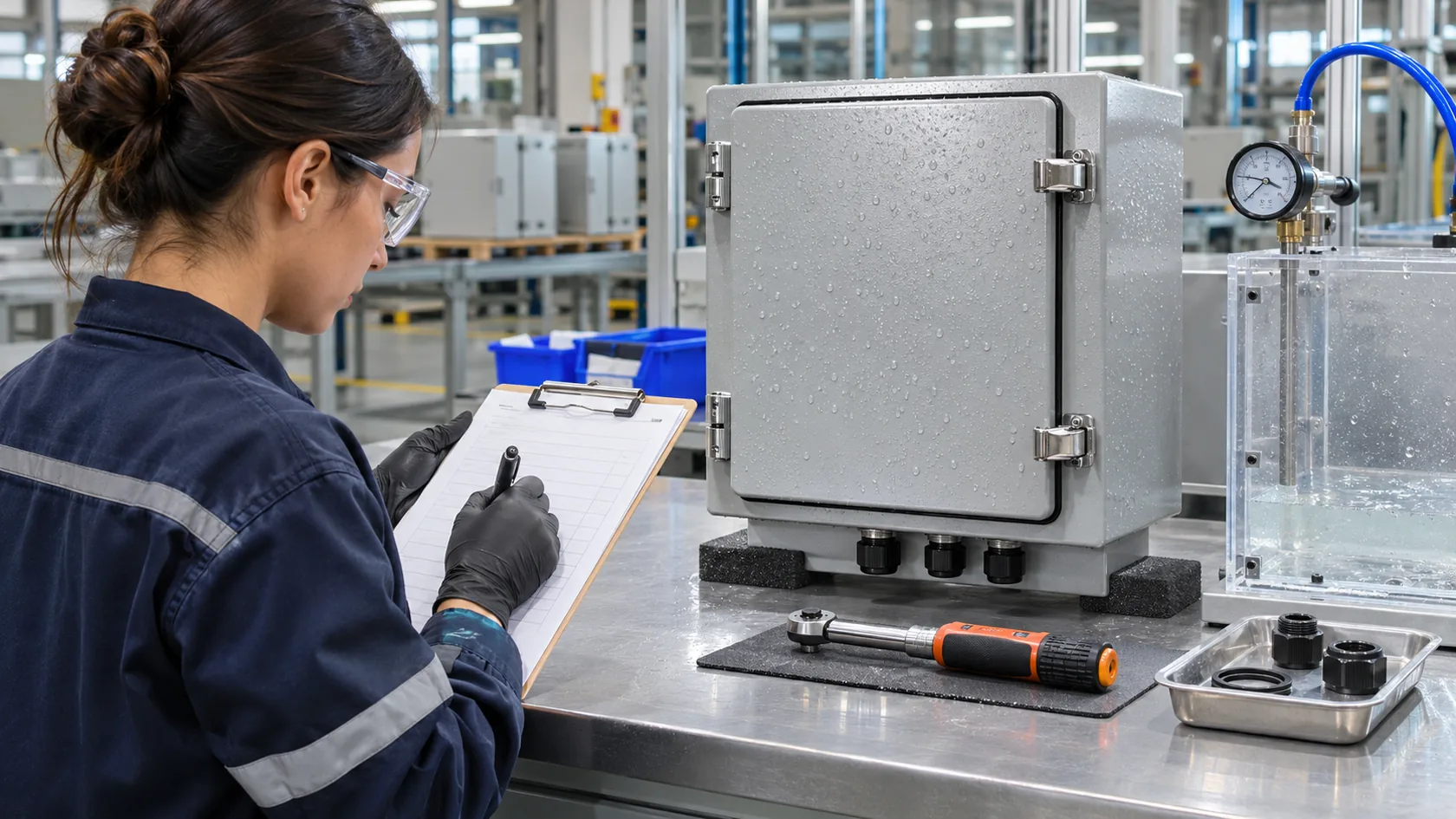
For a custom enclosure, I recommend treating the rating as one requirement in a short validation brief. This helps the buyer compare suppliers on the same finished condition and gives the factory a stable production reference.
A practical buyer checklist
- State the exact requested NEMA Type and the governing market or approval route.
- Describe the location, mounting orientation, rain path, dust, washdown liquid, spray method, corrosion exposure, UV, temperature range, and any flood condition.
- List every fitted penetration: cable glands, conduit, connectors, windows, buttons, antennas, vents, drains, hinges, and unused-hole plugs.
- Provide cable outside diameters, entry direction, gland model or performance requirement, and access for torque and service.
- Define shell material, finish, gasket, hardware, grounding/EMC interfaces, and corrosion-sensitive joints.
- Agree on the production-intent sample, installed test configuration, test method, acceptance criteria, and which changes require revalidation.
The scope of NEMA 250 makes an important limitation clear: it does not cover internal condensation, corrosion, icing, or contamination that can arise inside the enclosure or enter through conduit or unsealed openings. That is one reason the installation and cable system belong in the quote, even for a well-made housing.
When those inputs are complete, a supplier can help select the practical Type and design the real interfaces around it.
Conclusion
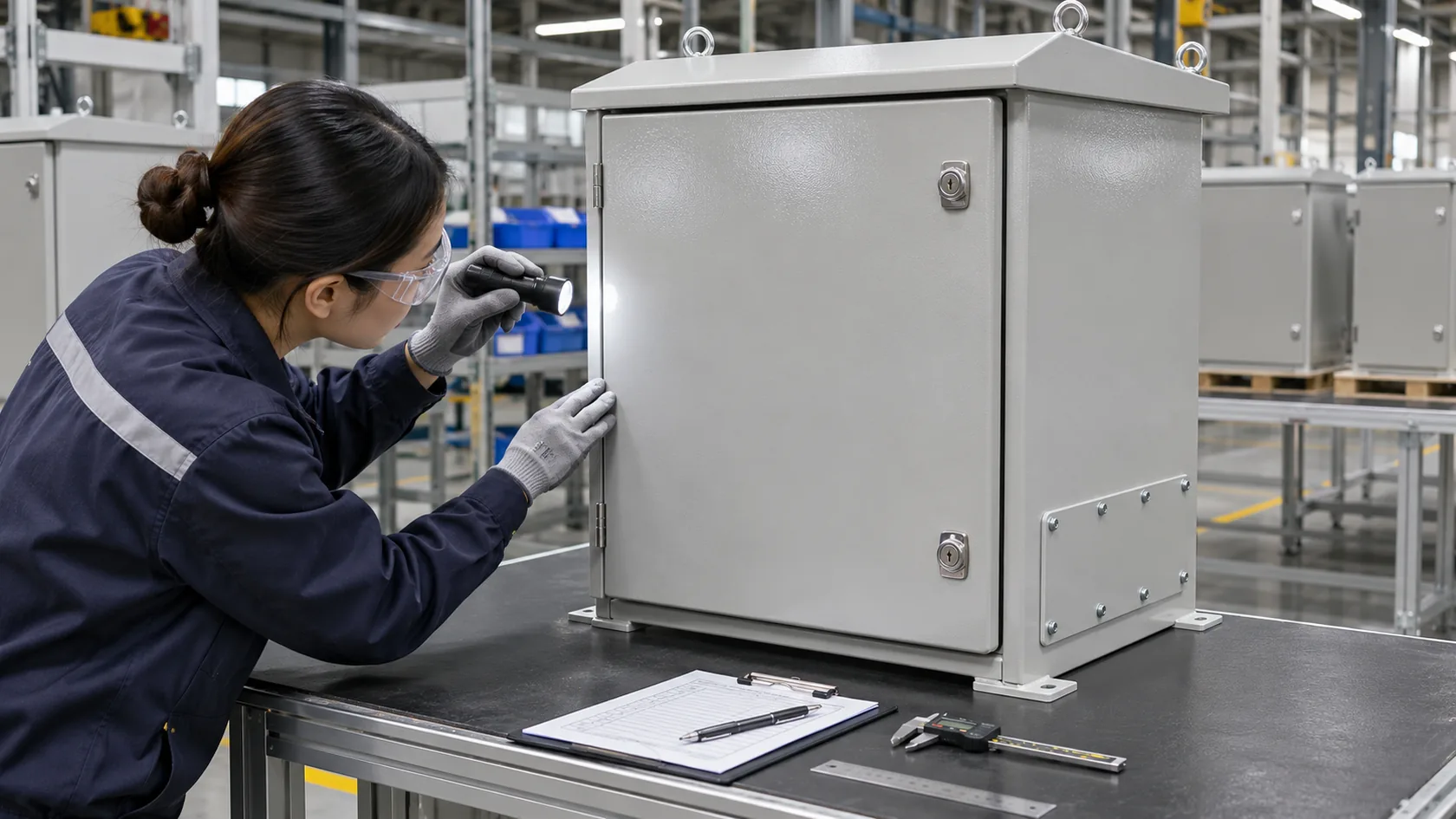
NEMA 3, 4X, and 6P are not three grades of the same promise. Type 3 is a practical outdoor-weather direction. Type 4X adds hose-directed-water and corrosion needs. Type 6P is for a defined prolonged-submersion condition at limited depth. Each can be the right answer when the exposure is real and the finished assembly supports it.
After years of making custom enclosures, my view is simple: choose the least complex Type that honestly covers the environment, then protect every seam, entry, finish, and service action that could defeat it. Send MaidaTech your enclosure drawing, mounting direction, cable schedule, water or cleaning exposure, corrosion details, and internal heat load. We can review the seal path and manufacturability before the rating becomes an expensive assumption.